Last month I set out to name a small coffee subscription for a client and did the thing everyone does now: I opened an AI name generator, typed in a few words about roasted beans and mornings, and let it run. Ninety seconds later I had two hundred options. By the time I hit the third page they had started to blur together, all the same soft suffixes and the same tidy blends. A few were usable. Most were the naming equivalent of stock photos.
That weekend taught me something I should have known already. A generator, human or machine, is only as good as the method behind it. Speed is easy. A name that a customer repeats to a friend without being reminded is not. So before the next round I wrote down the seven approaches that keep showing up in the brands that stuck, tested my shortlist against each one, and only then went back to the software. This is that list, with real examples and the trade offs nobody mentions when they promise you a name in minutes.

THE SHORT VERSION Seven ways to build a name, ranked by how you want to be remembered: 1. Describe it for instant clarity 2. Coin a new word for the strongest ownership 3. Blend two words for a modern hint of meaning 4. Use a person’s name for trust and story 5. Borrow from myth or fiction for emotion 6. Shorten to initials when the full name is a mouthful 7. Run an AI generator for volume, then cut hard by hand |
Memorable and legally yours are two different goals
Most naming advice stops at "make it catchy." The problem shows up later, when you try to protect the name. United States trademark law sorts brand names on a scale called the spectrum of distinctiveness, running from generic at the weak end to fanciful at the strong end. A name that plainly describes what you sell is easy to understand and hard to own. A made up word is strange on day one and defensible forever. Every method below sits somewhere on that scale, so picking a method is really picking your position between clarity and ownership.

From simplest to most invented
Say exactly what you do
DESCRIPTIVE NAMES
The most literal route. You name the business after the product, the place, or the promise, and the customer knows what you are before they walk in.
In the wild: Whole Foods Market, The Home Depot, Bank of America, General Motors, Pizza Hut.
| WORKS BECAUSE | WATCH FOR |
|---|---|
| No explaining required, easy to spell, friendly to local search where people type what they want. | Weak legal protection. Descriptive marks only earn trademark rights after years of use, and the name boxes you into one category. |
Best for: local service shops, single category retailers, and anyone who wins on being found rather than being clever.
Invent a brand new word
COINED OR FANCIFUL NAMES
Build a word that did not exist before you needed it. It means nothing until your marketing gives it meaning, which is exactly why it becomes yours.
In the wild: Kodak, Xerox, Google, Häagen-Dazs. George Eastman liked the firmness of the letter K and built Kodak around it. Google is a riff on googol, the number one followed by a hundred zeros. Häagen-Dazs was assembled by a New York founder purely to sound imported, and it means nothing in any language.
| WORKS BECAUSE | WATCH FOR |
|---|---|
| The strongest trademark protection available, plus the domain and the social handles are usually wide open. | An empty word needs a marketing budget to fill it, and it can read as odd until people hear it a few times. |
Best for: startups that intend to build a category and can afford to teach the market a new word.
Blend two words into one
PORTMANTEAUS AND COMPOUNDS
Take two words that each carry part of your idea and fuse them. Done well, the seam disappears and you get a fresh word that still whispers what it does.
In the wild: Verizon joins veritas, Latin for truth, with horizon. Microsoft fused microcomputer and software. Instagram blended instant and telegram. Pinterest, Groupon, and Netflix all work the same way.
| WORKS BECAUSE | WATCH FOR |
|---|---|
| You keep a hint of meaning while ending up with something ownable and modern. | Trend fatigue. Certain blends age quickly, and awkward pronunciation kills word of mouth. |
Best for: software, apps, and consumer products that want to feel current without going fully abstract.
Put a real name to it
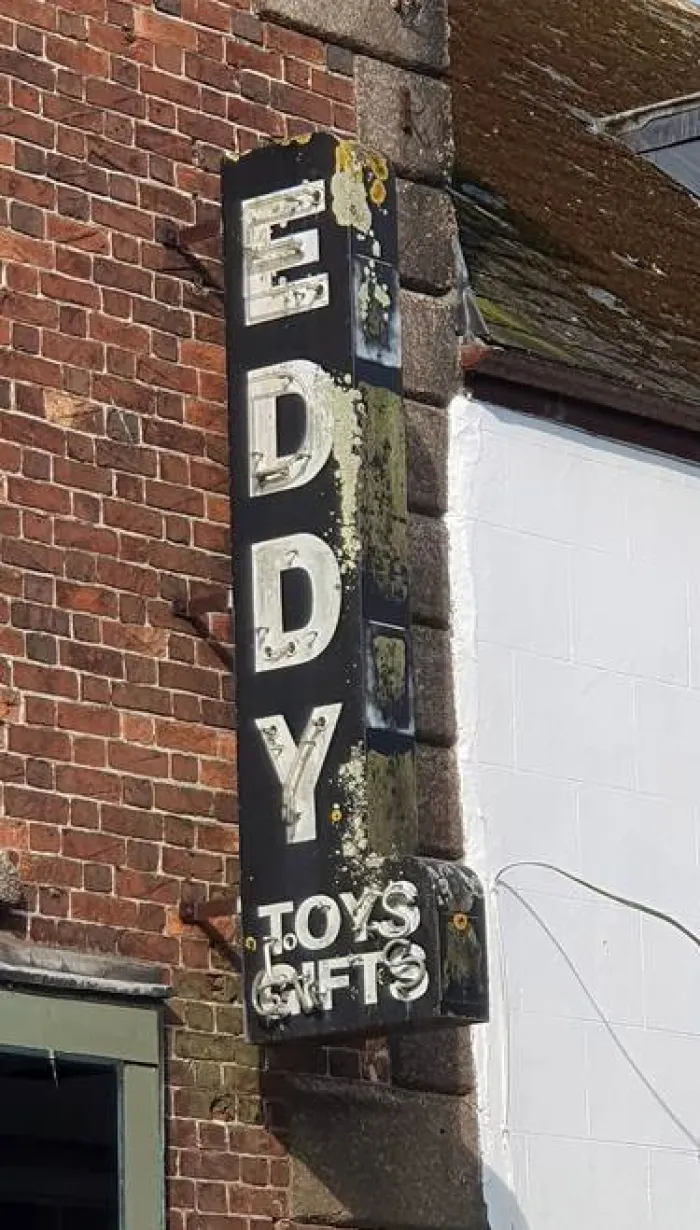
FOUNDER AND EPONYMOUS NAMES
Name the company after a person. It signals that someone stands behind the work, which reads as accountability in trades where trust is the product.
In the wild: Ben & Jerry’s, Ford, Dyson, Disney, Chanel. A single surname on the door has anchored everything from ice cream to jet engines.
| WORKS BECAUSE | WATCH FOR |
|---|---|
| Instant story and warmth, and no competitor can honestly claim your exact name. | The brand and the person become linked, which complicates a future sale and ties your reputation to theirs. |
Best for: founder led brands, professional services, and craft makers where the maker is part of the value.
Borrow meaning from myth, place, or story
METAPHOR AND EVOCATIVE NAMES
Reach for a word that already carries a feeling and point it at your business. You inherit an emotional shortcut without having to build it from scratch.
In the wild: Nike is the Greek goddess of victory. Amazon was chosen to signal sheer scale, after the largest river. Starbucks lifted a first mate from Moby-Dick, and Warby Parker stitched together two characters from Jack Kerouac’s journals.
| WORKS BECAUSE | WATCH FOR |
|---|---|
| A borrowed meaning gives you a ready made story, and an unrelated word makes a strong, defensible mark. | The reference can miss part of your audience, and some words carry baggage in other languages or cultures. |
Best for: lifestyle, apparel, media, and any brand that sells a feeling as much as a function.
Shorten it to initials
ACRONYMS AND INITIALISMS
When the full name is long, foreign, or a founder mouthful, compress it. The letters travel better than the sentence they came from.
In the wild: IKEA stands for Ingvar Kamprad Elmtaryd Agunnaryd, the founder plus the farm and village he grew up in. IBM, BMW, and H&M all took the same shortcut.
| WORKS BECAUSE | WATCH FOR |
|---|---|
| Compact and clean on signage, and it rescues a name that would otherwise be unwieldy. | Bare initials mean nothing on their own and are hard to protect until you have spent years building recognition. |
Best for: long formal names, business to business firms, and companies expanding across languages.
Let an AI generator do the heavy lifting
AI ASSISTED NAMING
Feed a generator your niche, your tone, and a few keywords, and it returns hundreds of candidates before your coffee cools. Used right, it is a brainstorming partner, not a decision maker.
How to run it: Prompt for a specific method above, for example "coined one word names for a coffee brand," rather than "good business names." Narrow prompts produce sharper lists. Then run every survivor through the human tests below.
| WORKS BECAUSE | WATCH FOR |
|---|---|
| It breaks a blank page fast and surfaces blends and coinages you would not reach alone. | Default output leans generic and reuses the same fashionable endings. Nothing it gives you is checked for trademark or a free domain. |
Best for: generating volume early, then handing the shortlist back to a human for taste, legal, and availability.
The seven methods at a glance
| Method | Best for | Trademark | Example | Main risk |
|---|---|---|---|---|
| Descriptive | Local, search driven shops | Weak | Whole Foods Market | Hard to own, easy to copy |
| Coined | Category building startups | Strongest | Kodak | Needs budget to add meaning |
| Blend | Apps and consumer tech | Medium | Verizon | Can date quickly |
| Founder | Trust based services | Medium | Ben & Jerry’s | Ties brand to a person |
| Metaphor | Lifestyle and media | Strong | Nike | Reference can miss people |
| Acronym | Long or B2B names | Weak at first | IKEA | Forgettable without recognition |
| AI assisted | Fast idea volume | Varies | (your shortlist) | Generic and unchecked |
The spectrum of distinctiveness, in plain terms
This is the framework trademark lawyers use to gauge how strong a name is, established in a 1976 case involving Abercrombie & Fitch. The higher your name sits, the more protection it earns, and the easier it is to stop a competitor from copying it. Aim as high as your brand strategy allows.
| Category | What it is | Example | Protection |
|---|---|---|---|
| Generic | The common name for the thing itself | "Software" for software | None, ever |
| Descriptive | States a quality or feature | Cold and Creamy for ice cream | Only after years |
| Suggestive | Hints at a benefit, needs a small leap | Netflix, Tide, Greyhound | Immediate |
| Arbitrary | A real word, unrelated to the product | Apple, Amazon | Strong |
| Fanciful | A word invented only to be a brand | Kodak, Xerox, Google | Strongest |
The availability check that saves a rebrand
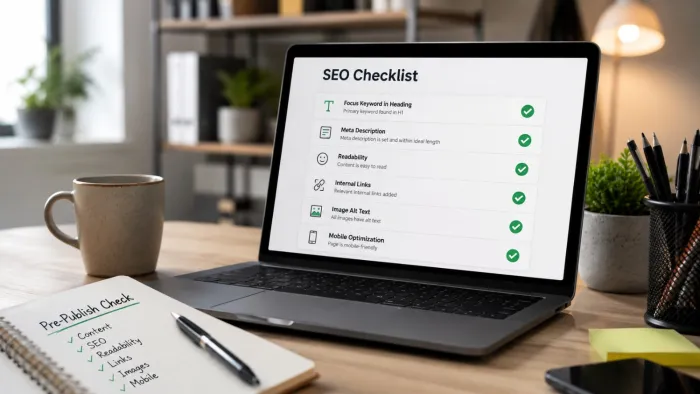
A name you love is worthless if you cannot use it. Run every finalist through this list before you print a single card.
● Trademark search. Check the public trademark database in your country for the same or a confusingly similar name in your category.
● Domain reality. The exact .com is a bonus, not a requirement, but confirm you can secure a clean, spellable web address.
● Handles. Claim the matching usernames on the platforms your customers actually use before someone else does.
● The phone test. Say the name out loud and ask someone to spell it back. If they hesitate, so will your customers.
● The other language check. Search the word in the main languages of your market so it does not mean something unfortunate.
● The room test. Read your top three to a stranger, wait a day, and ask which one they remember.
Six naming mistakes that look fine on day one
Too descriptive to defend If the name only states what you sell, expect a long, uphill fight to protect it. | Impossible to spell A clever misspelling costs you every time a customer types it wrong and lands nowhere. |
Chasing a suffix trend Fashionable endings feel current now and quietly date the brand in a couple of years. | Skipping the legal check Falling for a name before the trademark search is how rebrands and legal letters happen. |
Shadowing a competitor A name that sounds like the market leader gets you mistaken for them, and not in a good way. | Boxing yourself in A hyper specific name blocks the day you add a second product line or a new city. |
The final verdict
What actually worked after the software stopped
I went back to that coffee brand with the seven methods printed next to my keyboard, and the whole exercise changed. Instead of asking the generator for "good names," I asked it for one method at a time, coined words first, then blends, then a couple of borrowed words with warmth. The lists came back sharper because the prompt was sharper. The AI was genuinely useful for the first hour, the way a fast intern is useful: it produced quantity and killed the blank page, and once or twice it handed me a blend I would not have found on my own.
What it could not do was decide. Every name that survived did so because a person read it aloud, checked the trademark database, tried to buy the domain, and asked a friend to repeat it the next morning. The winner was a short coined word, high on the distinctiveness scale, that the client’s mother remembered a week later without being told. That is the real test, and no generator can run it for you. Use the software for volume, use the seven methods for direction, and keep the final call human. The name people remember is almost never the one that arrived fastest.