I didn't want to write another comparison based on feature pages. So for the past three months, I ran my actual workload through both tools: two client blogs, a weekly newsletter, product descriptions for an ecommerce store, and a stack of LinkedIn posts. I paid for ChatGPT Plus out of my own pocket and kept a Jasper Pro seat running the whole time.
Here's what surprised me early on. These two tools stopped competing with each other about two years ago. ChatGPT became a general assistant that happens to write extremely well. Jasper rebuilt itself into a marketing platform with brand controls, agents, and campaign workflows. Asking which one is "better for writing" now depends entirely on what kind of writing pays your bills.
This comparison covers writing quality, brand voice, templates, long-form content, SEO, pricing, and team features, with a clear winner in each round. All pricing and feature details were verified in July 2026 against current plans, not old reviews.
Quick Answer
Pick ChatGPT if You're a solo writer, blogger, student, or freelancer who wants the strongest all-round writing assistant at the lowest price. | Pick Jasper if You run marketing content for a brand or a team, and consistency matters more than flexibility. |
My full scores and reasoning are below.
My Review Scores
I scored each tool out of 5 after daily use. These are my ratings, not aggregated review-site numbers.
| CATEGORY | CHATGPT | JASPER |
|---|---|---|
| Raw writing quality | 4.5 | 4.3 |
| Brand voice control | 3.6 | 4.8 |
| Templates and workflows | 3.8 | 4.7 |
| Long-form content | 4.6 | 4.2 |
| SEO support | 3.9 | 4.4 |
| Ease of use | 4.6 | 4.0 |
| Pricing and value | 4.7 | 3.5 |
| Team features | 4.0 | 4.6 |
| Overall | 4.4 / 5 | 4.3 / 5 |
The overall scores are close on purpose. Both tools are genuinely good. The gap shows up when you match them to a specific type of user, which is what the rest of this article does.
ChatGPT vs Jasper at a Glance
| CHATGPT | JASPER | |
|---|---|---|
| Built for | General writing, research, everyday tasks | Marketing content and brand teams |
| Free plan | Yes (with ads in the US) | No, 7-day trial only |
| Starting paid price | $8/month (Go) or $20/month (Plus) | $69/month, or $59/month billed annually |
| AI models | OpenAI's GPT-5 series | Multiple models (OpenAI, Anthropic, Google) under one roof |
| Standout feature | Deep Research plus Canvas editing | Jasper IQ brand governance and AI agents |
| Template library | None built in (custom GPTs instead) | 100+ marketing Apps |
| Team plan | Business, around $20 to $25 per seat | Custom-priced Business plan |
| Best fit | Individuals and small teams | Marketing departments and agencies |
The Core Difference in One Minute
ChatGPT is a blank page with a brilliant writer behind it. You get one input box, and the quality of what comes out tracks closely with the quality of what you type in. There's no marketing scaffolding, no campaign structure, no brand guardrails unless you build them yourself with custom instructions and Projects.
Jasper flips that. Before you write anything, it wants to know your brand voice, your audience, your style rules, and your company facts. That setup lives in Jasper IQ, and every output gets filtered through it. You trade some flexibility for consistency.
In practice, that meant:
• In ChatGPT, my first draft was faster, but my third client email sounded slightly different from my first.
• In Jasper, setup took me most of an afternoon, but week six outputs sounded identical to week one outputs.
Now the head-to-head rounds.
ROUND 1
Raw Writing Quality
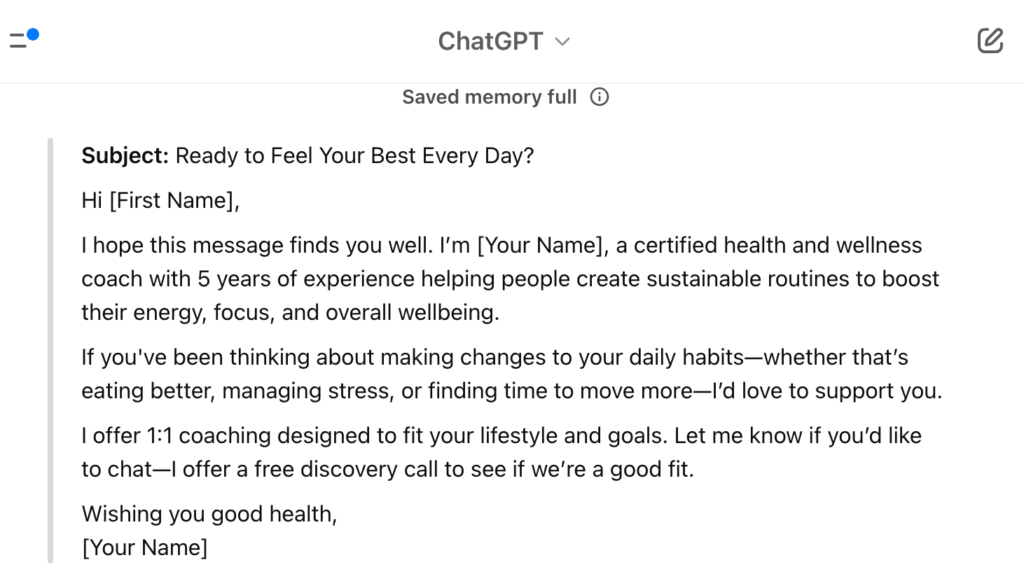
For open-ended writing, ChatGPT won more of my tests than it lost. The current GPT-5 series handles tone shifts well, rewrites without flattening your sentences, and follows odd, specific instructions like "make this sound tired but hopeful" without turning it into a greeting card. Long essays and narrative pieces came out with better rhythm.
Jasper's output is strong but tuned for a narrower lane. Ad copy, email subject lines, and product descriptions came out punchy and usable with fewer edits, largely because Jasper's structured inputs force you to define audience and tone before generating. Outside marketing formats, its answers felt more boxed in. When I asked both to draft a personal essay, Jasper kept steering it toward something that read like a landing page.

Winner: ChatGPT. For range and control. Jasper takes it if all you write is marketing copy.
ROUND 2
Brand Voice and Consistency
This is Jasper's home turf and it shows. Jasper IQ stores your brand voice, style guide, banned phrases, audience personas, and a knowledge base of company facts. Since a January 2026 update, the knowledge base can sync with SharePoint folders, so pricing sheets and positioning docs stay current without re-uploading. Every draft passes through those rules automatically, whether it comes from chat, an App, or an agent.
ChatGPT can approximate this with custom instructions, memory, Projects, and a custom GPT loaded with your style guide. It works, and for one person it's honestly enough. But it's manual, it drifts on long documents, and nothing stops a teammate from generating off-brand copy in a fresh chat.
Winner: Jasper. And it isn't close for teams.
ROUND 3
Templates, Apps, and Workflows
Jasper ships with more than 100 marketing Apps: structured tools for blog outlines, Facebook ads, AIDA frameworks, press releases, product descriptions, and plenty more. Fill in a few fields, get a consistent result. The Pro plan also includes Essential Agents that run multi-step jobs like drafting a blog post or a batch of social captions, and the Business plan adds Advanced Agents, Jasper Grid for bulk generation in a spreadsheet view, and a no-code App Builder.

ChatGPT has no template library. Its answer is custom GPTs, which let you build your own reusable tools, and Projects, which keep files and instructions attached to a workspace. Powerful, but you're the one doing the building. Someone who wants a ready-made "cold email" button on day one won't find it.

Winner: Jasper. If you'd rather build your own tools, ChatGPT's custom GPTs are more flexible, but out of the box there's no contest.
ROUND 4
Long-Form Content
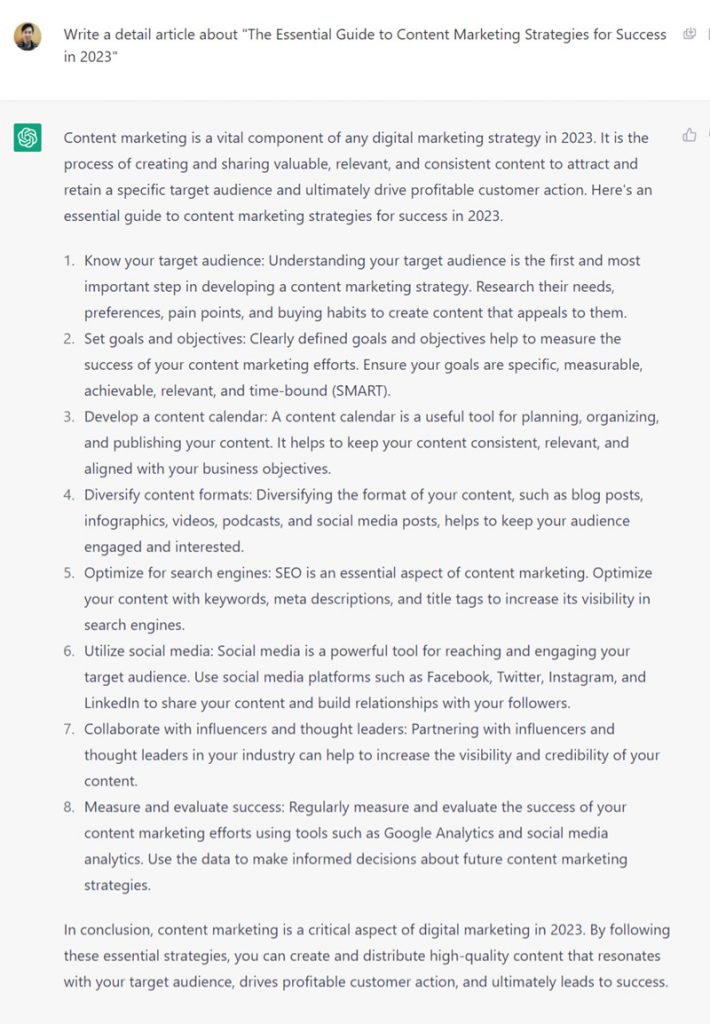
For 2,000-word articles, ChatGPT was the better workhorse in my testing. The workflow lives in one place: Deep Research pulls sources and compiles a briefing (Plus includes 10 runs a month), Canvas gives you a proper editing surface where you can highlight and rewrite sections, and Projects keep the whole series organized. Draft quality held up deep into long pieces without losing the thread.
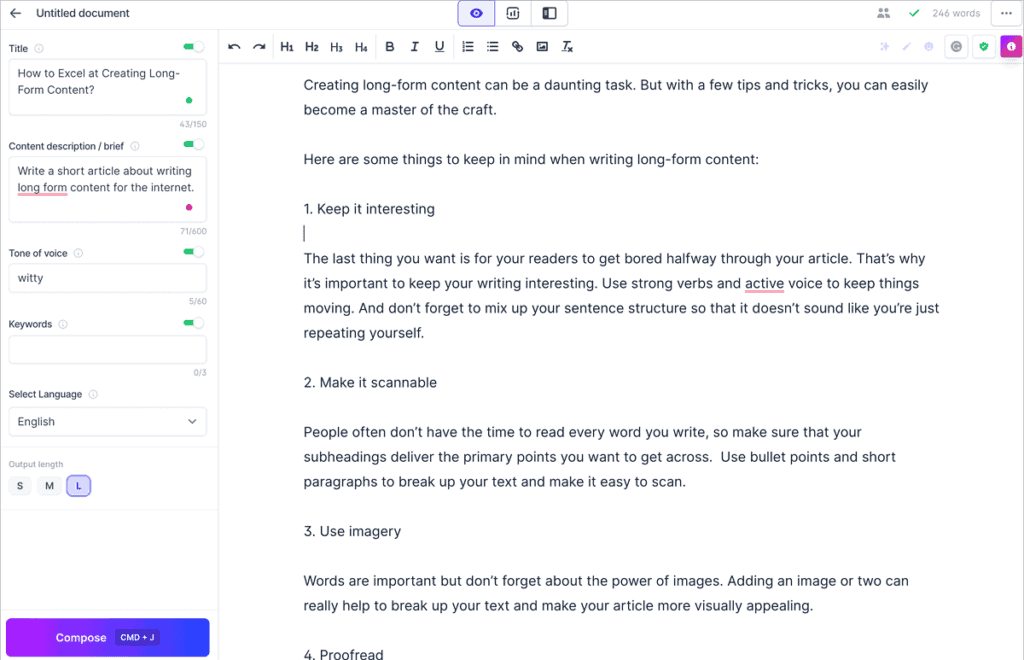
Jasper's Canvas editor is genuinely pleasant, works like a doc with AI built into the margins, and its blog workflows produce clean structured drafts. Where it lags is research depth. Jasper can pull in your own knowledge base beautifully, but for fresh, sourced research on a topic outside your company docs, ChatGPT dug up more and cited it better.
Winner: ChatGPT. Research, drafting, and editing in one place.
ROUND 5
SEO Support
Jasper was built with content marketers in mind, and the SEO tooling reflects that: keyword-focused Apps, meta title and description generators, and a long-standing Surfer integration for on-page scoring while you write. Having the optimization loop inside the editor saved me tab-switching on client posts.
ChatGPT handles SEO tasks well if you drive: keyword clustering, search intent analysis, outlines, schema markup, internal linking suggestions. Deep Research is useful for checking what currently ranks. But there's no built-in content scoring, so you're pasting drafts into third-party tools to grade them.
Winner: Jasper. By a modest margin.
ROUND 6
Ease of Use
ChatGPT is about as close to zero setup as software gets. Open it, type, done. Voice input, file uploads, and image generation all sit in the same box. My only gripe is the model and feature sprawl; new users shouldn't need to think about which mode to pick, and occasionally you do.
Jasper asks more of you upfront. To get the consistency it's famous for, you need to feed it a brand voice, audiences, and knowledge assets first, and the interface has more surface area: Apps, Canvas, agents, IQ settings. None of it is difficult, but I was noticeably slower in week one. The browser extension helps, letting you write with Jasper inside Gmail, Google Docs, and LinkedIn.
Winner: ChatGPT. Open it, type, done.
ROUND 7
Pricing and Value
| PLAN LEVEL | CHATGPT | JASPER |
|---|---|---|
| Free | $0, ad-supported in the US, usage limits | None |
| Trial | Free plan acts as the trial | 7 days |
| Budget | Go, $8/month | Not offered |
| Standard | Plus, $20/month | Pro, $69/month or $59/month billed annually, per seat |
| Power user | Pro, $100 or $200/month tiers | Business, custom pricing |
| Teams | Business, roughly $20 to $25 per seat | Business, quoted by sales |
The math is hard to argue with. ChatGPT Plus costs less than a third of a Jasper Pro seat and covers writing plus research, data analysis, images, and voice. Jasper's price only makes sense when you're paying for the marketing layer: brand governance, agents, Grid, and team controls. For a solo blogger, that layer is mostly dead weight. For a five-person content team shipping campaigns, it can replace a chunk of process and review time, which is where the seat price starts earning itself back.
Also worth knowing: Jasper no longer offers a permanent free plan, and its older $39 Creator tier has quietly disappeared from the main pricing page for new signups.
Winner: ChatGPT. Comfortably, on pure value.
ROUND 8
Team and Collaboration Features
Jasper treats content like a team sport. Shared brand voices, role-based permissions, collaborative Canvas docs, and agents that any teammate can run with the same guardrails. The Business plan layers on SSO, admin controls, API access, and the App Builder so ops teams can standardize workflows. A new writer joining mid-project inherits the brand setup instantly.
ChatGPT's Business plan covers the basics well: shared workspaces, SSO, admin controls, connectors to tools like Slack and Google Drive, and your company data excluded from training by default. What it lacks is content governance. There's nothing enforcing that everyone's output matches the style guide.
Winner: Jasper. For marketing teams. ChatGPT Business is fine for general company use.
Scoreboard
| ROUND | CHATGPT | JASPER |
|---|---|---|
| Raw writing quality | YES | |
| Brand voice and consistency | YES | |
| Templates and workflows | YES | |
| Long-form content | YES | |
| SEO support | YES | |
| Ease of use | YES | |
| Pricing and value | YES | |
| Team features | YES | |
| Final tally | 4 | 4 |
A tie on rounds, which sounds like a cop-out until you notice the pattern: ChatGPT sweeps everything an individual writer cares about, and Jasper sweeps everything a marketing team cares about.
Pros and Cons
ChatGPT: what I liked
• Best writing range of any tool I've used, from ad copy to essays
• Deep Research plus Canvas covers the full article workflow in one app
• Free plan exists, and Plus at $20 undercuts almost everything
• Custom GPTs and Projects let you build your own reusable setups
• Ships useful updates constantly
ChatGPT: what bugged me
• Keeping a brand voice consistent is on you, every session
• Output style can drift between chats without careful instructions
• No ready-made marketing templates or campaign structure
• Defaults to a slightly generic tone when your prompt is lazy
Jasper: what I liked
• Brand voice enforcement that actually holds across weeks of output
• 100+ Apps and agents remove repetitive prompt writing
• Knowledge base keeps product facts accurate in drafts
• Real team controls: permissions, shared assets, admin oversight
• Runs on multiple AI models, so you're not tied to one provider
Jasper: what bugged me
• $69 per seat is a serious ask next to a $20 ChatGPT plan
• No free plan, and 7 days isn't much time to test a brand setup
• Needs real setup time before the consistency payoff arrives
• Feels restrictive for anything outside marketing content
Which One Should You Pick?
Choose ChatGPT if you are
• A freelancer, blogger, or student writing many different formats
• A solo founder who needs research, writing, and analysis in one subscription
• On a budget, or unsure how much you'll use an AI writer
• Someone who enjoys crafting prompts and building custom workflows
Choose Jasper if you are
• A marketing team producing branded content across channels
• An agency juggling multiple client voices and style guides
• A content lead tired of editing everyone's AI drafts back on-brand
• A company that needs permissions, governance, and audit-friendly workflows
Honest third option: several teams I know run both. Writers draft and research in ChatGPT, then final marketing assets go through Jasper for brand enforcement. At $20 plus a Jasper seat, it's not cheap, but the combination covers each tool's blind spot.
Final Verdict: ChatGPT for Most People, Jasper for Marketing Teams
After 90 days, here's where I actually landed. My ChatGPT subscription is staying. It wrote the better long-form drafts, handled research I used to do manually, and cost me $20. For the newsletter and the essay-style client blog, it was clearly the right tool, and by the end I stopped opening anything else for first drafts.
But I'd be lying if I said Jasper didn't earn its keep on one project. The ecommerce client has a fussy, well-documented brand voice, and Jasper was the only tool that reproduced it reliably without me babysitting every prompt. Product descriptions that used to need two editing passes went out after one skim. If my week consisted entirely of that kind of work, or if I managed three writers doing it, I'd pay for Jasper without hesitation and consider it cheap.
So the answer to "which is better for writing" splits cleanly. Better writer, better value, better all-rounder: ChatGPT. Better system for producing on-brand marketing content at scale: Jasper. Match the tool to the job and you'll be happy. Buy Jasper for casual writing, or lean on ChatGPT for team-scale brand work, and you'll feel the mismatch within a month.