This comparison started with a practical question from a content team: could it drop ChatGPT Plus and move to DeepSeek, which costs nothing, without the drafts getting worse? Answering that took a month. Every brief that came in went through both tools with the same prompt and the same files, and the draft that made it into the finished piece was logged each time.
That added up to around forty pieces. Blog posts, two product pages, an onboarding email sequence, a batch of LinkedIn posts, and one 90-page PDF that had to become a white paper summary. DeepSeek was used through the free app, switching between Instant Mode and Expert Mode. ChatGPT was used on the Plus plan with GPT-5.6 Sol, Canvas and Projects. OpenAI announced GPT-6 Astra on 3 September and it had not reached the test account by publication, so everything below reflects what a writer can open and use today.
The short version: the gap in draft quality is much smaller than the gap in price. The real differences are workflow, voice control, and how comfortable a writer is handing each company their files. The long version follows, with tables wherever a table beats a paragraph.
The quick answer
Pick DeepSeek if • A capable drafting tool at zero cost, with no message cap, is the priority • The work leans on outlines, briefs and structured B2B content • Very long source documents are a regular part of the job • Nothing being pasted is confidential | Pick ChatGPT if • Matching a brand voice matters more than the $20 • Editing happens inside the tool rather than by copying drafts out • Style rules and past projects should be remembered between sessions • Images, voice or sourced web research are needed in the same window |
Review scorecard for writers
Scores are out of 10 and weight what a content writer feels every day rather than benchmark results.
| Criterion | DeepSeek (V4, free app) | ChatGPT (Plus, GPT-5.6 Sol) | Edge |
|---|---|---|---|
| First-draft quality | 8.0 | 8.5 | ChatGPT |
| Tone and brand voice control | 6.5 | 8.5 | ChatGPT |
| Editing and rewriting workflow | 6.0 | 9.0 | ChatGPT |
| Outlines, briefs and structure | 9.0 | 8.0 | DeepSeek |
| Long source documents | 9.0 | 8.5 | DeepSeek |
| Research with web search | 7.0 | 8.5 | ChatGPT |
| Remembering preferences | 4.0 | 9.0 | ChatGPT |
| Speed and availability | 7.0 | 8.5 | ChatGPT |
| Price | 10 | 7.0 | DeepSeek |
| Privacy and data handling | 4.0 | 7.0 | ChatGPT |
| Overall for content writers | 7.1 | 8.3 | ChatGPT |
What you are actually using in September 2026
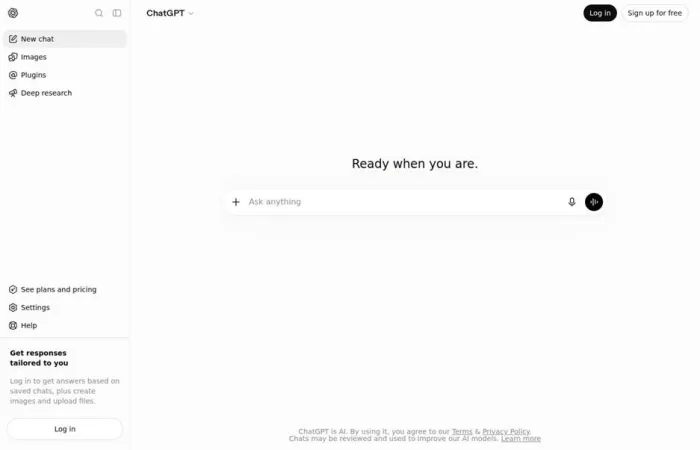
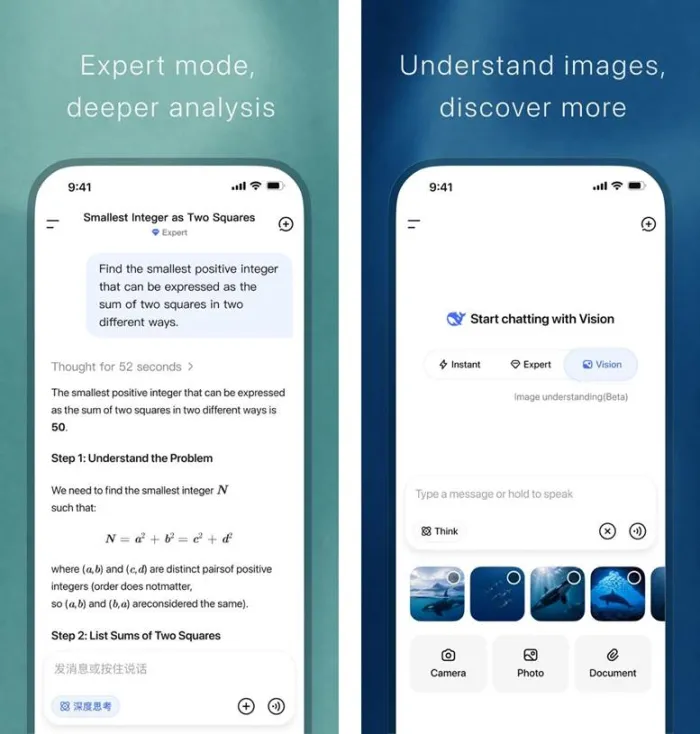
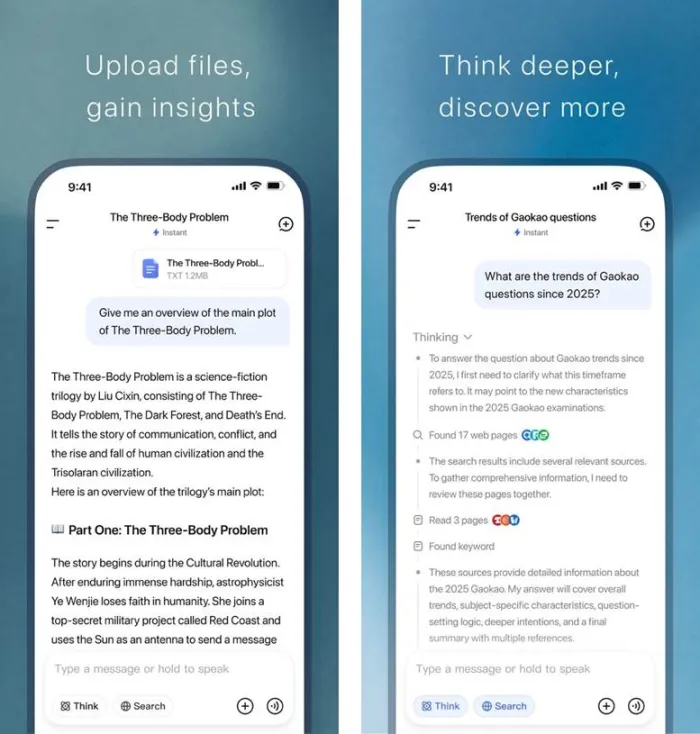
DeepSeek, free app at chat.deepseek.com DeepSeek V4 • Instant Mode runs V4 Flash. Expert Mode runs V4 Pro, the flagship, generally available since 13 August • 1 million token context on both modes, up from 128K last generation • A thinking toggle that shows the model working before it answers • Web search is a manual switch. Uploads cover PDF, DOCX and TXT. Image understanding is in beta through Vision mode • No paid tier, no message cap. Only the developer API costs money • Open weights under an MIT licence | ChatGPT at chatgpt.com, web, desktop and mobile ChatGPT with GPT-5.6 • GPT-5.6 Sol, Terra and Luna landed on 9 July. Sol is the model that matters for writing, and it starts on Plus • Free and Go moved to GPT-5.6 Luna in August with unlimited text chats, but carry ads in the US • GPT-6 Astra, announced 3 September, is rolling out to Plus, Pro, Business and Enterprise. The pricing page already lists it on Plus and Pro • Memory, custom instructions, Projects with their own memory, Canvas for side-by-side editing • Image generation, voice, deep research and wide file upload support |
DeepSeek vs ChatGPT on real writing tasks
Each row is a task that went through both tools more than once. The edge column shows whose output was used most.
| Writing task | DeepSeek | ChatGPT | Edge |
|---|---|---|---|
| Blog post first draft (1,200 words) | Clean structure, flat transitions | Warmer read, better openings, short unless told otherwise | ChatGPT |
| Headlines and hooks | Sensible but samey | Wider range, better rhythm | ChatGPT |
| Rewrite in a client's voice | Follows rules, loses the voice after a few turns | Holds the voice across a session, especially in a Project | ChatGPT |
| Content brief and outline | Excellent hierarchy and section weighting, thinking mode explains its choices | Good, but more generic H2 patterns | DeepSeek |
| Summary of a 90-page PDF | Whole file in one go, accurate recall | Also handled it, slightly more polished | Close |
| Technical or B2B explainer | Precise, well ordered, likes a bullet list | Readable, sometimes softens detail | DeepSeek |
| Editing an existing draft | Returns a rewritten block to paste back | Canvas changes only the sentence highlighted | ChatGPT |
| Email sequence (5 emails) | Solid, a little formal, weak subject lines | Better subject lines, more natural cadence | ChatGPT |
| Draft with current sources | Search works once switched on, fewer sources | Search plus deep research, sources inline | ChatGPT |
| Story-led copy | Competent but stiff | Natural pacing and dialogue | ChatGPT |
Where DeepSeek pulled ahead
The first thing that stands out with DeepSeek is that it thinks in structure. Ask for a brief and it returns sections weighted by importance, reader questions placed where a reader would ask them, and a thinking trace showing why it ordered things that way. For the outline stage it became the tool opened first. That matches what Tom's Guide found when it ran nine prompts through ChatGPT-5 and DeepSeek and handed DeepSeek the overall win for methodical, step-by-step answers.
The second is the context window. Both V4 modes take a million tokens, and the 90-page PDF went in without chunking. Asked for figures from around page 60, it found them. ChatGPT managed the same file, but DeepSeek did it for free and never raised an upload limit.
The third is that the free tier is not a demo. There is no paid plan to upsell into, no message cap surfaced during the month, and Expert Mode gives access to the flagship model. TechRadar's July review summed it up as powerful AI at rock-bottom prices, with caveats, and that is about right.
One warning: Expert Mode queues at busy times. DeepSeek said so when it introduced the mode, and the wait appeared two or three times a week during testing. Instant Mode never queued.
Where ChatGPT pulled ahead
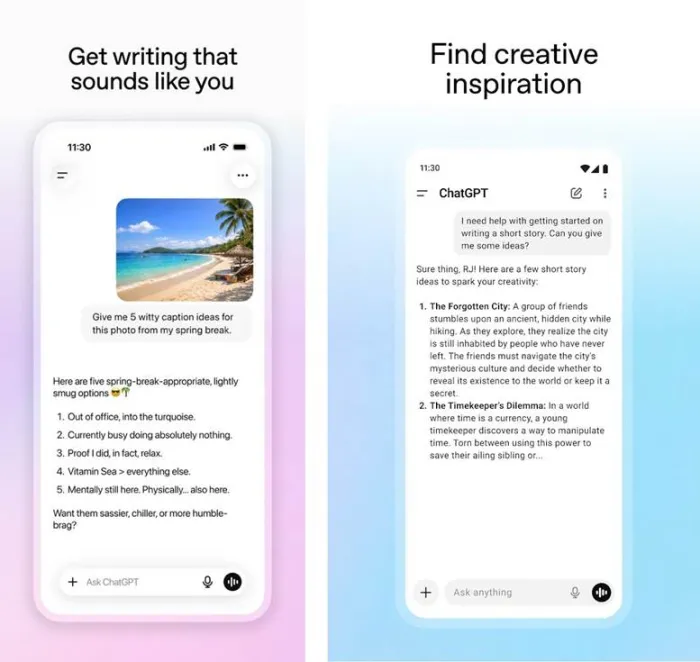
Voice. That is the whole argument for most writers. With a client's style guide and three sample posts loaded into a Project, ChatGPT held that voice for the full session and picked it up again the next day. DeepSeek followed the same rules for two or three exchanges and then drifted back to its default register, which is tidy, slightly formal and a bit flat. It also starts every chat from zero. No memory, no custom instructions, nothing carries over, so the same setup paragraph gets pasted every morning.
Editing. Canvas changes how ChatGPT gets used more than any model upgrade has. Highlight one sentence, say what is wrong, and only that sentence changes. DeepSeek returns the whole rewritten block, which then has to be checked against the draft by eye. Fine for 300 words. Tedious for 2,000 with one weak section.
Range. Asked for five headline options, ChatGPT returned five that were different from each other. DeepSeek returned five variations on one idea. The same pattern showed up in intros, subject lines and closers, where a lot of a copywriter's time goes. Tom's Guide saw it too in an April test, calling DeepSeek's answers heavier and less approachable even where they were more thorough.
One caution: since OpenAI moved to shorter default answers in May, ChatGPT drafts come back trimmed unless the prompt specifies a word count. Put the target length in every prompt and the problem goes away.
Features that matter for writers
| Feature | DeepSeek (free app) | ChatGPT (Plus) |
|---|---|---|
| Flagship model on the plan | V4 Pro via Expert Mode | GPT-5.6 Sol, GPT-6 Astra rolling out |
| Memory across chats | No | Yes, with a memory summary that can be edited or switched off |
| Custom instructions and style rules | No, pasted each time | Yes, global and per Project |
| Side-by-side editing | No | Canvas |
| Web search | Manual toggle | Search plus deep research reports |
| File upload | PDF, DOCX, TXT | PDF, DOCX, XLSX, CSV, images, audio and more |
| Image generation | No (image understanding in beta) | Yes |
| Voice | No | Yes |
Pricing for individuals and small content teams
| Plan | Monthly price | What a writer gets |
|---|---|---|
| DeepSeek chat app | Free | V4 Flash and V4 Pro, 1M context, search, file upload, no cap |
| DeepSeek API, V4 Flash | $0.22 in / $0.66 out per 1M tokens off-peak | Doubles at weekday peak hours |
| DeepSeek API, V4 Pro | $0.66 in / $1.98 out per 1M tokens off-peak | Only relevant when building a custom tool |
| ChatGPT Free | $0 | GPT-5.6 Luna, unlimited text chats, ads in the US, limited tools |
| ChatGPT Go | $8 | Luna with roomier limits, still ad-supported |
| ChatGPT Plus | $20 | GPT-5.6 Sol, GPT-6 Astra, Canvas, Projects, images, deep research, Custom GPTs |
| ChatGPT Pro | $100 or $200 | Same models plus Sol Pro and far higher usage limits |
| ChatGPT Business | $25 per seat ($20 annual) | Team workspace, no training on your data by default |
DeepSeek API rates reflect the 16 August 2026 repricing. ChatGPT prices from chatgpt.com/pricing, early September 2026.
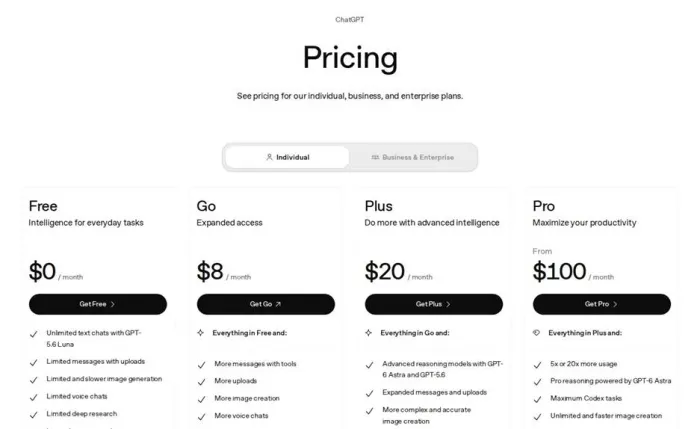
For a solo writer the real comparison is free versus $20. For a team of five it is free versus roughly $100 to $125 a month, which is where the question gets serious.
Privacy: the part that decides it for client work
DeepSeek stores user data on servers in mainland China, and several governments have banned the app from official devices for that reason. For anyone writing for clients, that is not theoretical: unpublished product details, pricing, customer interviews and strategy decks are exactly what writers paste into a chat window. During the test, anything under NDA stopped going into DeepSeek within the first week.
ChatGPT is not spotless either. On Free, Go, Plus and Pro, conversations can be used to improve OpenAI's models unless the setting is switched off in data controls. Business and Enterprise do not train on workspace data by default, which is why agencies end up on the team plan rather than a pile of Plus accounts.
There is also the content filter. DeepSeek goes vague on politically sensitive topics, particularly Chinese domestic affairs. For most marketing copy it never comes up. For anyone writing about geopolitics or policy, it will.
What people are saying
TechRadar DeepSeek AI review, July 2026 The reviewer found the V4 models impressive and said the free app holds its own against paid rivals, but flagged Chinese data storage, security issues, censorship on sensitive topics and the missing memory and personalisation features. On DeepSeek | Tom's Guide ChatGPT-5 vs DeepSeek, nine prompts, August 2025 DeepSeek took the overall win for methodical, step-by-step answers. The writer also noted it does not match ChatGPT's flair for tone, which is the trade-off every content writer will feel. On both |
Zapier DeepSeek vs ChatGPT, February 2026 Zapier's take is that DeepSeek's chat app feels like a showcase for the models rather than a finished product, while ChatGPT arrives packed with extras: image understanding, voice, custom instructions, memory, Canvas and integrations. On both | Axios DeepSeek pricing report, August 2026 Axios reported that V4 Flash performs close to Anthropic's Claude Opus 4.8 on complex coding tests while charging pennies, and read the release as more evidence that frontier capability is becoming a commodity. On DeepSeek |
Tom's Guide Claude vs DeepSeek, seven tests, April 2026 Across everyday prompts, the reviewer praised DeepSeek for depth but found its answers heavier and less approachable than the competition, most noticeably on advice and creative writing tasks. On DeepSeek | CNBC GPT-6 Astra rollout, September 2026 CNBC reported that Astra will reach Plus, Pro, Business and Enterprise users as well as the API, and quoted Sam Altman calling it a “new capability level”. For writers on Plus, the upgrade costs nothing extra. On ChatGPT |
Pros and cons at a glance
DeepSeek
What works • Free, with the flagship model included and no message cap • 1M token context handles whole reports and books • Best outlines and briefs of the two, with visible reasoning • Open weights for teams that want to self-host | What does not • No memory or custom instructions, so every chat starts cold • Flat default tone and occasional odd phrasing • Expert Mode queues at busy times • Data stored in China, unsuitable for confidential client work • No image generation, voice or side-by-side editor |
ChatGPT
What works • Best voice matching and widest stylistic range • Canvas makes line-level editing painless • Memory, custom instructions and Projects carry the setup forward • Search and deep research with sources inline, plus images and voice | What does not • The model worth having costs $20 a month • Free and Go tiers carry ads in the US • Default answers run short unless a length is stated • Consumer plans train on chats unless the user opts out • Plus usage caps can bite on heavy days |
A workflow that uses both
By week three the test stopped being a contest. This is the sequence that now handles most long-form pieces.
1. Brief and outline in DeepSeek Expert Mode. Upload the source material, ask for a brief with reader questions mapped to sections, and read the thinking trace to check the logic.
2. Draft in a ChatGPT Project. Paste the outline into a Project that already holds the client's voice rules and sample posts, and state the word count.
3. Check facts with both search tools. ChatGPT shows sources inline; DeepSeek's search is a useful second opinion on anything that looks too neat.
4. Edit in Canvas, then by hand. Fix weak sentences in place, then do a final human pass for rhythm, because neither tool is fully there yet.
Final verdict
Here is what the content team was told. Keep ChatGPT, but on the Business plan rather than five separate Plus subscriptions, because the data terms are better and the price per seat is close to the same. Install DeepSeek anyway, because the briefing and outlining stage got faster the moment it moved there, and it costs nothing.
For anyone who writes for a living, the $20 for ChatGPT Plus is the easiest money spent this year. Canvas alone saves more time than any prompt trick, the voice matching means fewer rewrites, and GPT-6 Astra is landing on the same plan. A month of side-by-side work leaves ChatGPT as the better writing partner, not because its drafts are dramatically better, but because everything around the drafts is.
For students, hobby bloggers, or writers working mostly on explainers, DeepSeek is remarkable for free and there is no reason to talk anyone out of it. Keep confidential material out of it, expect to paste style rules every morning, and plan to warm up its prose by hand.
Both windows are still open on the test machine. That is probably the truest verdict there is.