If you stepped away from AI writing tools for even a couple of months this year, the landscape you come back to looks dramatically different. Google raised its Workspace prices by up to 22% to bake Gemini in permanently. OpenAI retired GPT-4o entirely. Anthropic launched a model that nearly matches its most expensive tier at a fraction of the cost. And several standalone writing tools you may have been paying for have either pivoted, merged, or shut down.
This is not a "best tools" list. This is a news briefing. These are the developments that directly affect what you are paying for, what you have access to, and whether the tool you chose six months ago is still the right one.
The Headlines: 5 Launches That Reshaped the Market
The first half of 2026 brought a concentrated burst of major releases. Each one shifted the competitive balance in a meaningful way. Here are the five developments that mattered most, in chronological order.
APRIL 23, 2026
OpenAI Releases GPT-5.5 With 1M Token Context Window
GPT-5.5 launched as a new top-tier model with 82.7% on Terminal-Bench 2.0 for agentic tasks and a 1 million token context window, designed for coding, research, data analysis, and document creation. With the release, OpenAI retired GPT-4o, GPT-4.5, o1, o3, and o4-mini from the consumer ChatGPT model picker.
MAY 5, 2026
GPT-5.5 Instant Becomes ChatGPT's Default With Personalization
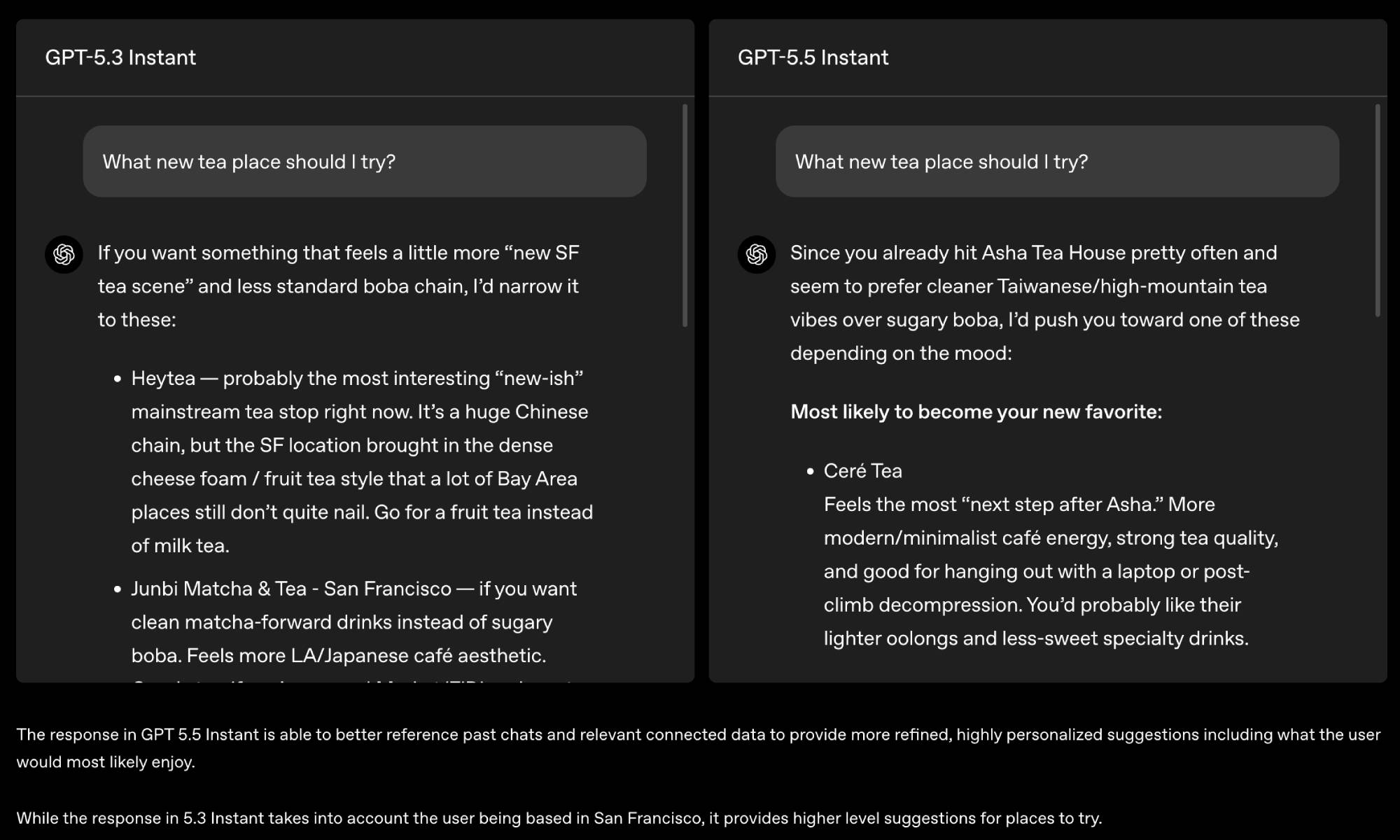
OpenAI updated ChatGPT's default model to be smarter and more accurate, with enhanced personalization drawing from past chats, files, and connected Gmail. It initially rolled out to Plus and Pro users, with Free and Go tier access following on June 9.
JUNE 24, 2026
ChatGPT Removes Canvas, Replaces It With Inline Writing Blocks

Canvas was removed from the main models and replaced by inline writing blocks and code blocks. This was a significant workflow change for writers who relied on the side-by-side editing interface. The update also made GPT-5.5 Instant try to identify the user's underlying goal, not just the literal question.
JUNE 30, 2026
Anthropic Launches Claude Sonnet 5 With Near-Opus Performance

Claude Sonnet 5 promises performance close to Opus 4.8 but at much lower costs. It became the default model for Free and Pro plans immediately. Introductory pricing is $2/$10 per million input/output tokens through August 31, 2026, rising to $3/$15 after. Context window: 1 million tokens. Maximum output: 128K tokens.
JULY 9, 2026
OpenAI Unveils GPT-5.6 Family: Sol, Terra, and Luna

OpenAI unveiled its newest family of models in three variants: Sol (its workhorse), Terra (intermediate), and Luna (budget-friendly). Sol sets a new standard for intelligence and efficiency across coding, knowledge work, cybersecurity, and science. It also arrived alongside ChatGPT Work, an agent designed to carry out entire tasks autonomously.
The Workspace Integration War
While standalone AI writing tools grabbed headlines, the bigger structural shift in 2026 has been AI writing capabilities getting absorbed directly into the productivity suites where most people already work. This trend is reshaping which tools you actually need to pay for separately.
| Platform | What Changed | Writing Impact | Status |
| Google Workspace | Introduced "Workspace Intelligence," shifting from generative to agentic AI across Gmail, Docs, Sheets | Style Matching mimics your voice from Drive and Gmail history | Live |
| Google Pricing | Integrated Gemini into enterprise tiers, raising costs by up to 22% | AI writing is no longer an add-on; it is built into the base cost | Q2 2026 |
| Gemini Plus | Launched at $4.99/month, undercutting ChatGPT Go, includes 2TB storage | Cheapest major AI writing entry point available | Live |
| Microsoft Copilot | Embedded deeper into Word, Outlook, Teams, and Excel | AI writing for Microsoft 365 users with no separate subscription | Rolling out |
| Notion AI | AI agents now work on docs and databases ($19.50/user/month) | Only workspace where AI agents operate on your documents | Live |
The Tools That Disappeared or Pivoted
Not every AI writing tool survived the first half of 2026. The combination of ChatGPT and Claude covering general writing at $20/month, and Gemini entering at under $5/month, created brutal competitive pressure on standalone tools without a clear specialization.
| Tool | What Happened | Status |
| Copy.ai | Pivoted to GTM automation at $1,000+/month. No longer a writing tool for individuals. | Pivoted |
| Peppertype | Merged into Pepper Content and broke lifetime licenses. | Merged |
| Jasper | Revenue dropped from $120M (2023) to ~$55M (2024). Narrowing to enterprise brand voice. | Narrowing |
| ChatGPT Canvas | Replaced by inline writing blocks and code blocks in chat. | Retired |
| GPT-4o / o1 / o3 | Retired from consumer ChatGPT model picker. | Retired |
| Thin AI wrappers | Many shut down as ChatGPT absorbed their core features. | Shut down |
Grammarly's 2026 Overhaul
While generative tools grabbed the spotlight, Grammarly completed its most significant transformation in years. The 2026 overhaul cements its shift from a passive proofreader to an active writing partner. If you dismissed it as "just a grammar checker," it is worth a second look.
| Smart Drafts | Tone Rewriter | 16 New Languages | 40M+ Daily Users |
| Turns a short idea into a full draft in seconds, combining AI speed with grammar, tone, and clarity checks. | Flips your message from diplomatic to enthusiastic without losing meaning across all supported platforms. | Expanded multilingual support covers 16 new languages, making it relevant for global teams. | Over 40 million daily users on the browser extension. Lag issues from 2024-2025 largely eliminated. |
The Market by the Numbers
Behind all these product launches, the scale of AI writing tool adoption has hit levels that would have seemed unrealistic two years ago. These are the verified figures that define the market as of mid-2026.
900M ChatGPT weekly active users (March 2026), up from 400M in February 2025
90% of content marketers now use AI writing tools in their daily workflows
$2.74B AI content creation market size in 2026, growing at a 23.4% CAGR
75% of global knowledge workers now use AI tools regularly
The productivity data backs it up: MIT studies show AI tools have increased writing speed by 40%. Workers save an average of 5.4% of weekly work hours, roughly 2.2 hours per week, according to the Federal Reserve Bank of St. Louis, OpenAI, and Anthropic.
The New Pricing Landscape
One of the most user-relevant stories of 2026 is how dramatically the pricing equation has shifted. A consumer AI price war broke out when Google launched Gemini Plus at $4.99/month. Here is where pricing stands right now.
| Tool | Price/mo | What Changed in 2026 |
| Gemini Plus | $4.99 | New tier. Cheapest major AI writing entry point, includes 2TB storage |
| ChatGPT Plus | $20 | Now runs GPT-5.6 Sol/Terra/Luna. Canvas retired for inline blocks |
| Claude Pro | $20 | Default upgraded to Sonnet 5 (near-Opus quality). 1M token context |
| Grammarly Premium | $12 | Smart Drafts and Tone Rewriter added. Now generates, not just edits |
| Jasper Creator | $39 | Dropped from $49. Narrowing to enterprise brand voice |
| Writesonic | $20+ | SEO integration remains its differentiator |
| Sudowrite | $22 | Only serious tool for novel-length fiction continuity |
| Notion AI | $10 add-on | AI agents now work on your documents directly |
Best Stack for Your Budget (Post-2026 Price Changes)
| Zero Budget | Solo Writer | Google-Native | Marketing Team |
| ChatGPT Free + Grammarly Free | Claude Pro + Grammarly Premium | Gemini Plus + Grammarly Free | Jasper + Grammarly Business |
| $0/mo | $32/mo | ~$5/mo | ~$54/seat |
| GPT-5.6 on the free tier plus basic grammar. Covers more than you'd expect. | Sonnet 5's natural prose plus Grammarly's polish. Best quality per dollar. | AI writing built into Docs, Gmail, Drive. Cheapest capable entry point. | Only if you need brand voice enforcement. Otherwise $20 tools suffice. |
The Numbers Nobody Wants to Talk About
Amid all the launches, 2026 has surfaced data that complicates the productivity narrative. Keep these figures in mind before assuming AI writing tools are a guaranteed win.
| 74% | 44% | 89-95% | 68% |
| of new web pages contain AI-generated content. Search engines are penalizing low-value output. | of users regularly fix AI mistakes. Hallucinated facts and confident filler remain persistent. | of firms see no measurable ROI. A landmark NBER study of 6,000 executives. | of educators use detection tools. Unedited AI submissions face growing scrutiny. |
The real story behind the numbers
Daily AI users save the most: 33.5% of daily users save 4+ hours weekly, compared to just 11.5% of those who use AI once a week. Casual access does not drive meaningful gains. The productivity payoff comes from consistent daily use combined with thorough editing, not from occasional prompting.
What to Watch Next
Based on the trajectory of announcements and competitive dynamics right now, here is what will most likely affect your AI writing workflow in the months ahead.
| Agentic Writing | Price War | Consolidation |
| Both OpenAI (ChatGPT Work) and Anthropic (Sonnet 5) are pushing toward AI that executes entire workflows: research, draft, format, publish. | Google's Gemini Plus at $4.99 put direct pressure on the $20/month tier. Expect cheaper entry points or more value soon. | Standalone tools that survive will be those with features general-purpose assistants cannot replicate: brand voice, SEO, fiction continuity. |
Here Is What This All Means for You
The news cycle in AI writing tools has been relentless in 2026, and it can feel like you need to chase every update. You do not. The core shift is simple: general-purpose assistants (ChatGPT, Claude, Gemini) are getting better and cheaper, while the workspace tools you already pay for are absorbing AI writing features at no extra per-tool cost.
If you are paying for a standalone AI writing tool, ask one question: does it do something my $20/month ChatGPT or Claude subscription genuinely cannot? If the answer is brand voice training, SEO scoring, or novel-length fiction memory, keep it. If the answer is "it writes blog posts," you are probably overpaying.
The best writers using AI in 2026 are not the ones with the most subscriptions. They are the ones who picked one tool, use it every day, and never skip the edit. The floor of quality is higher, the price of entry is lower, and the excuses for not trying are running out.