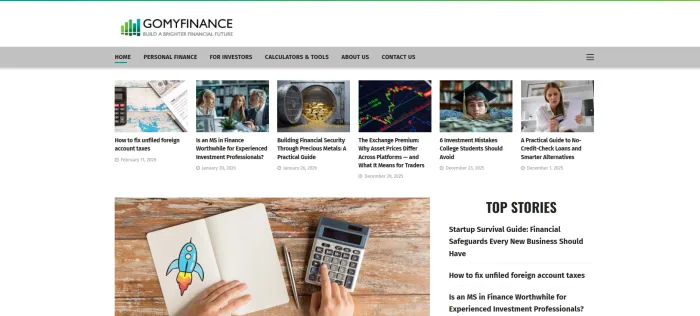
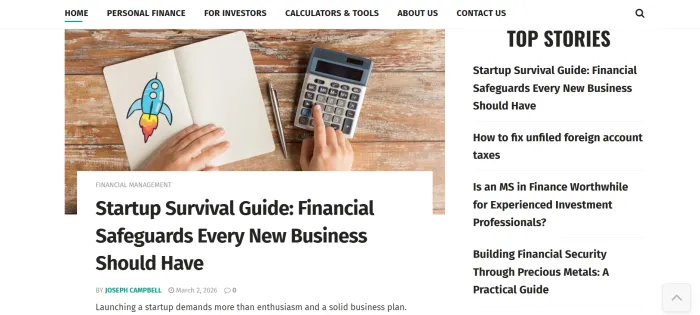
GoMyFinance.com is a personal finance content site that publishes guides on budgeting, saving, credit, debt, and investing. It launched in 2024 and presents itself as an educational resource rather than a regulated financial service. The question most readers actually have is simple: can the information be trusted, and how should it be used.
This review answers that directly. The short version is that the site works as a starting point for learning vocabulary and concepts, not as a sole source for money decisions. The sections below break down what it covers, the trust signals it shows, and a practical way to read it.
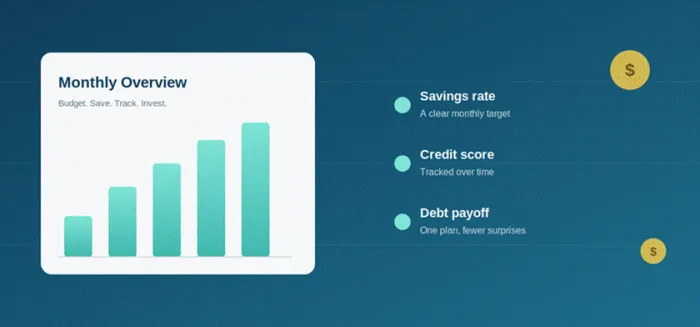
Figure 1. The core topics GoMyFinance.com organizes its content around.
Quick Snapshot
| Attribute | Detail |
| Site type | Personal finance education and articles |
| Founded | 2024, per the site's About page |
| Main categories | Personal Finance, Business Finance, Investments, Calculators and Tools |
| Stated purpose | Educational only, not financial, investment, legal, or tax advice |
| Regulatory status | Not a registered advisor or broker-dealer; not affiliated with the SEC or FINRA |
| Author shown | Posts credited to a single named author across the site |
What the Site Actually Covers
The content maps cleanly to four buckets. Personal finance handles everyday money topics. Business finance leans toward management and starting a company. Investments spans stocks, real estate, and crypto. The calculators and tools section points to utilities for running numbers. The table below sets out the categories and the kind of reader each one fits.
| Category | Typical topics | Best for |
| Personal Finance | Banking, credit and debt, budgeting, saving | Beginners building basics |
| Business Finance | Financial management, starting a business | New founders and side hustlers |
| Investments | Stocks, real estate, crypto, dividends, futures | Curious first-time investors |
| Calculators and Tools | Financial calculators and utility guides | Readers running quick numbers |
Trust Signals: Where It Holds Up and Where It Slips
Trust is the real test for any finance site, because weak information here costs readers money. GoMyFinance.com gets some things right. It carries a visible disclaimer, lists contact and about pages, and states plainly that it is not a registered advisor. Third-party reviewers note these as genuine positives, since the site is not trying to hide who runs it or what it is.
The weaker areas are common to small content sites. Articles often read as polished introductions without visible sourcing, named expert review, or citations a reader can follow. Independent assessments suggest treating such pieces as intro guides rather than authority. The table below scores the main signals.
| Trust signal | Present? | Note |
| Clear disclaimer | Yes | States educational use only, no advice given |
| Contact and About pages | Yes | Site is not anonymous |
| Named author | Yes | One byline across most posts |
| Visible sources and citations | Limited | Many posts lack linked references |
| Disclosed editorial review | Unclear | No expert review process is shown |
| Author credentials | Limited | Background and qualifications are thin |
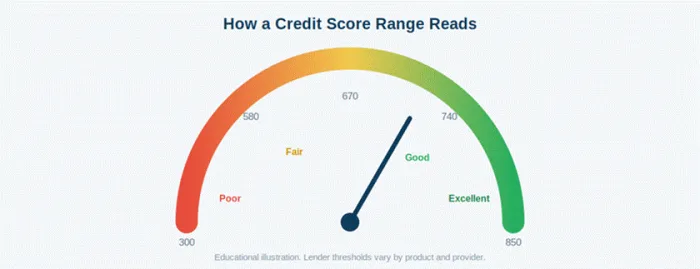
Figure 2. The kind of beginner concept the site explains well, shown as a reference range.
How to Use It Without Getting Burned
A content site at this stage is most useful as a first read, not a final word. The following habits keep it helpful while protecting against thin or dated information.
•Use it to learn terms and frameworks, then verify specifics against a primary source such as a regulator, bank, or licensed advisor.
•Treat any article without visible sources as an introduction, and confirm numbers, rates, and rules before acting on them.
•Cross-check time-sensitive topics like tax rules, loan terms, and interest rates, since general guides can fall out of date quickly.
The Verdict
GoMyFinance.com is a legitimate, openly run educational site that does a fair job introducing personal finance ideas to beginners. It is transparent about being content rather than advice, which is the right posture. What holds it back is depth: limited sourcing, thin author credentials, and no visible editorial review keep it in the introductory tier rather than the authority tier.
Used as a learning starting point and paired with primary sources for anything that touches real money, it earns its place. Used as a sole source for decisions, it asks for more trust than its current signals support.
| Good fit if | Look elsewhere if |
| Learning finance basics and vocabulary | Making a specific investment or tax decision |
| Wanting plain-language explainers | Needing cited, expert-reviewed data |
| Comparing general approaches before research | Relying on a single source for accuracy |