
If search engines cannot find a page, nothing else about it matters. A sitemap is the file that hands a search crawler a tidy list of your URLs instead of making it guess. The Sitemap Generator by SpellMistake, free at spellmistake.info, builds that file for you: paste a URL, let it crawl, download a clean XML file, submit it. No plugin, no login, no code. This piece covers what it actually does, who it suits, how it stacks up, and a few rough edges on the site worth knowing before you rely on it.
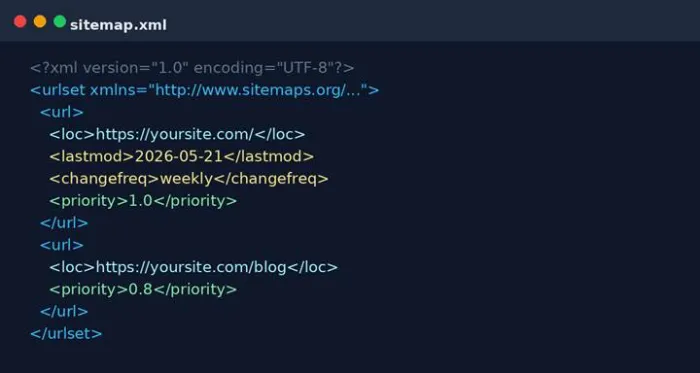
A generated XML sitemap lists each URL with its last-modified date, change frequency, and priority.
What the Tool Actually Does
The generator crawls a site the way a search bot would, following internal links, collecting accessible URLs, and writing them into a standards-compliant XML file. The output follows the sitemap protocol that Google and Bing accept, so it submits cleanly without formatting fixes. It is browser-based, which means it works the same whether your site runs on WordPress, Shopify, Wix, or hand-coded HTML.
Its scope is deliberately narrow. It discovers URLs and exports a file. It does not validate broken links, resolve canonical conflicts, or manage image and video sitemaps. That focus is the point: for a small or mid-sized site, you get a usable file in minutes rather than configuring a full SEO suite.
The Tool at a Glance
| Attribute | Detail |
|---|---|
| Cost | Free, no usage limits stated |
| Access | Browser-based at spellmistake.info, nothing to install |
| Account | No registration or sign-in required |
| Output | Standard XML, ready for Search Console and Bing |
| Best fit | Blogs and sites under a few thousand URLs |
| Not built for | Image or video sitemaps, deep crawl control, link audits |
Why a Sitemap Is Worth the Two Minutes
Search engines find most content by following links. That works on small, tightly linked sites and breaks down on new domains, deep navigation, or orphan pages with nothing pointing to them. A sitemap closes that gap by handing the crawler the list directly.
The effect is measurable. In a Google study of crawl behaviour across more than five billion URLs seen by both methods, 78 percent were discovered through sitemaps first, against 22 percent found by ordinary crawling. For a new site with few backlinks, that head start is the difference between same-week indexing and a wait of weeks.
What the Data Says About Sitemaps
| Finding | Figure | Source |
|---|---|---|
| URLs seen by sitemaps before ordinary crawling | 78% | Google research study |
| URLs found by crawling first | 22% | Google research study |
| Sites publishing XML sitemaps (2008 baseline) | ~35 million | Google research study |
| Where sitemaps help most | New, large, or thinly linked sites | Google Search Central |
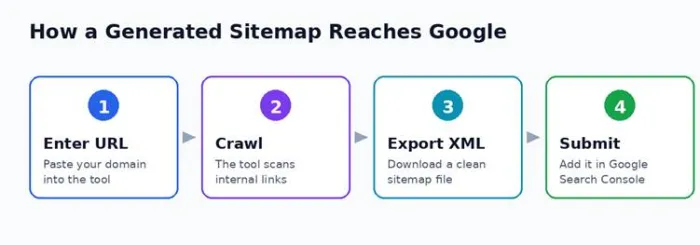
The full path: enter a URL, let it crawl, export the XML, then submit it in Search Console.
Using It in Four Steps
The workflow is short and the same for every site:
1.Open the Sitemap Generator at spellmistake.info.
2.Paste your full site URL into the input field.
3.Generate, then download the XML file once the crawl finishes.
4.Submit the file in Google Search Console and Bing Webmaster Tools.
Who It Fits, and Who Should Look Elsewhere
The tool earns its place by removing friction. If you have content but no easy way to make it discoverable, it bridges that gap fast. Where it falls short is equally clear, and worth weighing before you commit.
| Good fit | Better served by a heavier tool |
|---|---|
| Bloggers wanting posts indexed quickly | Sites needing image or video sitemaps |
| Small business and service sites | Enterprise crawls beyond a few thousand URLs |
| Developers spinning up client sitemaps | Teams needing broken-link or canonical audits |
| Anyone avoiding plugins or logins | Workflows needing crawl filtering and scheduling |
A Few Habits That Help
•Keep the lastmod dates accurate; crawlers lean on them to spot fresh content.
•Re-generate and resubmit after major content changes rather than relying on a stale file.
•Pair the sitemap with solid internal linking; the file aids discovery but does not replace structure.
A Candid Note on the Site Itself
The tool is useful, but the site hosting it is rougher than the product deserves. Two things stand out from a hands-on look.
First, freshness and pace. The blog reads as lightly maintained, with the most recent posts clustered in late April and no steady cadence after that. For a site whose whole pitch is SEO, a thin and slow-moving publishing record undercuts the message.
Second, and more practical, the navigation is misleading. The header lists Home, Services, About, Reviews, Why Us, and Contact, but most of these are anchor links that jump to sections on a single page rather than real pages. Trying to reach a proper Contact or About page leads nowhere useful, which matters because those are exactly the pages a cautious user checks before trusting a free tool with their domain. The pages either fail to load as standalone destinations or simply do not exist as separate pages.
The overall feel is generic and a little sluggish: a templated layout, repetitive copy across tool pages, and slow, heavy hero images. None of this breaks the sitemap generator, but it does make the platform feel less trustworthy than the tool's actual output. If you are evaluating it, judge the generated XML on its own merits and treat the surrounding site with mild caution.
Site Observations at a Glance
| Area | What stands out | Effect on the user |
|---|---|---|
| Content freshness | Latest posts cluster in late April, no steady cadence | Site feels lightly maintained |
| Navigation | About and Contact are anchor jumps, not real pages | Hard to verify who is behind the tool |
| Page loading | Standalone Contact and About do not resolve cleanly | Dead ends erode trust |
| Look and speed | Templated layout, repetitive copy, heavy images | Generic and slightly laggy feel |
The Verdict
As a single-purpose utility, the Sitemap Generator by SpellMistake does its job well. It turns a tedious task into a two-minute one, asks for nothing, costs nothing, and produces a clean file you can submit anywhere. For a blog or small site, that is genuinely all you need. Just go in with realistic expectations: it is a discovery aid, not a ranking lever or a technical audit, and the site around it is more basic than the tool. Use the file, mind the rough edges, and you will get the value without the friction.