Google Search rankings appear to have gone through another sharp round of turbulence in mid-August, with several SEO tracking tools showing unusually high movement around August 12 and 13, 2026.
The important caveat is that Google has not announced an August 2026 core update, spam update or named ranking update connected to this movement. That means website owners should treat the latest shake-up as unconfirmed ranking volatility, not as an official Google update.
The distinction matters. A confirmed update gives SEOs a clearer timeline to analyze. Unconfirmed volatility is harder to diagnose because it may come from smaller ranking-system changes, testing, SERP layout adjustments, query-level recalibration or multiple systems changing at once.
What Actually Happened
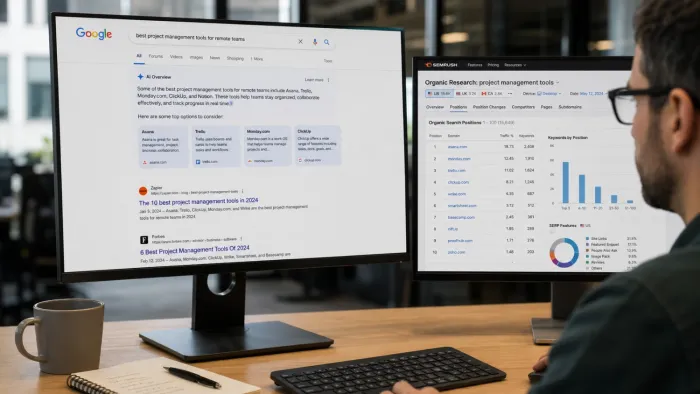
SEO monitoring tools detected a noticeable rise in ranking movement across Google Search results around August 12–13. These tools track how many URLs move up, move down, appear or disappear across search results compared with previous days.
When several independent trackers show higher-than-normal movement at the same time, it usually signals that something meaningful is happening in the results. But it does not prove that Google has launched a core update.
Tools such as AccuRanker, Semrush Sensor, Mozcast, Sistrix, Serpstat, Wincher, Similarweb and others measure volatility in different ways. Some compare keyword rankings across large keyword sets. Others track movement inside the top results or assign a daily volatility score.
That makes the latest spike more than one website reporting a traffic drop. It reflects broader movement across tracked search results.
August Has Been Unstable
The August 12–13 spike is especially notable because it was not the first wave of ranking turbulence this month.
SEO tracking and community reports had already pointed to volatility around August 1–3. Another visible wave followed around August 5–6, with publishers discussing traffic shifts, ranking reversals and changes in result composition.
Now the August 12–13 movement suggests Google Search has seen several rounds of unconfirmed volatility in the first half of the month.
That pattern is stronger than a single-day fluctuation. It does not confirm a secret update, but it does suggest that SEOs should review recent performance carefully instead of dismissing the movement as normal noise.
What Site Owners Are Reporting
Publisher reports should be handled carefully because they are anecdotal. Some site owners have described sudden traffic spikes followed by declines. Others reported Google Discover volatility, ecommerce traffic changes without matching conversion gains, or renewed visibility for spam-like pages in some niches.
There have also been discussions about Discover traffic in Brazil, where at least one publisher claimed major losses while some heavily AI-generated sites appeared to gain exposure. That is worth noting, but it should not be treated as evidence that Google has changed how it ranks AI content.
Other reports from earlier August volatility mentioned stronger visibility for YouTube results and high-authority domains. Again, these are observations from the SEO community, not confirmed characteristics of a Google ranking update.

No Confirmed August Update
As of August 14, there is no official Google announcement confirming an August ranking update. Google’s official 2026 ranking history currently lists earlier updates, including the March spam update, March core update, May core update and June spam update, but no August core or spam update.
That is why publishers should avoid calling this the “August 2026 Core Update” unless Google later confirms one.
Google also makes smaller ranking-system changes throughout the year that are not individually announced. Some can affect rankings without being large enough to receive a public update label. The August movement could fall into that category, but the exact cause is not known.
What SEOs Should Do Now
The safest response is measured analysis, not panic editing.
Start with Search Console and check performance by page and query. Do not rely only on total traffic. Identify which URLs changed, which queries moved and whether the loss came from ranking drops or lower click-through rates.
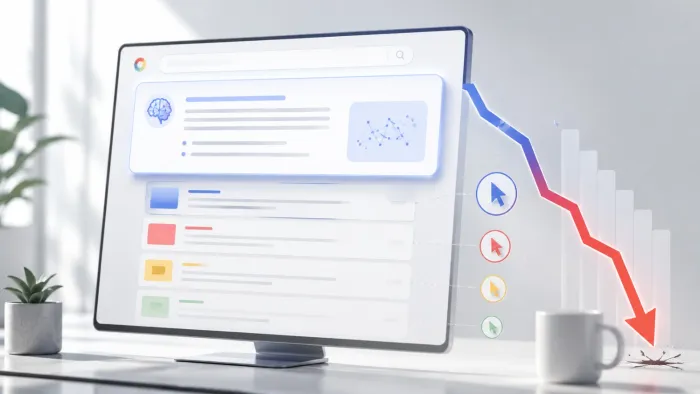
That second point is important. A page can keep a similar ranking but lose clicks if the search results page changes. AI Overviews, video blocks, shopping modules, image packs or other SERP features can reduce clicks without a dramatic ranking loss.
SEOs should also separate Web Search, Images, Video, News and Discover where possible. A loss in Discover is not the same problem as a loss in Web Search, and each surface may need a different diagnosis.
Avoid rewriting successful pages because of two volatile days. If a page is still broadly performing well, drastic edits can create more risk than value. For large, sustained losses, review the affected pages against the current competitors and ask whether the page still provides the best answer for the query.
The AI Content Angle
For WriteNexa’s audience, the most useful angle is not simply that rankings moved. It is how this volatility fits into the wider debate around AI-generated content.
Google’s public position is not that AI-assisted content cannot rank. The issue is whether the content is helpful, reliable and created for users rather than produced mainly to manipulate search rankings.
That means the safest strategy remains the same: publish content with original value, clear expertise, accurate information, first-hand examples and meaningful usefulness. Generic AI-written pages are vulnerable not because they are AI-assisted, but because they often lack substance.
The takeaway from the August 12–13 volatility is simple. Something significant appears to be moving in Google’s results, but it is not officially confirmed as a core or spam update. SEOs should monitor carefully, diagnose by page and query, and avoid chasing imaginary signals before the data is clear.