Major publishers are beginning to question one of the internet’s longest-running assumptions: that letting Google crawl their content is always worth the traffic in return.
In July 2026, several large media and content companies reportedly began reassessing whether Google’s search relationship still works in their favour as AI Overviews answer more queries directly on the results page. The concern is simple. If Google’s AI features summarize publisher content without sending enough users back to the original source, the value exchange starts to break down.
Companies including Reddit, USA Today, Reuters, Politico, The Economist and People Inc. have been linked to discussions about restricting Google’s access in some form. As of the latest reporting, no major publisher has fully pulled the trigger, but the fact that blocking Google is now being discussed at boardroom level marks a major shift.
Why Publishers Are Frustrated
For years, publishers accepted the trade-off of allowing Google to crawl their pages because search traffic brought readers, ad impressions, subscriptions and brand visibility.
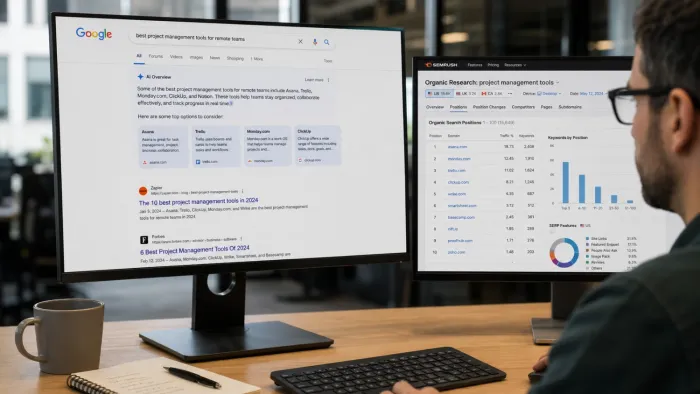
AI Overviews complicate that model. When Google generates an answer at the top of the results page, users may not need to click through to the article, forum thread or guide that helped inform the answer.
That is especially worrying for publishers already facing declining referral traffic. Search used to function as a discovery engine for the open web. AI search increasingly turns it into an answer engine.
Some publishers are now asking whether their content is being used to strengthen Google’s products while weakening their own traffic and revenue.
Reddit Becomes the Key Flashpoint
Reddit is one of the most important names in the debate because its content is unusually valuable to AI systems. The platform contains years of human conversations, product opinions, troubleshooting threads, niche expertise, local advice and first-hand experiences.
Reddit also has a major licensing relationship with Google, reportedly worth about $60 million a year. But as AI summaries become more common, Reddit is reportedly reconsidering how much access Google should receive and on what terms.
The tension is clear. Reddit’s discussions help make AI answers more useful, but those same answers may reduce the number of people who click into Reddit threads from search.
Investors reacted quickly to reports that Reddit could restrict access or renegotiate terms. The market concern is that Reddit could lose licensing revenue if it walks away, while also facing pressure on referral traffic if it stays.
Reddit’s negotiating position appears to be that its content is not a commodity. If AI companies rely on Reddit’s human conversations, Reddit wants to capture more of that value.
The Data Behind the Debate
Several studies have intensified publisher anxiety. One major study found that users clicked traditional search results less often when an AI summary appeared. Users clicked a normal result in 8% of visits with an AI summary, compared with 15% of visits without one. Links inside the AI summary performed even worse, receiving clicks in only 1% of visits.
Other research has suggested sharp click-through declines when AI Overviews appear, particularly for top-ranking pages and news publishers. Some reports have pointed to traffic drops across major media properties as AI search becomes more prominent.
The numbers vary by study, but the direction is consistent enough to worry publishers. AI answers may keep users on the search page longer and reduce the need to visit the underlying source.

Google’s Response
Google argues that its AI features still send significant traffic to the web. The company has said AI-powered search sends billions of clicks to websites and that it continues to highlight links and provide controls for site owners.
Google has also introduced tools that let publishers manage participation in some AI search features, and it has started paying selected publishers for AI access. Preferred source features and new citation displays are part of the company’s attempt to show that publishers can still gain visibility inside AI search.
But critics say the issue is not whether AI search sends any traffic. It is whether it sends enough traffic to support the businesses producing the content.
Why Blocking Is Difficult
The practical problem is that blocking Google is risky. Google remains one of the largest traffic sources on the web. Cutting off its crawler could reduce visibility in traditional search, not only AI features.
Publishers also do not always have clean controls to separate normal search indexing from AI-powered use. Some tools can limit training or participation in specific AI features, but no single switch solves every concern.
That creates a trap. Staying in gives Google access to valuable content, but opting out may hand visibility to competitors that remain available.
What Happens Next
The most likely outcome is not a sudden industry-wide block. It is a period of harder negotiation. Publishers may push for higher licensing fees, better attribution, clearer traffic data, usage-based payments and more precise controls over how their content appears in AI products.
For Google, the challenge is maintaining the open-web content supply that makes Search useful while proving that AI features do not destroy the economics of publishing.
The relationship between publishers and Google has always been tense. AI search has turned that tension into a direct business question: if the web provides the intelligence behind the answer, who gets paid when the click disappears?