
Random chat apps are like opening a mystery box. Sometimes you get a normal conversation, sometimes you get instant regret, and sometimes you question why WiFi was ever invented.
That is exactly where Mirami Chat and OmeTV split into two very different worlds. One tries to control the experience before it happens. The other lets everything happen first and figures it out later.
So instead of asking which one is better, let’s ask the only question that actually matters. Which one keeps you safer while you are using it.
The Core Difference Most Users Miss
The real difference is not features. It is how each platform is designed to behave.
Mirami Chat is built like a controlled environment. You are not thrown into randomness immediately. There is structure, limited access, and even a pricing layer that changes how people behave inside the platform.

OmeTV is built on speed and randomness. You press start and instantly meet a stranger. There is no filtering before exposure. The experience begins before safety kicks in.

“One platform limits chaos. The other runs on it.”
Key differences that actually matter:
- Mirami focuses on structured interaction
- OmeTV relies on instant random pairing
- Mirami reduces unexpected outcomes
- OmeTV increases unpredictability by design
Platform Overview (Real Comparison That Actually Helps)
| Feature | Mirami Chat | OmeTV |
| Chat Type | Curated video chat (male → female matching) | Fully random video chat |
| Login | Simple email entry (no OTP required) | Google, Facebook, VK (no basic email login) |
| Pricing Model | Paid (diamond system per minute) | Completely free |
| Premium System | Yes (diamonds, paid interaction) | No premium model |
| Moderation | Not clearly visible | AI + reporting system |
| Anonymity | Medium | High |
| Experience Style | Controlled and guided | Fast and unpredictable |
| Risk Nature | Financial + engagement risk | Exposure + behavioral risk |
Login & Access Experience (Where Friction Starts)
The first real difference between Mirami Chat and OmeTV shows up before you even start chatting. It is not about features, it is about how easily you enter the platform.
Mirami keeps things extremely simple. You can start with just an email, and there is no OTP verification involved. This makes onboarding fast and almost frictionless, but it also raises a small concern around account authenticity and security.
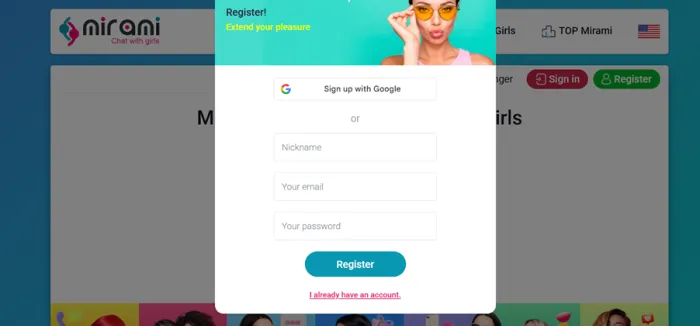
OmeTV takes a more structured route. Instead of a basic email login, it pushes users toward social authentication like Google, Facebook, or VK. This adds a layer of identity connection, but also introduces privacy concerns since your external accounts are now part of the system.

The result is a clear trade-off. One platform prioritizes speed and ease. The other prioritizes identity linkage and slightly more structured entry.
Login & Access Comparison Table
| Factor | Mirami Chat | OmeTV |
| Entry Method | Email only | Google, Facebook, VK |
| OTP Verification | Not required | Not required |
| Onboarding Speed | Very fast | Moderate |
| Identity Linking | Minimal | High |
| Privacy Exposure | Lower initially | Higher (linked accounts) |
| Ease of Access | Extremely easy | Slightly restrictive |
Monetization vs Free Model (Why Behavior Changes)
One of the most underrated differences between these platforms is how money changes behavior.
Mirami runs on a pay-per-minute diamond system, which fundamentally changes how people interact. When users are paying, conversations become more intentional. There is less random skipping and more engagement, but at the cost of financial pressure.
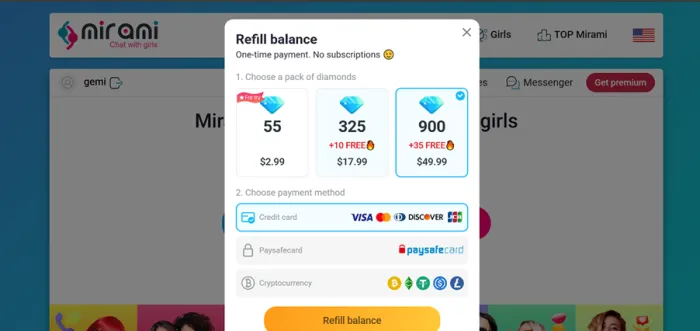
The pricing structure explains it clearly:
- 55 diamonds for $2.99
- 325 diamonds for $17.99
- 900 diamonds for $49.99
This means users are not just chatting. They are spending time in a measurable way, which directly affects how interactions behave.
OmeTV has no premium model at all. It runs completely free. That removes financial pressure but opens the door to unpredictable behavior since anyone can join instantly.
One platform filters users through cost. The other allows unrestricted entry.
Monetization Comparison Table
| Factor | Mirami Chat | OmeTV |
| Pricing Model | Pay-per-minute (diamonds) | Completely free |
| Entry Barrier | Medium (payment required) | None |
| User Intent | More intentional | Completely random |
| Interaction Quality | More controlled | Highly variable |
| Financial Risk | High | None |
| Behavioral Predictability | Higher | Lower |
Real Usage Experience: What It Actually Feels Like
Mirami Chat Experience
Mirami does not feel random in the traditional sense. You usually get one quick interaction, and then the system pushes you toward login or payment. The entry is extremely simple, just an email without OTP, which makes it quick but slightly loose in terms of verification.
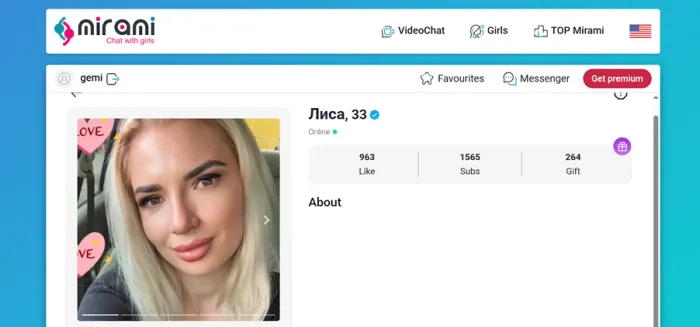
The interaction feels guided. Conversations are smoother, longer, and less chaotic compared to most random chat platforms.
At the same time, it starts to feel structured in a different way. The platform is clearly designed to keep you engaged, and often to keep you spending. It feels less like organic conversation and more like controlled engagement.
OmeTV Experience
OmeTV is instant. You click start and within seconds you are connected to someone random. There is no structure, no filter, and no preparation.
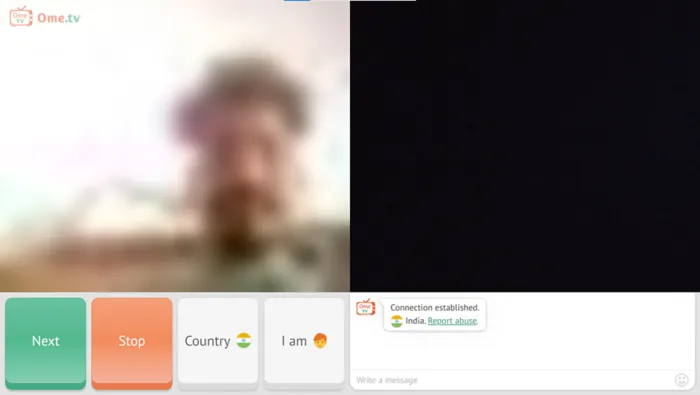
This creates a mixed experience. Some conversations are normal, some are awkward, and some are skipped immediately. You do not control who appears next.
Because the platform is free and open, it attracts all types of users. That openness is what makes the experience both exciting and risky.
Speed vs Stability (Hidden Experience Factor)
Another difference that becomes clear over time is how speed changes the entire experience.
OmeTV is built for speed. Connections happen almost instantly, which creates a fast loop of interactions. However, that same speed increases exposure. You do not get time to assess before the next interaction begins.
Mirami is slower and more controlled. Interactions last longer, and switching between users is less frequent. This creates a more stable and predictable environment.
Speed sounds like an advantage, but in random chat platforms, it often increases risk rather than reducing it.
Speed & Flow Comparison Table
| Factor | Mirami Chat | OmeTV |
| Connection Speed | Moderate | Very fast |
| Interaction Duration | Longer | Short |
| User Switching | Limited | Frequent |
| Exposure Frequency | Lower | High |
| Experience Stability | High | Low |
| Risk Trigger Rate | Lower | Higher |
How Safety Actually Works (Not Just Theory)
Mirami Chat
Mirami controls safety through structure rather than active moderation. The platform design itself reduces randomness.
The paid system plays a big role. When users are spending money per minute, behavior becomes more intentional and less chaotic.
However, moderation is not strong. There are limited reporting tools and unclear enforcement, which means safety depends more on system design than active protection.
OmeTV
OmeTV relies on moderation after interaction begins. AI filters and reporting systems exist, but they work reactively.
You are exposed first, and then moderation steps in. That delay is where most risks come from.
Because the platform is open and free, controlling behavior at scale becomes difficult.
Real Risk Comparison (What Actually Affects You)
| Risk Type | Mirami Chat | OmeTV |
| Financial Risk | High (pay-per-minute system) | None |
| Exposure Risk | Low–Moderate | High |
| Content Control | Moderate | Low |
| User Behavior | More controlled | Completely unpredictable |
| Privacy Concerns | Medium | High |
| Interaction Authenticity | Mixed | Mixed |
Scam vs Reality
Mirami Chat is not a scam, but it is clearly a monetized platform. You are paying for interaction, not just chatting.
OmeTV is also not a scam. It is a legitimate platform with a massive user base. The concern is not legitimacy, but environment.
- Both platforms are legitimate
- Risk comes from how they are used
- Mirami risk is financial
- OmeTV risk is exposure
Who Should Use What
Mirami Chat works best for users who prefer control and predictability. It suits those who are comfortable paying for a structured experience.
OmeTV fits users who want randomness and exploration. It is better for those who accept unpredictability and understand the risks.
Neither platform is suitable for minors.
Final Verdict
Mirami is safer structurally. It limits chaos through controlled matching and a paid system that filters behavior.
OmeTV is riskier behaviorally. It exposes users to random interactions without strong prevention before contact.
Mirami shapes the experience before it happens. OmeTV lets it happen and deals with it later.
One platform filters risk. The other makes you deal with it.