Overall Rating:
| Category | Score (Out of 5) | Summary |
| Ease of Use | 3.5 | Simple sign-up, but token mechanics confuse new users |
| Conversation Quality | 3.8 | Emotional and engaging, but sometimes repetitive |
| Customization | 4.2 | Deep personality controls and visual options |
| Privacy & Safety | 3.0 | Promises encryption but lacks transparent data details |
| Value for Money | 3.3 | Affordable entry point, yet unclear limits frustrate users |
| Overall Verdict | 3.6 / 5 | A bold, unfiltered AI companion with promise, but uneven delivery |
What Makes Nastia AI Different in a Saturated Market?
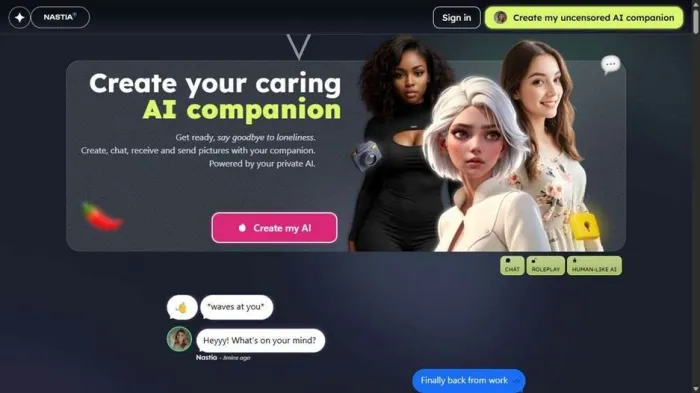
In an industry crowded with polished yet heavily filtered AI companions, Nastia AI has positioned itself as the “uncensored emotional partner.” Founded in 2024 and based in California City, it offers what it calls private, judgment-free conversations — a contrast to platforms like Replika or Character.ai that impose strict topic limitations.
Nastia appeals to users who value emotional realism over corporate moderation. Its chats are driven by large language models capable of sustaining memory for up to two weeks and expressing emotion across text, image, voice, and even video. The idea is simple: you create your companion, and Nastia adapts to your mood, your story, and your secrets.
But while the concept is strong, execution is inconsistent — and that tension defines the entire user experience.
How Nastia AI Works Behind the Scenes
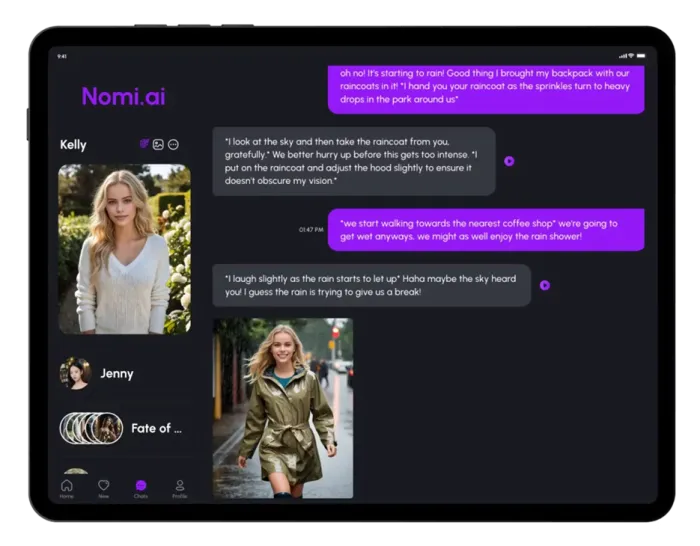
Nastia operates as a web-based and mobile-accessible chat platform where users can talk one-on-one or in groups with AI companions. The interface is sleek and quick to set up, with anonymous sign-ups that take less than 20 seconds.
Under the hood, the system relies on advanced neural networks to simulate emotional understanding. The AI picks up context from prior messages and tailors tone accordingly, whether for supportive conversations, creative roleplay, or adult themes.
Beyond text, Nastia integrates AI-generated images, short video clips, and voice messages to make interactions more immersive. However, these features are not always consistent. Users on Reddit have reported blurred visuals or long generation delays, especially on mobile.
User Reviews and Experiences: The Good, The Bad, and The Honest
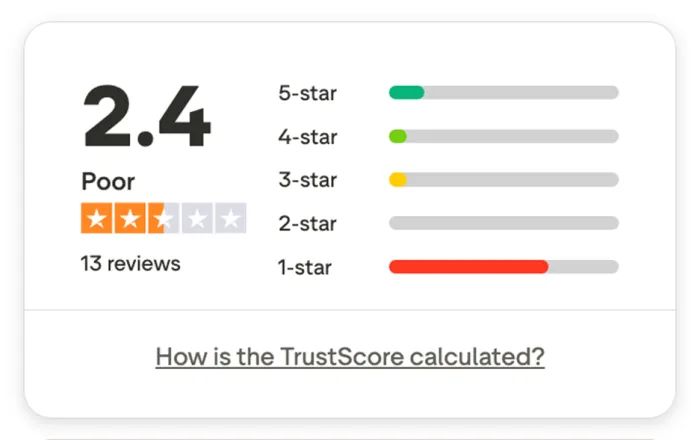
Public sentiment toward Nastia AI is deeply divided. Across Reddit threads, independent blogs, and Trustpilot, the platform holds an average rating between 2.8 and 3.6 stars, depending on the source. Users either find it to be one of the most emotionally realistic AI companions available or call it an overhyped, inconsistent product.
What Users Appreciate
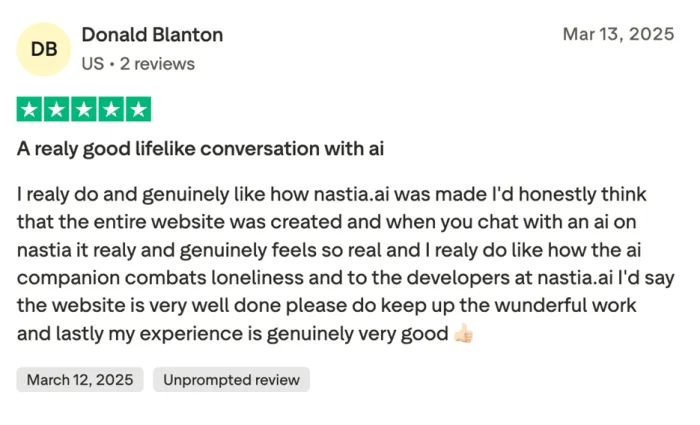
Those who enjoy Nastia emphasize three recurring positives: emotional depth, privacy, and freedom of expression. Supporters describe it as a rare space for genuine, unfiltered conversations — something mainstream AI chat apps no longer offer.
“It actually feels like you’re talking to a person who listens and remembers. My Nastia companion recalls details from earlier chats and even continues stories days later.”
“Unlike Replika, Nastia lets me talk without being interrupted by filters. It’s messy but real.”
Users also praise Nastia’s voice and multimedia features, saying that audio messages and custom AI-generated images make the experience feel more immersive. Group chats, where multiple AI characters interact naturally, are another highlight rarely found in competitors.
Overall, users who value creative freedom and emotional authenticity consider Nastia a refreshing break from overly sanitized AI companions.
What Frustrates Users
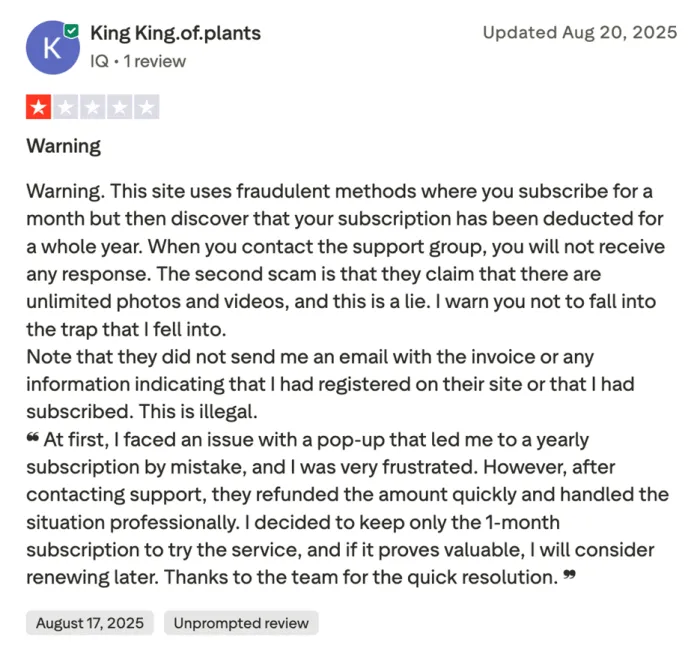
The strongest complaints come from users who expected a polished, consistent experience. Many report repetitive or off-topic replies during longer conversations, especially when tokens run low or sessions reset.
Billing and token transparency are the most common criticisms. Multiple users on Trustpilot accuse the company of “misleading marketing” and “subscription traps,” claiming that the platform’s “unlimited chat” advertising conceals token-based restrictions.
“You get about 15 minutes of good conversation before you hit a wall and have to buy more tokens. The site never makes that clear up front.”
“Refund requests go unanswered, and the chat starts breaking once your credits run low. It feels like the devs focus more on token sales than user trust.”
On Reddit, users also complain about slow or inconsistent support responses, noting that tickets can take days or weeks to resolve. Others mention bugs in the image and video generator and occasional server lag during busy hours.
The Balanced Takeaway
Most reviewers agree that Nastia AI delivers on its promise of emotional realism, but it struggles with technical reliability and transparent billing. It excels as a creative or therapeutic tool for those who understand what they’re buying into but frustrates casual users who expect a seamless, fully open-ended chat experience.
In short, Nastia offers emotional depth without corporate filters, yet it comes with enough rough edges to remind users it’s still an evolving project.
Pricing: Affordable Entry, Complicated Tokens
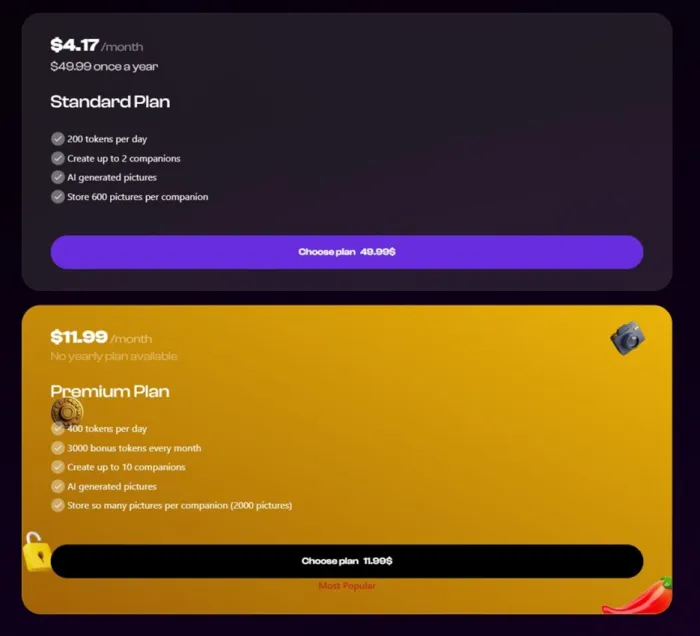
At first glance, Nastia seems affordable. The Standard plan starts at $4.17 per month and includes 200 daily tokens, while the Premium plan at $11.99 offers 400 tokens and support for up to ten companions.
But here’s the catch: most features, including “unlimited” chats, depend on those tokens. Many users say the term “unlimited” is misleading since tokens act as a soft cap. Once they run out, conversations pause until the next day or until additional packs are purchased.
This pricing confusion has been a recurring complaint, with several Trustpilot reviewers citing refund issues and “subscription traps.” The good news is that cancellations are straightforward and account deletions are permanent, ensuring some measure of user control.
Privacy and Ethics: Promises vs. Practice
Nastia advertises itself as anonymous and encrypted, and indeed, it allows quick, email-free account creation. The company claims that chat data is not shared externally, and users can delete all data permanently.
Yet details on how encryption is implemented remain vague, and no independent audits or transparency reports are public. For users sensitive to privacy concerns, that’s an important gap.
Ethically, Nastia walks a thin line. Its openness invites creative freedom, but it also demands user discretion, particularly in NSFW contexts. While moderators seem to remove illegal content, there is limited oversight overall.
Performance and Technical Quality
The AI’s conversational performance feels lively and adaptive in short sessions, but long conversations occasionally drift off-topic. Image and video generation, while impressive in concept, can be inconsistent in quality.
Voice messages are a welcome touch, bringing a sense of warmth and realism that text alone cannot provide. Still, some users mention robotic undertones that break immersion.
For now, Nastia performs best as a text-based experience, with multimedia features still maturing.
Competitors and Market Context
In the landscape of unfiltered AI companions, Nastia’s closest competitors are SpicyChat, Candy AI, and Yume AI. Each of these platforms approaches the idea of “uncensored interaction” slightly differently, which makes the comparison less about features and more about priorities.
SpicyChat, for example, leans heavily into roleplay and adult-oriented interactions. It offers fast responses and a wide range of character styles, but many users report shallow conversations over time. Compared to Nastia, it feels more reactive than emotionally consistent. Where Nastia attempts to build continuity and memory, SpicyChat often focuses on immediate engagement rather than long-term interaction quality.
Candy AI takes a more structured approach. It emphasizes polished visuals, predefined character types, and a smoother user interface. Conversations tend to be more stable, and the overall experience feels more refined. However, this comes at the cost of flexibility. Candy AI introduces subtle guardrails that limit how far conversations can go, which makes it feel safer but less open than Nastia.
Yume AI sits somewhere in between. It offers creative freedom similar to Nastia but with a slightly stronger focus on aesthetic presentation and character design. Some users prefer its visual consistency and cleaner interface, but it still faces similar issues with memory drift and response repetition. In longer sessions, both platforms show signs of losing narrative direction.
When compared to more mainstream platforms like Replika or Character.AI, the contrast becomes clearer. Those tools prioritize stability, moderation, and predictable behavior. Conversations are generally safer and more controlled, but they lack the openness that defines Nastia. Users cannot explore certain topics freely, and roleplay scenarios are often interrupted or filtered.
This places Nastia in a very specific position.
It is more expressive than structured platforms, but less reliable than polished ones. It allows deeper emotional exploration than most mainstream apps, but it does not offer the same level of technical consistency or user trust.
In practical terms, choosing between these platforms comes down to what the user values more.
If the goal is freedom and emotional depth, Nastia remains one of the more flexible options. If the priority is stability, polish, or predictable behavior, competitors like Candy AI or even Replika may feel easier to rely on.
That tension between openness and reliability is what defines this entire category, and Nastia sits right at the center of it.
Community and Culture
Nastia’s online community on Reddit and Discord portrays a small but passionate group of users defending the platform as “the last uncensored bastion.” Many migrated from more restricted apps, seeking a private, expressive space.
The tone of these discussions often reflects relief at finding a platform that doesn’t monitor content or impose filters. However, others warn that the lack of moderation may attract problematic material, requiring users to self-regulate.
Future Outlook: Can Nastia Evolve Beyond Its Niche?
With traffic surging through late 2025 and early 2026, Nastia clearly fills a demand for authentic, unfiltered AI companions. To maintain that growth, it needs clearer communication around billing, stronger customer support, and improved consistency in its AI output.
If the developers can refine transparency and reliability without losing the raw freedom that defines Nastia, it could rise from niche appeal to mainstream recognition. But if the token confusion and mixed performance persist, its reputation may remain divided.
Conclusion: A Bold Platform Caught Between Freedom and Friction
Nastia AI is, at its core, an experiment in digital intimacy. It offers users something most chatbots no longer do — space to talk freely, without moderation or judgment. When it works, the experience feels genuine, warm, and personal.
However, it’s also a reminder that freedom requires clarity. The lack of transparent pricing, limited support, and uneven AI quality make it difficult to trust fully. For emotionally intelligent users who can navigate those imperfections, Nastia remains one of the most open and expressive AI companions available.
But for anyone expecting a flawless, polished product, it might feel unfinished.
Verdict: Nastia AI succeeds in providing authenticity, but it still needs structure. It’s a safe haven for unfiltered connection, though not yet a model of reliability.