Three months ago I did something slightly uncomfortable. I handed our entire blog pipeline, briefs, outlines, first drafts, meta descriptions, to a stack of AI tools and told my team we would measure everything for a quarter. Every draft logged, every edit tracked, every hour recorded in a spreadsheet nobody enjoyed updating.
I went in expecting a clear winner. Either the tools would embarrass themselves and I could write the smug "AI is overrated" piece, or they would be so good I would need to start an awkward conversation about headcount. Neither happened. What happened instead was messier and, honestly, more interesting. Our output roughly doubled. Our editing hours went up, not down. And one writer quietly became the most valuable person on the team. Not the fastest writer. The one who could spot a fabricated statistic from across the room.
So when people ask whether AI will replace content teams, I no longer answer with a hot take. I answer with what our tracking sheet, the hiring boards, and the big workforce studies all point to from three different directions. The jobs are not disappearing. The job descriptions are.

THE SHORT ANSWER: AI REPLACES TASKS, NOT TEAMS Drafting, repurposing, summarizing, and metadata work are being automated almost everywhere. Strategy, editing, fact-checking, original reporting, and brand judgment are gaining value precisely because machine-made text flooded the market. Most teams with published data are holding headcount roughly steady while shifting it away from pure writing and toward editorial and operations work. The people genuinely exposed are those whose entire job was producing average text at volume. |
What the 2026 data actually shows
Two stories compete for your attention right now. One says the writing profession is finished. The other insists nothing real has changed. The 2026 numbers support neither, and the honest picture sits in an awkward middle that rarely makes headlines: adoption is near universal, fear is high, and the largest workforce study on the planet still projects net job growth. All of that is true at once.
| FINDING | NUMBER | SOURCE |
|---|---|---|
| Content marketers using AI at work | 96% | HubSpot AI Trends 2026 |
| Blog posts made with zero AI involvement | 65% in 2024, 5% in 2026 | Typeface, State of Content Marketing 2026 |
| Global jobs created vs displaced by 2030 | 170M created, 92M displaced | World Economic Forum, Future of Jobs 2025 |
| Employers planning AI-driven staff cuts | 41% | World Economic Forum, 2025 |
| Digital marketers who fear writers will lose jobs | 81.6% | SEO.ai marketer survey |
| Marketers who say AI content beats human-only work | 26% (about 10% say it performs worse) | CoSchedule, State of AI in Marketing 2025 |
| US advertising and PR jobs lost in one year | 54,000 (a 9.9% drop) | Bureau of Labor Statistics, May 2025 |
| Time saved per marketer, per week | 6 to 13 hours | HubSpot AI Trends 2026 |
Read rows three and four together. The same report projecting a net global gain of 78 million jobs also found that four in ten employers expect AI-related cuts. Growth and displacement are happening at the same time, in different roles, sometimes inside the same department. That is exactly the pattern my own team lived through.
Where AI genuinely earns its keep
I want to be fair to the tools, because on certain jobs they are not slightly better than a junior writer. They are not comparable at all. These four areas moved to AI on my team within the first month and never came back.
First drafts at volume
A structured brief goes in, a workable 1,500 word draft comes out in minutes. Quality varies, but the blank page problem is gone for good.
Repurposing and cutdowns
One long article becomes a newsletter, eight social posts, and a video outline in a single afternoon. This used to consume two full days a week.
Research summarization
Transcripts, reports, and competitor pages go in, a clean summary of themes comes out. It is now the default first step of every brief we write.
SEO scaffolding
Title variants, meta descriptions, schema markup, and internal link suggestions arrive in seconds and need only a light review pass.
Where it still fails without people
Now the other column, and every item on it caused a real incident during our tracking quarter, from an invented statistic to a paragraph that read like it was written for a different company.
Facts and sources
Models invent numbers with total confidence. In 2026 surveys, 56% of marketers named hallucinations as an active problem. Ours once cited a LinkedIn engagement study that does not exist.
Lived experience
AI can describe a product launch. It cannot tell readers what went wrong in yours, and audiences feel that difference immediately.
Voice under pressure
Unedited drafts converge on the same polite, forgettable tone. HubSpot's 2026 survey found 62.7% of marketers now betting on more human perspective for exactly this reason.
Regulated topics
Healthcare, finance, and legal content carry liability no model can absorb. Demand for verified expert writers in these niches is rising, not falling.
There is a fifth failure that deserves its own line: knowing what not to publish. AI will happily generate forty mediocre ideas. Deciding which one deserves budget is still, entirely, a human call.
The role shift you can already see in hiring
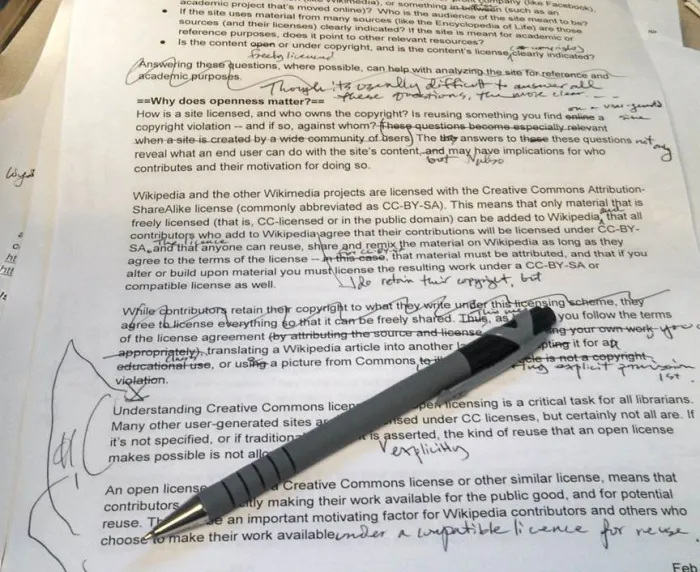
If you want proof that roles are changing rather than vanishing, skip the think pieces and read listings. AI Content Editor roles now appear at $45K to $65K, asking for people who fact-check, refine, and quality-control machine output. Macmillan Learning posted a Director of Content Operations and Transformation at $105K to $135K to rebuild workflows around AI. Surfer's team published a whole debate on whether "content engineer" is a real title yet. None of these jobs existed in 2022.
The clearest structural evidence comes from content operations benchmarks. On AI-mature teams, the mix of strategists to editors to writers moved from roughly 1:1:3 in 2023 to 1:2:1 in 2026, while headcount relative to revenue stayed about flat (Content Marketing Institute / Welcome content ops benchmarks, 2026).
That ratio flip is the whole story in miniature. Editing hours grew because AI front-loads volume into the review queue. Pure drafting hours shrank. Here is how the individual titles are translating:
| 2022 TITLE | 2026 VERSION | WHAT ACTUALLY CHANGED |
|---|---|---|
| Staff writer | AI-assisted writer | Directs and edits drafts, owns interviews and original angles instead of typing every word |
| Copy editor | AI content editor | Adds fact verification, source tracing, and compliance checks to the classic grammar pass |
| SEO writer | Search and AI visibility strategist | Optimizes for Google rankings and for being cited by ChatGPT, Perplexity, and AI Overviews |
| Content manager | Content operations lead | Designs workflows, approval routing, tool stacks, and quality gates rather than chasing deadlines |
The task ledger: who owns what now
This is the actual split on my team after a quarter of measurement, and it matches what the benchmark data describes across the industry. Three owners, no ambiguity.
| TASK | OWNER | WHY |
|---|---|---|
| First drafts of standard articles | AI | Fast, cheap, good enough to edit |
| Social cutdowns and repurposing | AI | Mechanical transformation of finished work |
| Meta descriptions, alt text, schema | AI | High volume, low judgment |
| Keyword clustering and briefs | Shared | AI groups the data, humans pick intent and angle |
| Analytics summaries | Shared | AI reads numbers, humans decide what they mean |
| Interviews and original quotes | Human | Sources talk to people, not prompts |
| Fact-checking and source tracing | Human | Liability lives here |
| Final edit and brand voice | Human | The last mile is where trust is won |
| Strategy and editorial calendar | Human | Choosing what not to make |
| Opinion and thought leadership | Human | A model has no stake and no story |
What a working week looks like now
People keep asking what this means day to day, so here is our current weekly rhythm, stripped of theory.

1. Monday: planning. Humans pick the three angles worth making. AI clusters search data, summarizes competitor coverage, and drafts briefs by lunch. The strategist's main job is rejection, not generation.
2. Tuesday and Wednesday: drafting. Writers run the drafts rather than type them. Industry tracking of writers who moved into this directing role reports 40 to 60% faster production, and our own logs landed inside that range.
3. Thursday morning: the edit. The heaviest block of the week. Every draft gets a structural pass and a voice pass. This is where our hours went up, and where quality actually gets decided.
4. Thursday afternoon: the fact pass. Every number gets traced to a primary source before publication. One rule governs it: if we cannot find the original study, the stat dies.
5. Friday: distribution. AI generates the cutdowns, the newsletter version, and the ad variants. A human approves every single piece that carries our name.
The skills that decide who stays
When I rewrite job descriptions now, these are the five things I screen for. Typing speed is not on the list.
Editorial judgment
Spotting the draft that is grammatically perfect and completely wrong for the audience. Currently the scarcest skill on the market.
Verification instinct
Treating every AI-supplied fact as a claim until a primary source confirms it. My best recent hire thinks like a fact-checker first.
Workflow design
Building repeatable prompt systems, style rules, and quality gates that keep output consistent across an entire team.
Subject-matter depth
Real expertise in one vertical beats surface fluency in ten. Regulated industries pay a visible premium for it in current listings.
The fifth is a genuine point of view. The one thing no model can generate is your actual opinion, earned from your actual work. It also happens to be the only content type readers now go out of their way to find.
A 90 day plan if you run a content team
If you feel behind, this is the sequence I would repeat, in this order.

Task audits work best on a wall the whole team can argue with. Photo: Rawpixel Ltd, CC BY 2.0
1. Audit tasks, not people. List every recurring task, then sort each into the three ledger columns above. Do it with the team in the room, not to them behind closed doors.
2. Change what you measure. Volume metrics reward the machine. Track edit depth, factual accuracy, and content that produces pipeline or citations instead.
3. Train formally. Surveys keep finding that only about one in five marketers receives structured AI training. Two focused workshops beat a year of improvising.
4. Write the rules down. An accuracy policy, a disclosure policy, and a list of topics AI never touches. Ours fits on one page and has prevented every repeat incident.
5. Rewrite the job descriptions. Shift compensation toward editing, verification, and operations. The market already prices these roles higher, so pretending otherwise just loses you people.
Final Verdict
I closed the spreadsheet with a conclusion I did not expect to reach: the replacement question is the wrong question. Nobody on my team lost a job to AI this year. Every single person lost a chunk of their old job description, and the ones thriving are the ones who grabbed the new chunks fastest. Our output doubled. Our costs barely moved, because the hours saved on drafting were reinvested in editing, verification, and two original research pieces we would never have had time for before. The best thing we published all quarter was the article AI contributed to least, and it only exists because AI cleared the space for it. That is the whole dynamic in one sentence. I will not pretend the floor is holding for everyone. If your entire professional value is producing acceptable text quickly, the market for that skill is collapsing, and no optimistic framing changes it. I have stopped hiring for it. But if you can tell a true story, catch a false number, shape a voice, or decide what deserves to exist at all, you are more employable than you were in 2023, not less. So no, I do not believe AI replaces content teams. I believe it exposes them. What it reveals about yours depends on what your people were really contributing before the machines showed up. |