Here is the uncomfortable part of blogging that nobody warns you about: you can spend four hours on a post and lose the reader in the first four seconds.
I learned that the slow way. For years my intros started with a warm-up lap. “In this post, we will explore why X matters.” Nobody explored anything. They left. When I finally started watching where people bailed, the drop was almost always the opening paragraph, not the meat in the middle.
So I did the boring, useful thing. I saved the intros that had kept me reading, took them apart, and tried the patterns on my own posts across a couple of years and a few hundred drafts. The ten below are the ones that survived. Each has a job, a reason it works on the brain, and an example you can lift and adapt.
One reality check before the list, because it changes how you will read the rest of this.
20% of the words on a page the average reader actually reads. The ceiling is 28%. | 55% of visitors leave in under 15 seconds, across 2 billion tracked visits. | 15s is roughly all the time you get to prove the page is worth staying on. |
Jakob Nielsen's team put a hard number on it: on a typical page, people read roughly a fifth of the words. Chartbeat then studied two billion visits and found more than half of readers gone inside fifteen seconds. The first line is not the warm-up. It is the audition.

The ten openers, and how to steal them

The Open Loop
Start a story or a claim, then refuse to finish it right away.
This is the Zeigarnik effect, named for psychologist Bluma Zeigarnik, who in 1927 noticed waiters remembered unpaid orders in detail and forgot them the second the bill was settled. An unfinished thought sits in the reader's head like an itch. Newer replications, including a 2025 meta-analysis, suggest the memory boost is milder than the legend, but the pull to close a loop is still real enough to write with.
I deleted my most popular blog post on a Tuesday. By Friday, traffic was up. Here is the part that took me a year to understand.
Best for: how-tos, case studies, any post with a delayed payoff Watch out: open a loop you actually close later
The Cold Open
Drop the reader into a moment already in motion, like the first scene of a film.
Scene beats summary. A specific moment with a time, a place, and some tension turns the reader into a witness instead of a student. The relevance can wait one or two sentences.
It was 11:52 p.m., my launch email was scheduled for midnight, and I had just noticed the discount code did not work.
Best for: personal essays, founder stories, narrative case studies Watch out: land the point fast or it reads as a detour
The Contrarian Take
Say the opposite of the advice everyone repeats.
It works as a pattern interrupt. The reader expects the usual line, gets the reverse, and has to keep going to find out whether you are reckless or right.
“Post consistently” might be the worst advice in blogging. I published every single day for a year, and it nearly buried the site.
Best for: opinion pieces, thought leadership, saturated topics Watch out: you have to back it up in the body
The Surprising Statistic
Lead with a number that stops the scroll.
A specific, counterintuitive figure feels like evidence before you have made a single claim. It borrows the authority of data and lends it to your first sentence.
Fifty-five percent of the people who click your headline are gone before they finish this sentence. You have about fifteen seconds. That one just cost me two of them.
Best for: data-driven posts, industry reports, B2B and marketing Watch out: use a real, sourced number, never a fuzzy one
The Direct “You”
Skip the setup and describe the reader's exact situation back to them.
When a sentence names a problem you are living, it reads as if it were written for you alone. This is the “Agree” step in Brian Dean's APP formula (Agree, Promise, Preview): prove you get the problem before you sell the fix.
You have a half-finished draft open in another tab right now. It has been there three days. The intro is the reason you have not hit publish.
Best for: tutorials, solution posts, landing pages Watch out: guess the reader wrong and it feels presumptuous

The Bold Promise
State the payoff up front, plainly.
It answers the only question a skimmer is asking: what do I get, and how fast? This is the Promise and Preview of APP, compressed into the opening.
Writing intros is miserable. I know. By the end of this page you will have a repeatable formula and ten openers you can steal outright.
Best for: guides, listicles, posts with concrete value Watch out: if the body does not cash the check, the bounce is instant
The Micro-Story
A tiny, complete story with a turn, usually two or three sentences.
Joseph Sugarman built a mail-order empire on this. In The Adweek Copywriting Handbook he argued the only job of the first sentence is to get you to read the second, and nothing greases that slide like a small story with a hook of curiosity inside it.
A reader once emailed to say my post changed how she runs her business. She had only read the first paragraph. That taught me something about intros.
Best for: newsletters, brand blogs, about pages Watch out: it has to be true and it has to be tight
The Provocative Question
Ask something that pokes a nerve, not something soft and rhetorical.
A sharp question forces a private answer. The reader has to think for a beat, and once they have answered it in their head, they are already in.
When did you last read a blog intro all the way to the end? Be honest. Now you see the problem I am trying to solve.
Best for: engagement posts, coaching content Watch out: skip the tired “Have you ever wondered” opener
The Analogy
Explain the topic through something the reader already understands.
A good comparison does the teaching for you. It hands an abstract idea a familiar shape, so the reader grasps it before you have defined a single term.
A blog intro is a movie trailer, not a table of contents. Trailers do not summarize the plot. They make you need it.
Best for: explainers, technical topics, anything new to the reader Watch out: a tired metaphor reads as autopilot
The Confession
Admit a mistake, a failure, or something slightly embarrassing.
Vulnerability lowers the reader's guard, and it buys credibility. A writer willing to say “I got this wrong” sounds like one worth trusting for the next thousand words.
For three years I opened almost every post with the phrase “in today's world.” I am genuinely sorry. Here is what I write instead now.
Best for: personal brands, lessons-learned posts Watch out: the confession must connect to the point
The ten at a glance
| Opener | Best used for | Effort | Biggest risk |
|---|---|---|---|
| Open Loop | How-tos, case studies | Medium | Never closing the loop |
| Cold Open | Essays, founder stories | High | Scene runs too long |
| Contrarian Take | Opinion, thought leadership | Medium | No argument underneath |
| Surprising Statistic | Data and B2B posts | Low | Using a fuzzy number |
| Direct “You” | Tutorials, landing pages | Low | Misreading the reader |
| Bold Promise | Guides, listicles | Low | Overpromising |
| Micro-Story | Newsletters, brand blogs | Medium | A story that rambles |
| Provocative Question | Engagement posts | Low | Sounding rhetorical |
| Analogy | Explainers, technical | Medium | A tired comparison |
| Confession | Personal brands | Medium | Oversharing for its own sake |
Six openers to delete on sight
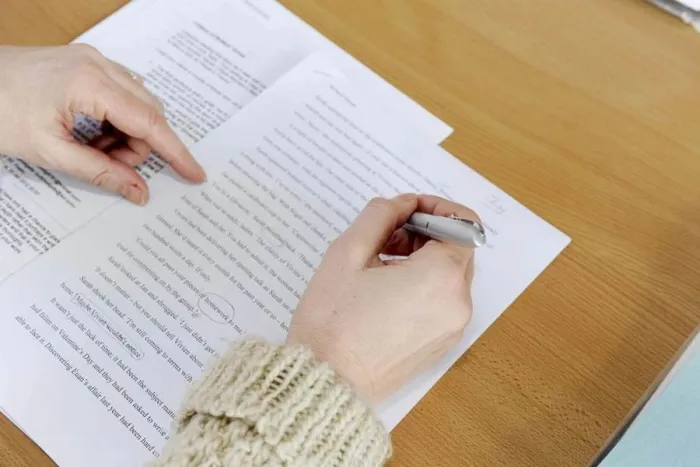
If your draft opens with any of these, cut the line and start with the point instead. In the editor's red are the phrases to lose.
✕ In this article, we will discuss
The warm-up lap. It tells the reader nothing and asks them to wait. Open with the actual point.
✕ Merriam-Webster defines resilience as
The dictionary opener. Nobody stayed for a definition. Show the idea in action.
✕ In today's fast-paced digital world
The weather report. Filler that could sit on top of any post ever written. Get specific.
✕ Have you ever wondered
The throat-clearing question. The reader has seen it too often to feel anything. Ask something sharper.
✕ There are many factors that one must consider before
The buried verb. Long, clause-heavy first sentences make the reader work too early. Short first line, always.
✕ This might be obvious, but
The apology. Never open by shrinking your own point before the reader has judged it.
Write your own in four moves

1. Write the boring version first
Get the plain point on the page with no pressure to sound clever. Your real intro is usually hiding inside it.
2. Cut the first two sentences
Nine times out of ten, the actual hook is sentence three. You wrote a warm-up without noticing.
3. Pick one technique, not five
Match it to the post. A data piece gets a stat, a personal piece gets a scene. Stacking techniques reads as trying too hard.
4. Read the first line out loud
If you run out of breath or feel bored saying it, the reader felt it faster. Rewrite until the first line is short and the second one feels inevitable.
The final word
Here is what I actually believe: the first line is the highest-leverage sentence you will write all week. Everything after it only gets read if it does its job. That is not a reason to agonize. It is a reason to stop treating the intro as a formality you knock out before the “real” writing begins.
My routine now is dull, and it works. I draft the whole post, ignore the intro, then write the opener last, once I know what the piece is genuinely about. I pick one technique off this list based on the post. I cut until the first sentence is short. Then I read it aloud, and if I am bored, I start over.
If you take one thing from all of this, take this: your reader is not obligated to stay. Every line has to buy the next one. Write the first line as if the whole post depends on it, because for more than half your readers, it does. Steal these openers, make them yours, and watch where people stop leaving.