
The rise of AI detectors has created a new category of tools designed to modify machine generated text. One of the more discussed tools in this space is Grubby AI. This Grubby AI review examines how the tool works, what users report, and how it performs in actual testing environments.
Grubby AI is designed to rewrite AI generated content so that it appears more natural and less detectable by systems such as GPTZero, Turnitin, and Originality.ai. It is primarily used by students and content creators who want their writing to pass automated checks or avoid false positives.
Despite its growing visibility, the tool shows inconsistent results depending on the type of content and the detector being used. Some users report improved readability, while others highlight issues with detection and output quality.
How Grubby AI Processes and Rewrites Text
Input and Rewrite Mechanism
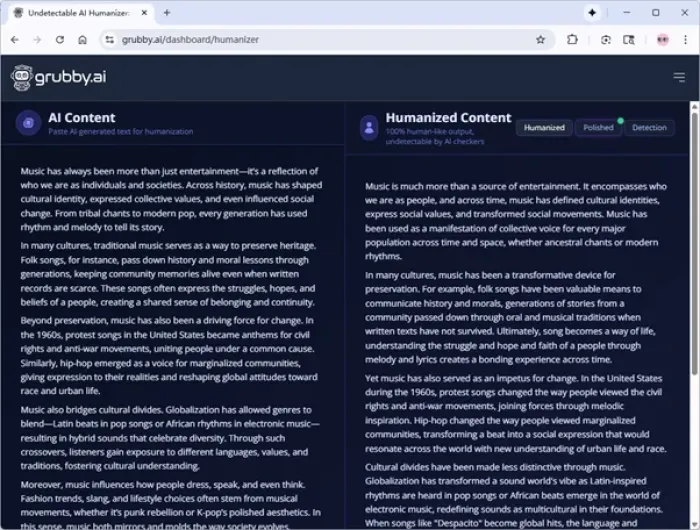
Grubby AI operates through a simple interface where users paste text or upload content for rewriting. The system analyzes sentence patterns, tone, and structure before generating a modified version.
The rewriting process typically involves changing sentence flow, replacing words with alternatives, adjusting tone, and introducing small variations that aim to resemble human writing patterns.
Available Modes and Their Purpose
The platform includes different modes that are described as optimized for specific AI detectors. These modes attempt to modify rewriting behavior depending on the target detection system.
However, testing shows that these modes do not consistently produce the expected results. Content processed for one detector may still be flagged by that same system.
Language Limitations
The tool functions most effectively in English. When other languages are used, the system often converts the text into English instead of refining it in the original language.
Grubby AI Detection Test Results Across Major Tools
Structured Testing Overview
Tests were conducted by generating AI content, processing it through Grubby AI, and then running it across multiple detectors.
| Detector | Result After Humanizing |
| QuillBot Detector | 0 percent AI |
| Originality.ai | 1 percent AI |
| ZeroGPT | 19 percent AI |
| GPTZero | 100 percent AI |
| Writer Detector | 0 percent AI |
What These Results Indicate
The results show that Grubby AI can reduce detection scores in some tools but not all. Certain systems classify the output as human, while others still identify it as AI generated.
Impact of Grammar Corrections on Detection
When grammar corrections are applied after rewriting, the readability improves. However, detection scores often increase in stricter systems. This suggests that some outputs rely on imperfections that reduce detection but also affect quality.
Quality of Output: Readability, Grammar, and Coherence
Initial Output Quality
The rewritten text often improves basic flow compared to raw AI content. However, it may include awkward phrasing, long sentences, and inconsistent tone.
In structured testing, the output scored 73 out of 100 in grammar and clarity.
After Manual Editing
After applying grammar corrections, the score improved significantly. This shows that the tool can produce a usable draft, but additional editing is usually required.
Consistency Problems
User feedback highlights that results vary. Some outputs maintain meaning, while others change the original context or introduce unclear phrasing.
Pricing Structure and Plan Breakdown
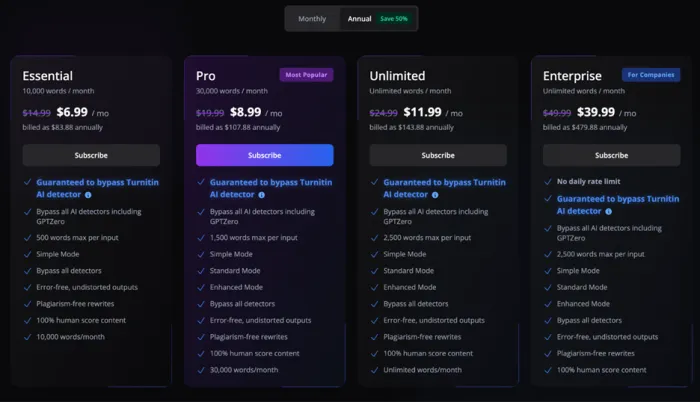
Grubby AI provides a limited free allowance of 150 words per month. For continued usage, users must select a paid plan based on monthly word limits.
The Essential plan includes 10,000 words per month and is priced at 14.99 dollars monthly or 6.99 dollars per month when billed annually at 83.88 dollars. This plan supports inputs up to 500 words at a time and includes a basic rewriting mode.
The Pro plan expands usage to 30,000 words per month. It is priced at 19.99 dollars monthly or 8.99 dollars per month when billed annually at 107.88 dollars. It allows larger inputs of up to 1,500 words and introduces additional rewriting modes for different output styles.
The Unlimited plan removes monthly word limits and is priced at 24.99 dollars monthly or 11.99 dollars per month when billed annually at 143.88 dollars. Input size increases to 2,500 words per request, with access to all rewriting modes.
The Enterprise plan is designed for higher volume usage and is priced at 49.99 dollars monthly or 39.99 dollars per month when billed annually at 479.88 dollars. It removes daily limits and maintains the same input size and features as the Unlimited plan.
Across all plans, the platform describes features such as rewriting text to appear human, avoiding plagiarism, and supporting different rewriting modes. However, real world performance varies based on content complexity and detection tools.
User Reviews: Common Themes and Patterns
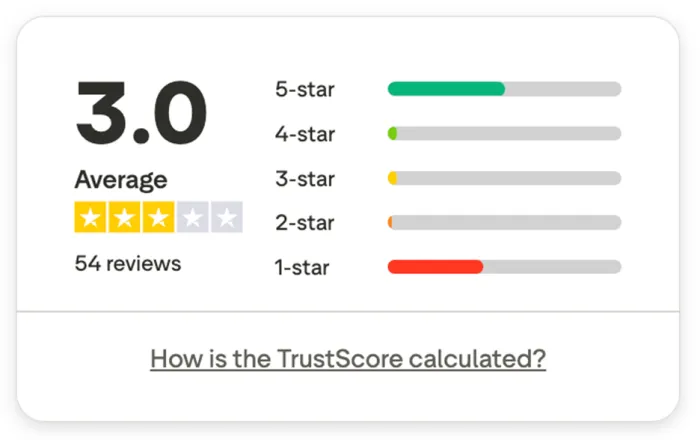
User feedback shows a mixed response to the platform. Some users report that the tool helps reduce time spent rewriting content and improves basic readability for short tasks.
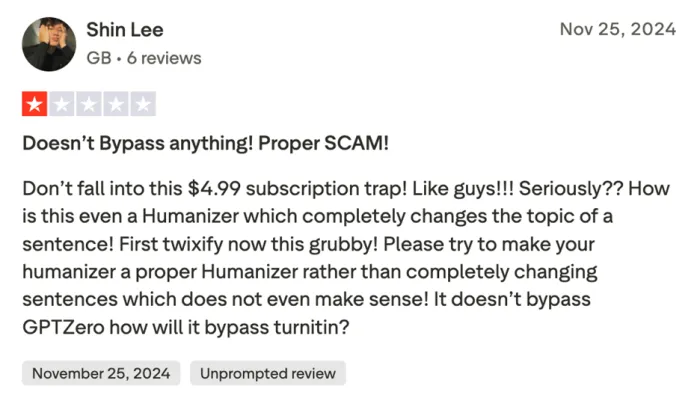
At the same time, many reviews describe issues related to detection failures. Several users mention that their content was still flagged by AI detectors after processing.
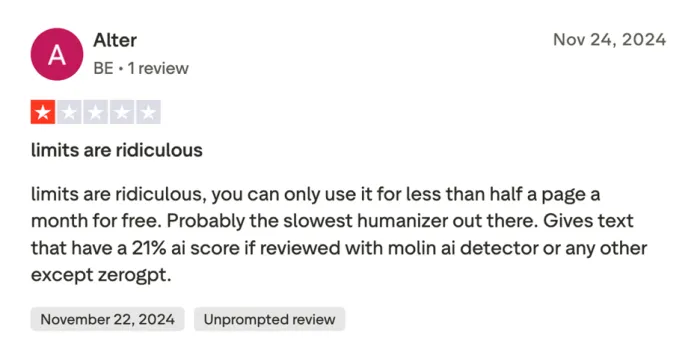
Quality concerns appear frequently in feedback. Some users report that rewritten text becomes unclear or changes meaning. Others describe outputs that feel unnatural or difficult to use without editing.
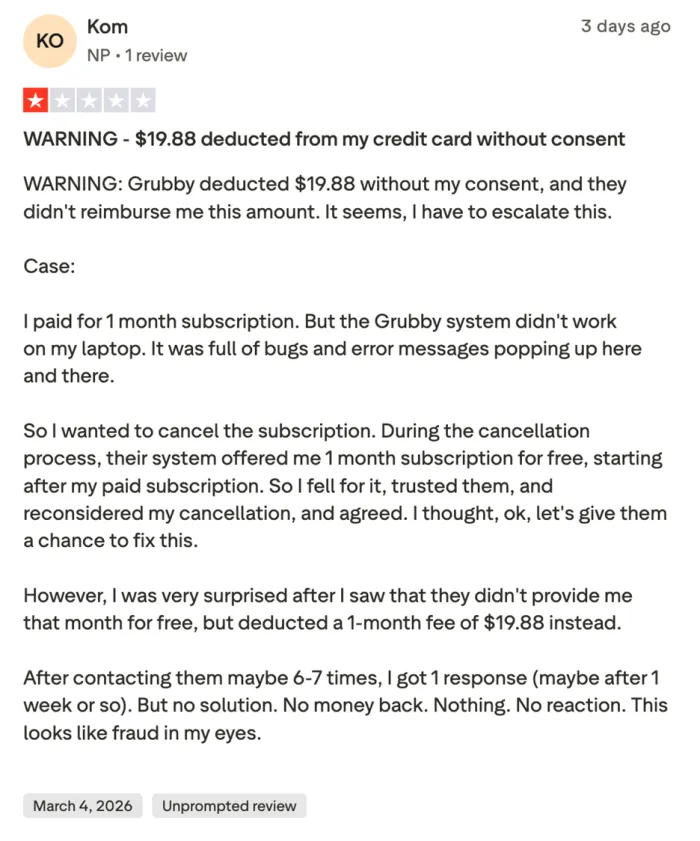
Billing concerns are also common. Users report unexpected charges, difficulty canceling subscriptions, and lack of refunds in some cases.
Technical issues such as login problems, access restrictions, and slow response from support are also mentioned in reviews.
Ethical and Practical Considerations
The use of AI humanizers raises questions about academic integrity. Many institutions have policies regarding AI generated content, and using such tools may conflict with those rules.
There is also a practical limitation related to reliability. AI detection systems are constantly updated, which means that rewriting methods that work today may not remain effective.
Another factor is the balance between detection avoidance and content quality. Attempts to reduce detection may result in writing that is less clear or harder to read.
Comparison With Other AI Humanizers
Grubby AI operates in a competitive category where several tools offer similar functionality. Some alternatives focus on improving consistency, while others emphasize broader language support or integrated detection features.
The platform gained attention through social media exposure, but long term usage depends more on reliability than initial visibility.
Conclusion: Where Grubby AI Stands Today
This Grubby AI review shows that the tool can modify AI generated text and improve basic readability in some cases. However, its effectiveness in bypassing detection is inconsistent, and output quality varies.
User feedback highlights concerns around reliability, billing, and support. These factors contribute to a mixed overall experience.
For users considering tools in this category, testing with specific use cases and understanding limitations is important before relying on the output.
Frequently Asked Questions
1. What is Grubby AI used for?
It is used to rewrite AI generated text so that it appears more human and less detectable by automated systems.
2. Does Grubby AI always bypass AI detectors?
No. Test results show that performance varies depending on the detector.
3. Is the output ready to use immediately?
Not always. Many outputs require editing to improve clarity and grammar.
4. Does it support multiple languages?
It works best in English. Other languages are often converted into English.
5. Are there billing concerns?
Some user reviews mention issues related to subscriptions and refunds.
6. Can it be used for academic work?
It can be used, but it may not align with institutional guidelines.