
I have been paying for Paperpal Prime out of my own pocket since late 2025, mostly to tidy manuscript drafts and the odd grant application. So when I logged in this year and found the plan page rearranged, with a brand new Pro tier sitting above Prime, I figured it was time to map the whole thing out properly. The prices have moved too. The annual plan that launched at $99 back in December 2022 climbed to $139, and the current annual Prime rate sits at $144.
This guide sticks to the money side: what each plan costs in 2026, where the free version cuts you off, what the new Pro tier is actually for, and the renewal details Paperpal does not put on the checkout screen. If you care more about how the editor performs on real text, I covered that separately in my full Paperpal review, where I ran a ChatGPT story through Make Academic and watched what it did to the prose sentence by sentence.
THE SHORT VERSION • Prime costs $25 a month, or $144 a year, which works out to $12 a month on annual billing. • The new Pro tier runs $59 a month or $348 a year and targets theses, journal articles, and clinical documents. • The free plan is genuinely usable: 200 language corrections a month, 5 AI actions a day, and a 7,000 word plagiarism allowance. • My position after months on Prime: annual billing is the only tier where the math feels fair. Monthly is a deadline-month tool. |
Paperpal plans at a glance
Paperpal now sells three tiers to individuals: Free, Prime, and Pro. Every tier works in the same places, so you are never paying for access to the MS Word add-in, the web editor, or the Chrome and Edge extensions that cover Google Docs and Overleaf. What you pay for is volume and depth.
Free $0 forever, with caps • 200 language suggestions a month • 5 generative AI actions a day • Plagiarism checks up to 7,000 words a month • Unlimited citation generation • Chat PDF on the Standard model Good for: short assignments and testing the editor before paying. | Prime (most popular) $25/mo or $144 a year ($12 a month) • Unlimited language and consistency checks • Unrestricted generative AI features • Plagiarism up to 10,000 words a month • Chat PDF on the Advanced model • 30+ submission readiness checks Good for: anyone writing academic text most weeks of the year. | Pro $59/mo or $348 a year ($29 a month) • Everything in Prime • Positioned for high-stakes manuscripts • Built for theses and clinical documents • Mid-cycle upgrade from Prime supported Good for: heavy publication pipelines and long documents. |
What the free plan really gets you
Paperpal does not run a timed trial. Instead, the free plan is permanent, and its limits reset daily or monthly depending on the feature. In practice that means you can lean on it indefinitely for light work, which is more generous than most tools in this category.
Here is what actually ran out for me, and in what order. The 200 monthly language suggestions sound like plenty until you paste in a 4,000 word chapter, at which point the counter drains fast. The five daily generative AI actions were the first wall I hit; on writing days I burned through them before noon. The 7,000 word plagiarism allowance held up fine for essays but covered barely a third of a full manuscript. Rewrites are also capped at 500 words per pass, so longer sections have to go through in chunks.
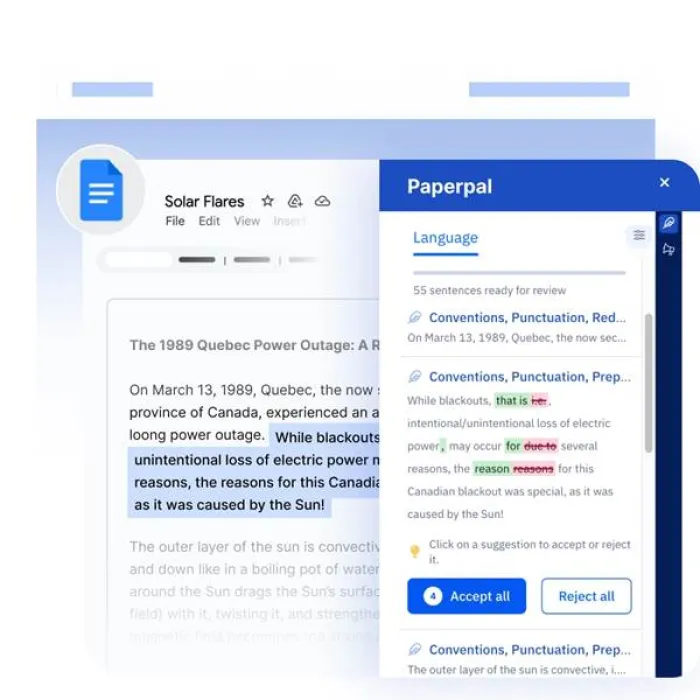
FROM MY DESK If you only need a grammar pass on a couple of essays a month, stay free. The moment your work involves a thesis chapter or a journal draft, the caps stop being theoretical and start interrupting you mid-task. |
Paperpal Prime, feature by feature
Prime is the tier Paperpal built its reputation on, and at $144 a year it removes every meaningful cap on the writing side. The company describes it as the plan for regular research and writing needs, and after months of daily use, that description holds. Here is what the subscription actually opens up.
• Unlimited editing. Language suggestions plus consistency checks with no monthly ceiling, covering grammar, punctuation, vocabulary, and formatting of terms and references.
• Unrestricted generative AI. Rewrite, paraphrase, trim, translate from 25+ languages, and use templates without the five-a-day meter that governs the free plan.
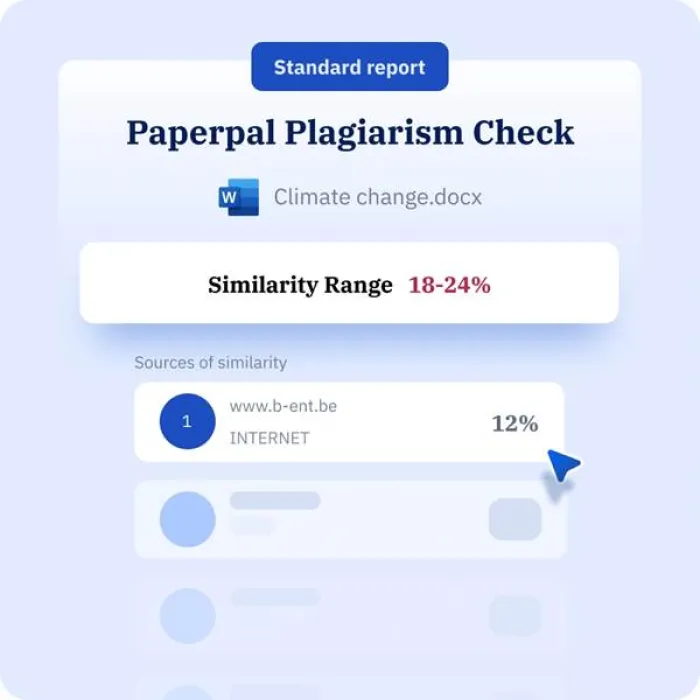
• Bigger plagiarism allowance. 10,000 words a month with detailed similarity reports, and the option to buy extra credits when a long manuscript pushes past the cap.
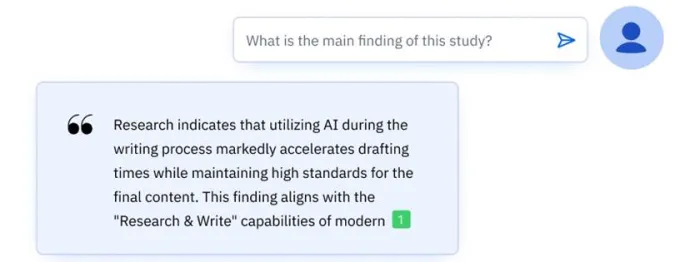
• Chat PDF, Advanced model. Deeper answers from uploaded papers, related literature suggestions, and the ability to save snippets to notes with accurate citations attached.
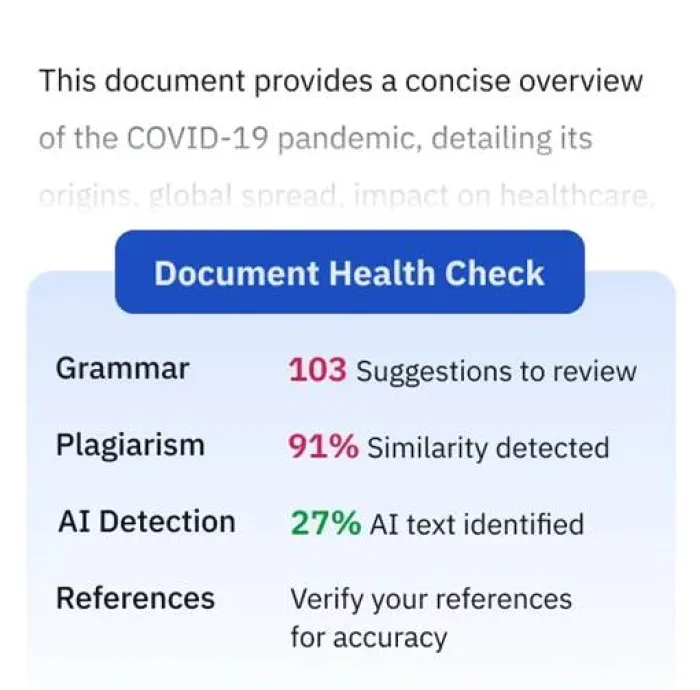
• Submission readiness checks. 30+ language and technical checks that flag the issues journals use for desk rejections before you ever hit submit.
• Citation workflow. A citation library with unlimited generation across the 10,000+ styles Paperpal lists, so references stop being a separate chore.
Two smaller Prime perks matter more than they look on paper: you can tailor suggestions to British or American English, and you can switch between Essential and Extensive editing modes depending on how heavy you want the intervention to be. For journal work I keep it on Extensive; for anything a supervisor will read closely, Essential keeps my own voice intact.
The new Pro tier, explained
Pro is the 2026 addition, priced at $59 a month or $348 a year. Paperpal's help center pitches it for high-stakes research writing: journal articles, theses, and clinical documents. Support docs also confirm you can upgrade from Prime to Pro mid-subscription rather than waiting for renewal.
Here is my honest read. Paperpal has not published a detailed public matrix of Pro-only features in its help documentation yet, and the tier is clearly aimed at people whose documents carry publication or regulatory weight. At more than double the annual cost of Prime, I would not start here. Start on Prime, and if your workload turns out to match Pro's brief, the upgrade path is a settings page away. Paying $348 up front on the assumption you might need it is how software budgets die.
Free vs Prime vs Pro: side by side
| What you get | Free | Prime | Pro |
|---|---|---|---|
| Monthly billing | $0 | $25 | $59 |
| Annual billing | $0 | $144 | $348 |
| Effective monthly (annual) | $0 | $12 | $29 |
| Language corrections | 200 a month | Unlimited | Unlimited |
| Generative AI actions | 5 a day | Unrestricted | Unrestricted |
| Plagiarism allowance | 7,000 words a month | 10,000 words a month, credits available | Included, credits available |
| Chat PDF | Standard model | Advanced model | Advanced model |
| Submission checks | Limited access | 30+ checks | 30+ checks |
| Word, Docs, Overleaf, Web | Included | Included | Included |
| Best for | Testing and light use | Regular research writing | Theses and clinical work |
Monthly vs annual: the real math
Paperpal's discount for paying up front is unusually steep, and it is the single biggest lever in this whole pricing structure. Twelve months of Prime on the monthly plan costs $300. The annual plan costs $144 for the same access. That is $156 saved, a 52 percent cut, for one decision at checkout.
| Plan | 12 months, billed monthly | Billed annually | You save |
|---|---|---|---|
| Prime | $300 | $144 | $156 (52%) |
| Pro | $708 | $348 | $360 (51%) |
PRICE HISTORY Annual Prime launched at $99 in December 2022, rose to $139, and now lists at $144. That is a 45 percent climb in under four years, which is exactly why I stopped assuming my renewal would match my first-year rate. |
The only situation where monthly billing makes sense is a compressed deadline. If your entire writing load lands in two months of thesis corrections, $50 across two monthly cycles beats $144 for a year you will not use. For everyone else, the annual plan is the plan.
Fine print and hidden costs
Nothing here is scandalous, but four details deserve a place in your decision before you enter card details.
Refunds have a 30 day window on annual plans. Paperpal's published vendor terms allow refunds if you cancel an annual plan within 30 days of purchase. After that, no refunds are issued and the subscription simply runs until expiry. You can cancel any time from the Membership and Billing page.
Plagiarism overages cost extra. The 10,000 word monthly allowance on Prime covers most papers, but a full-length thesis will blow through it, and additional credits are a separate purchase. Budget for that if you are checking book-length work.
The quarterly plan is gone. Older third-party listings still show a $55 quarterly option. Paperpal's current help center lists only monthly and annual billing for both paid tiers, so do not plan around a middle option that no longer appears in the official lineup.
Teams and institutions price differently. Paperpal's Teams listing runs $1,000 a year for 10 seats, which is $100 a seat, dropping to $50 a seat at 1,000 seats. Universities negotiate directly through sales, and plenty of institutions already hold licenses, so ask your library before spending your own money. Billing in local currencies is supported on individual plans too.
Is Paperpal Prime worth it?
Price only matters relative to output, so this is where my actual usage does the talking. The quality question convinced me before the cost question did. When I pushed a deliberately messy, ChatGPT-written story through the Make Academic experiment I ran for my hands-on review, the editing engine showed me both its ceiling and its habits, and that test is what persuaded me Prime earns its keep for manuscript work specifically, not for general-purpose writing.
Prime is worth $144 if
• You write or edit academic text most weeks, not just at exam time
• You keep hitting the 5-a-day AI cap on the free plan, like I did
• You want editing, plagiarism, citations, and submission checks under one login instead of three subscriptions
• You can pay annually, because $12 a month is fair and $25 is not
Stay free or skip it if
• You need a grammar pass a few times a term, which 200 free corrections already cover
• Your drafts are confidential or embargoed and your institution restricts external AI tools
• You mainly want a general chatbot, since Prime is tuned hard for academic prose
• Your university already licenses Paperpal, which makes paying twice pointless
One comparison worth making: a single round of professional human editing on a manuscript routinely costs more than a full year of Prime. That framing is what keeps me renewed. Prime is not replacing a human editor for a career-defining paper, but for every draft between now and that paper, it is doing the job for $12 a month.
Final VerdictBuy Prime annual, ignore the rest until you can't After paying for this tool with my own money through a plan restructure and a price bump, here is where I land. Prime on annual billing at $144 is the only Paperpal purchase I would make again without hesitation, because $12 a month for unlimited academic editing, a working citation system, and pre-submission checks undercuts every comparable stack I have priced. Prime monthly at $25 is a deadline-season rental, useful for exactly as long as the deadline lasts. Pro at $348 is a wait-and-see for me until Paperpal documents precisely what the extra $204 a year buys beyond Prime. And the free plan remains one of the more honest free tiers in this category, right up until your first long chapter, which is precisely when Paperpal knows you will upgrade. Value for money: 4.2 / 5 (Prime annual plan, based on my ongoing paid use and prices verified August 29, 2026) |