
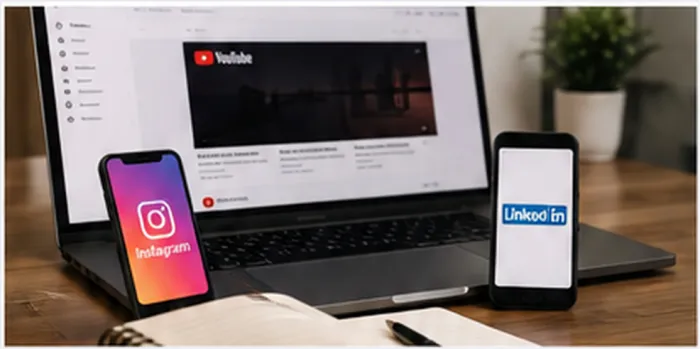
I have spent close to two years posting the same idea three different ways: once as a Reel, once as a LinkedIn carousel, and once as a YouTube video. The idea rarely changed. The results did, and not by a little. A pillar that pulled saves and DMs on Instagram would quietly sink on LinkedIn when I posted it the same way. A LinkedIn post that held people reading for a full minute would get buried on YouTube because the thumbnail earned zero clicks.
That gap taught me something that most "pick 3 to 5 topics" advice skips over. Choosing content pillars is only half the job. The harder, more valuable half is knowing how each pillar has to behave once it lands on a specific platform, because Instagram, LinkedIn and YouTube reward completely different behavior in 2026.
This guide is the process I wish someone had handed me at the start. First we choose the pillars themselves, then we translate them so the same idea earns reach on three platforms that measure success in three different ways. No filler, just what actually moves the needle right now.
First, what a content pillar really is
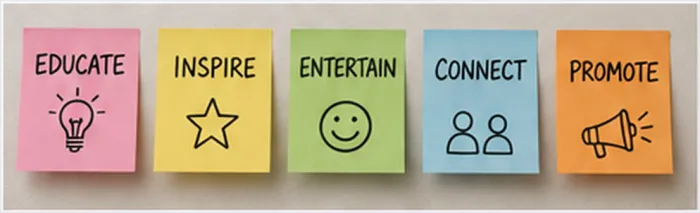
A content pillar is a recurring theme your account returns to on purpose, the two to five topics you want to be known for. Every post you publish should trace back to one of them. If you want the full origin story and the SEO logic behind them, I broke down what a content pillar is in a separate piece, so here I will keep it short and stay focused on the choosing part.
The point of pillars is not organization for its own sake. It is repetition with intent. When you post inside a tight set of themes, the algorithm on each platform starts to understand your niche, and your audience starts to know what they follow you for. Scattered accounts confuse both.
The mistake that quietly kills most pillar strategies
Here is the trap almost everyone falls into, myself included for far too long. You pick your pillars, you make one piece of content, and you post the identical thing everywhere. Same caption, same video, same link.
Every platform now punishes this.
Gives original, made-for-Instagram content 40 to 60 percent more distribution than reposts. Dump ten or more recycled posts in 30 days and you are dropped from recommendations. A TikTok watermark alone gets a Reel pushed down. | Slaps roughly a 60 percent reach penalty on any post with an external link in the body, and the old "link in the first comment" workaround is now detected too. It wants people to stay on LinkedIn. | YouTube Measures the percentage of your video people actually watch, so the exact clip cut for a 3-second Instagram hook will tank on YouTube, where a click promises a real payoff. |
So the real skill is not choosing between platforms. It is choosing pillars strong enough to survive being rebuilt three separate ways. That starts with picking the right ones.
How to actually choose your pillars
Forget vague brainstorming. A pillar is only worth keeping if it clears three tests at once. Run every candidate topic through all three.
| The test | The question to ask | How to check it |
|---|---|---|
| Staying power | Can I create for this every week for a year without running dry? | List 15 to 20 post ideas under the topic right now. If you stall before 10, it is a subtopic, not a pillar. |
| Real demand | Is my audience already searching for or asking about this? | Type your niche into Instagram and YouTube search and read the autocomplete. Check Google Trends for direction. Reread your DMs, comments and FAQs. |
| Business pull | Does this lead somewhere I sell? | Trace a straight line from the topic to a product, service or booking. If there is no line, it is a hobby topic. |
A topic that passes all three is a pillar. A topic that passes two is a maybe. A topic that passes one belongs in the occasional-post pile, not your core strategy.
| 3 | HOW MANY SHOULD YOU KEEP Three to five is the sweet spot, and you should never run more than about ten at once. Too few and your content feels repetitive. Too many and you dilute the signal you send to both the algorithm and your followers. Most creators overestimate how many themes they can carry, so start with three and add a fourth only once the first three feel effortless. |
| ✓ | A VALIDATION MOVE THAT COSTS NOTHING Sort your last 30 posts by saves, shares and watch time, not likes. The themes at the top are pillars your audience has already voted for. |
Once you have your shortlist, keyword research does the refining. Take each pillar and pull the specific phrases people use around it. A pillar of "budgeting" is really "budgeting tips," "budgeting for beginners," and "how to budget on a low income." Those phrases become your post topics, captions, titles and tags, which makes your content findable long after you hit publish.

One pillar, three platforms
This is the section I built this whole guide around. Say your pillar is email marketing and you run a marketing brand. Watch how one idea splits into three completely different builds, each matched to what its platform rewards.
| The same pillar | YouTube | ||
|---|---|---|---|
| Best build for this pillar | 15 to 30 second Reel or a saveable carousel | Document carousel or a text post with a strong hook | 5 to 10 minute tutorial |
| The angle | One sharp tip or a fast subject-line teardown | A named framework with your own take on it | A full walk-through, screen shared, start to finish |
| What "working" looks like | Sends and saves inside the first hour | 60-plus seconds of reading time and real comments | Over 50 percent retention and a 5-plus percent click rate |
| What quietly kills it here | A reposted clip with another app's watermark | A link sitting in the post body | Padding the runtime to hit ten minutes |
Same pillar. Three formats, three angles, three definitions of success. Nail this translation and one week of thinking produces content that performs natively everywhere. Skip it and you are spraying one asset into three feeds that were never going to reward it equally.
Now the platform-by-platform detail, so you know exactly what to optimize for.
IG InstagramReach is earned in the first hour | |
Instagram in 2026 runs separate ranking systems for Feed, Reels, Stories and Explore, and Reels is still the discovery engine. On average, Reels reach around 2.35 times more people than single-image posts, so short-form video should carry the pillars you want new people to find. What the algorithm actually rewards· Sends over everything: A DM share is now one of the heaviest signals, confirmed repeatedly by Instagram's own leadership. When someone forwards your post to a friend, the platform reads it as proof of quality. Make content worth sending privately. · Saves, roughly 3x heavier than likes: Frameworks, comparisons and step-by-steps get saved. That is why insight carousels punch above their weight. · Completion and early velocity: Whether people watch past the halfway mark, and how they engage in the first 30 to 60 minutes, decides if your Reel escapes to non-followers. The first 1 to 3 seconds either earn the rest of the video or kill it.
|
in LinkedInReading time beats reactions | |
LinkedIn quietly rebuilt itself around a single question: how long did someone actually spend with your post before scrolling on? That is dwell time, and it is now the primary quality signal. The numbers are stark. Posts that hold attention past the 61-second mark see engagement rates near 15.6 percent, while posts abandoned in the first 3 seconds sit around 1.2 percent. Anything under 3 seconds gets flagged as a "click bounce," and distribution stops there. What the algorithm actually rewards · Comments, and specifically thoughtful ones: A meaningful comment is widely estimated to carry around 15 times the weight of a like. The math creators repeat is simple: 50 real comments beat 500 likes. End posts with a genuine question, not engagement bait. · Formats that make people slow down: Document carousels, the swipeable PDFs, generate high dwell time because readers move through them slide by slide. Native video under 90 seconds with a hook in the first 3 seconds also holds attention in silent scroll. · On-platform value: Keep links out of the post body to dodge that 60 percent reach penalty. Deliver the payoff inside the feed and point to the link from your bio or a follow-up.
|
YT YouTubeTwo numbers decide everything | |||||||||||
On YouTube, your pillars are less about individual videos and more about series and playlists that YouTube can recommend as a set. But whether any single video survives comes down to two metrics that outweigh the rest. Click-through rate (CTR) The share of people who see your thumbnail and title and actually click. Healthy sits between 4 and 10 percent, above 6 percent is strong, and the platform-wide average hovers around 4 to 5 percent. Your target depends heavily on niche.
Average view duration (AVD) How much of the video people actually watch. This is where creators get the length question wrong. Raw watch-time minutes are not the signal, the percentage viewed is. A 20-minute video watched to 40 percent loses to a 10-minute video watched to 75 percent, so padding backfires. Aim for 50 to 60 percent retention, and treat 5 to 10 minutes as the sweet spot.
|
Getting the pillar mix right
Choosing pillars is step one. Deciding how often each one shows up, and keeping the feed from turning into an ad, is step two. A workable starting split:
| Content role | Share of posts | What it does |
|---|---|---|
| Educational and how-to | ~40% | Earns saves, dwell time and watch time. Your credibility engine. |
| Story and behind the scenes | ~30% | Builds the relationship signals that all three platforms reward. |
| Community and conversation | ~20% | Sparks the comments and shares that expand reach. |
| Promotional | ~10% | The pillar that pays the bills, kept light so the feed never feels like a sales pitch. |
Adjust the ratios to your goals, but hold the line on that last row. The moment promotion dominates, engagement drops and the algorithms notice.
Test your pillars in a week before committing
You do not need to guess for months. Run a fast, honest trial.
1. Pick your top three candidate pillars from the shortlist you built earlier.
2. Make one piece per pillar, per platform, rebuilt properly for each: a Reel, a LinkedIn carousel, a short YouTube video. That is your test batch.
3. Post across seven to ten days at consistent times so you are comparing like with like.
4. Read the right metrics. On Instagram, sends and saves per reach. On LinkedIn, dwell time and comment quality. On YouTube, CTR and retention. Ignore raw likes, they lie.
5. Keep what performed, cut what did not. A pillar that flops on all three platforms is not your pillar, no matter how much you like it. A pillar that wins on even one is worth developing further.
This tiny experiment saves you from spending three months building a content calendar around a theme your audience never wanted.

Common mistakes to avoid
| The mistake | Why it hurts | The fix |
|---|---|---|
| Running too many pillars | Dilutes your niche signal and your identity | Cap it at three to five, add more only when the core feels easy |
| Identical content everywhere | Triggers repost penalties and format mismatches | Rebuild each idea for the platform it lands on |
| An all-promotion feed | Kills engagement and reach across every platform | Keep promo near 10 percent, lead with value |
| Choosing pillars on gut alone | You bet months on unproven topics | Validate with your own analytics and platform search first |
| Chasing trends outside your pillars | Confuses the algorithm about your niche | Let trends flavor a pillar, never replace one |
Final VerdictWhat actually changed once I did this After running this exact process across all three platforms, the biggest shift for me was mental. I stopped treating content pillars as a list I chose once and taped to the wall, and started treating them as a single idea I owe three different builds. That reframe fixed almost everything. My Instagram reach climbed when I stopped reposting and started making Reels that people wanted to send. LinkedIn finally worked when I killed the links in my post bodies and wrote carousels people actually read to the end. YouTube stopped feeling random once I obsessed over the first thirty seconds and the thumbnail instead of the runtime. Choose fewer pillars than you think you need, prove them with a one-week test before you commit, and never insult a platform by handing it content built for a different one. The algorithms in 2026 are strict, but they are also honest. They reward the creator who respects how each place works, and they quietly bury the one who takes shortcuts. Pick your three to five pillars, translate each one properly, and let consistency do the compounding. That is the entire game, and it is very learnable once you stop guessing. |