| The | ██████████████████████████████████ | 41 |
| I | ███████████████████████ | 28 |
| It | ███████████████ | 18 |
| There | █████████ | 11 |
| This | ███████ | 9 |
| In | ██████ | 7 |
Five words open 60 percent of the chapter. That is the shape of the problem, and it takes about four minutes in a spreadsheet to see it.
The draft that taught me this was a client memoir, roughly 40,000 words, and it read like a wall even though every sentence in it was clean. No grammar errors. Barely any passive voice. Sentence lengths varied. I kept flagging paragraphs as "flat" without being able to point at the cause, which is the least useful note an editor can leave.
So I stopped reading it as prose and pulled it apart mechanically: one chapter into a spreadsheet, split at every period, first word of each sentence, counted. Forty-one sentences opened with The. Twenty-eight opened with I. The chart above is that count. Once I saw it, I could not unsee it anywhere in the manuscript.
Since then I have run the same audit on blog drafts, cover letters, grant applications, and a lot of machine-generated copy. I have also spent several evenings feeding one 1,200 word sample through every checker I could get an account for, because clients kept asking which one to buy. Short version: the tools are good at finding the pattern and close to useless at fixing it.
What actually counts as repetition
Repetitive sentence openings means several consecutive or near-consecutive sentences beginning with the same word, the same part of speech, or the same structure. Three kinds show up, and they are worth separating because each needs a different repair.
Type 01 Same word The most visible kind. The, I, It, This, There, or a character name, over and over. Easy to spot, easy to count. | Type 02 Same structure Different words, identical skeleton. Subject then verb then object, every time. Nothing repeats literally, so no tool flags it, and the rhythm still flattens. |
Type 03 Same opener move Four sentences in a row that all start with an -ing phrase, or all start with However, Additionally, Moreover. A fix that became its own tic. | Watch for The swap Writers told to vary their openings often trade one habit for another. The participial phrase becomes the new default, which carries a grammar risk as well as a rhythm one. |
Before you fix anything Deliberate repetition at the start of successive clauses has a name: anaphora. It is one of the oldest devices in English rhetoric and the engine behind almost every speech you can quote from memory. Repeating an opener three times on purpose, for build and cadence, is not a flaw. The test: read it aloud and ask whether the repetition is doing work. If it lands, keep it. If it sits there, it is a tic. |
Where each type of writing goes wrong
The offending word is predictable once you know what a piece is. I have stopped guessing and started expecting these.
| Type of writing | Usual repeat offenders | Why it happens |
|---|---|---|
| Memoir and personal essay | I, My, We | The narrator performs nearly every action, so the subject slot never changes hands. |
| Academic and research | The, This, These, It | Pointing back to the previous idea is the standard cohesion move, and it defaults to a demonstrative. |
| Business and email | I, We, Please, Just | Each sentence is a separate request, written fast, with no connective tissue between them. |
| Fiction | Character name, She, He, -ing phrases, As | Close third person parks one viewpoint character in the subject slot, scene after scene. |
| Blog and web copy | You, If you, When, It is | Direct address is house style, so every paragraph restarts from the reader side. |
| AI-assisted drafts | The, This, Additionally, Overall | Generated prose leans hard on demonstratives and transitional adverbs to stitch paragraphs together. |
The first-word audit, three ways
You cannot fix a rhythm problem by reading for it, because you already know what you meant. You need the text stripped of meaning. These three methods do that.
1. The spreadsheet count, about four minutes
My default for anything over 800 words. Paste a section into cell A1 of Google Sheets, then split it into sentences and pull the first word of each.
// Google Sheets. Paste your text into A1. // B1 breaks it into one sentence per row: =TRANSPOSE(SPLIT(A1,".")) // C1, filled down, grabs the opening word: =INDEX(SPLIT(TRIM(B1)," "),1,1) // D1, filled down, counts how often that word opens a sentence: =COUNTIF($C$1:$C$500,C1) |
Sort column D largest to smallest. The top five rows are your assignment. In Excel, use =TEXTBEFORE(TRIM(B1)&" "," ") on Microsoft 365 or =LEFT(TRIM(B1),FIND(" ",TRIM(B1)&" ")-1) on older versions. Splitting on periods misreads abbreviations as sentence breaks, which skews the count by a few rows. It does not matter. You want a shape, not a statistic.
2. Regex highlighting, about thirty seconds
If your draft lives in VS Code, Sublime, or Notepad++, switch search to regular expressions and select every word that follows a sentence break.
// every sentence-opening word, highlighted at once [.!?]\s+(\w+) // hunting one suspect, for example "The" [.!?]\s+The\b |
Run the second pattern with the match counter visible. That number in the corner of the screen is more persuasive than any note I could leave in a margin.
3. Ears, not eyes
Text to speech catches what the count misses, particularly Type 02, where nothing repeats literally. Word has Read Aloud at Ctrl plus Alt plus Space on Windows. On a Mac, switch on Spoken Content in Accessibility settings and select text with Option plus Escape. A synthetic voice will not smooth over your rhythm the way your inner ear does, which is the whole point.

Rules of thumb I actually use Two sentences in a row with the same opening word is invisible. Three is where readers feel it. Four is a pattern they notice consciously, and at that point they are watching the prose instead of reading it. If one word opens more than a quarter of the sentences in a section, that section needs restructuring rather than word swapping. Working thresholds from the desk, not laws. |
Ten ways to open a sentence differently
English offers far more entry points than most drafts use. Each move below is worked from the same flat original: She checked the logs. She found the error at 3 a.m. She called the on-call engineer.
| Move | What it is | Worked example |
|---|---|---|
| 01 Prepositional phrase | Lead with where, when, or under what conditions. | By the third pass through the logs, the error surfaced. |
| 02 Subordinate clause | Start with because, although, when, while, if, since. | Although the logs looked clean, the timestamps did not line up. |
| 03 Participial phrase | An -ing or -ed phrase, attached to the right subject. | Locked out of the dashboard, she called the on-call engineer. |
| 04 Infinitive phrase | Purpose first, action second. | To rule out a caching issue, she checked the logs by hand. |
| 05 Single adverb | Strong in small doses, tiresome in bulk. | Eventually the pattern showed itself: every failure hit at 3 a.m. |
| 06 Appositive | Identify first, then name the subject. | A former sysadmin, she trusted timestamps more than dashboards. |
| 07 Absolute phrase | A noun plus a participle, running alongside the main action. | Her coffee going cold beside her, she opened the third log file. |
| 08 Conjunction | And, But, So. Accepted by Chicago and by Garner. The ban is a schoolroom myth. | But the error was not in the logs at all. |
| 09 Question | Rare, and effective because it is rare. | What runs at 3 a.m. and nowhere else? The backup job. |
| 10 Object first | Invert the order so the thing acted on leads. | The 3 a.m. failures she could explain. The 3 p.m. one she could not. |
The repair that beats all ten moves
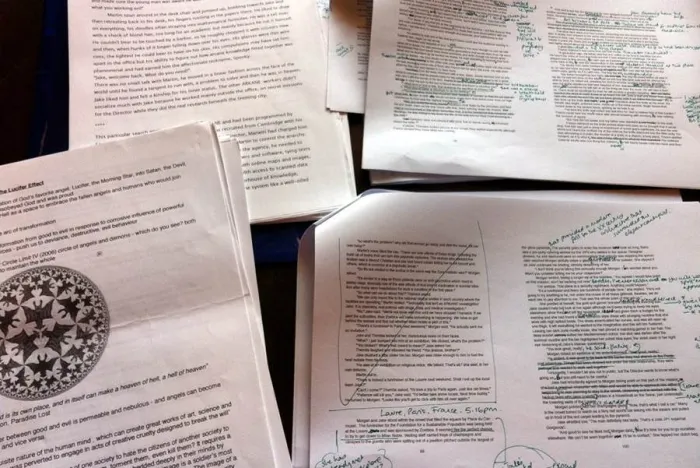
Here is the part most advice skips. Repetitive openings are usually a symptom. The disease is that every idea got its own sentence, so the same subject has to be reintroduced again and again. Shuffling words at the front of each sentence treats the symptom and leaves the choppiness untouched.
The stronger fix is to combine. Subordinate one idea to another and the second opener disappears, because the second sentence no longer exists.
Before / five sentences, one opener, one subject The team missed the deadline. The client asked for a call. The call went badly. The project was paused. The budget was frozen the same week. |
After / combined, resequenced, one sentence cut The team missed the deadline. Within an hour the client asked for a call, and it went badly enough that the project was paused and the budget frozen in the same week. |
Second structural fix: change the subject. If I opens 28 sentences, the real issue is that you are the grammatical subject 28 times. Hand the subject slot to the object, an abstraction, a place, or a time, and the opener changes on its own.
Before / narrator as subject every time I walked into the kitchen. I saw the note on the counter. I did not want to read it. |
After / the subject changes hands The kitchen smelled like burnt coffee. On the counter sat a note, folded once, my name on the outside in her handwriting. I did not want to read it. |
Notice that the surviving I now carries weight, because it is the only one. Repetition removed everywhere is repetition that means nothing anywhere.
Third fix, and the fastest: delete. When two sentences start the same way and say nearly the same thing, one is a rehearsal for the other. Cut the rehearsal.
Six mistakes people make while fixing this
Dangling the participle An opening -ing phrase must describe the subject that follows it. Walking into the room, the smell hit her puts the smell on the walk. Overusing Move 03 is the most common way a repetition fix introduces a grammar error. | Stacking simultaneous action As she opened the door, she reached for the light forces two actions into one instant when they happened in sequence. A common byproduct of hunting for non-subject openers. |
Bolting on transitions However, Moreover, and Additionally are the cheapest way to change an opener, and they leave a machine-written fingerprint when they pile up. If a transition does not mark a real turn in the argument, cut it. | Throat clearing There is, There are, and It is important to note that vary the opener while delaying the actual subject by four words. Swapping one weak opener for a longer weak opener is not progress. |
Fixing parallelism that was working In instructions and specifications, matched openers help readers scan. Click Save. Click Export. Click Done. stays as it is. Uniformity is a feature when someone is skimming for a step. | Reaching for a thesaurus The report says to The document states to The paper indicates varies the second word and leaves the opener alone. The problem was never vocabulary. |
What the tools do and do not catch
I ran the same deliberately repetitive sample through all of these. Here is what came back.
| Tool | Catches repeated openers? | Worth knowing |
|---|---|---|
| LanguageTool | Yes, directly | Its style rules include one that fires when three consecutive sentences begin with the same word. The most literal match for this problem, and the free tier has it. |
| ProWritingAid | Yes | The Repeats report and the sentence reports both surface repeated starts, with length variation alongside. Built for this pass. |
| Grammarly | Partly, premium only | Offers variety and fluency suggestions, but works sentence by sentence rather than counting across a section, so long runs slip through. |
| Hemingway Editor | No | Measures length, adverbs, passive voice, and complexity. Repeated openings sit outside its scope entirely. |
| Microsoft Editor | Rarely | Occasional conciseness and clarity flags. I would not rely on it for this. |
| A chat model | Yes, with a caveat | Ask it to list the first word of every sentence in order, not to count them. Language models are shaky at counting and solid at extracting. Tally the list yourself. |
One technical detail worth carrying: readability scores will never help here. Flesch Reading Ease and Flesch-Kincaid Grade Level are computed from sentence length and syllable counts. A page where every sentence starts with The can score beautifully. The metric is blind to the pattern by design.
The fifteen minute revision pass
Run this after the draft is done, never during. Hunting openers while drafting is a reliable way to stop writing altogether.

1. Finish the draft first. This is a revision pass. Ideas first, cadence second.
2. Run the audit on one section. Spreadsheet or regex. Write down the top three opening words and their counts.
3. Mark every run of three or more. Highlight the runs, not every instance. Isolated repeats are fine.
4. Ask why each run exists. Same subject throughout? One idea split across three sentences? A genuine list? The answer picks the repair.
5. Combine before you reorder. Every merge removes an opener without you having to invent one.
6. Vary the moves you use. Do not repair four sentences with four participial phrases.
7. Read the section aloud, or let the machine read it. If it still drones, the problem is structural and shuffling will not save it.
8. Re-run the audit once. The counts should be visibly flatter. If not, you rearranged words rather than sentences.
A drill worth doing once
Take any paragraph you wrote last month and rewrite it five times, each version opening with a different one of the ten moves. Most will be worse than the original, which is the point. You are not after a better paragraph. You are building the reflex that puts an alternative opener within reach at speed, until the moves stop being a list you consult and start being options you hear.
Quick checks before you publish
• No word opens more than a quarter of the sentences in any section.
• No run of four sentences sharing an opening word, unless the repetition is deliberate.
• No run of three sentences sharing an opener type, especially -ing phrases.
• Every opening participial phrase describes the subject that follows it.
• Transitional adverbs mark real turns rather than filling gaps.
• Parallel openers survive intact in steps, specifications, and comparison lists.
• The section has been heard, not only read.
Final verdictFifteen minutes, once, at the end After running this on roughly sixty manuscripts and plenty of my own drafts, my position is that repetitive openings are the highest return line edit available and the least taught. A quarter of an hour per chapter. No talent required, only a count. And it fixes something readers feel but never name, which is why the note that comes back is "it dragged" rather than "your sentences all started with The." LanguageTool and ProWritingAid genuinely find the pattern, and if you write long-form regularly, one of them will pay for itself in flagged runs you would have read straight past. What none of them do is repair it. Every automated rewrite I accepted made the sentence slightly worse, usually by bolting on a transitional adverb or converting a clean clause into a dangling participle. The machines are good at the count and bad at the ear. My setup now is unglamorous: finish the draft, dump a section into a spreadsheet, sort the counts, mark every run of three, fix by combining rather than reordering. The spreadsheet does the noticing. I do the writing. That split has held up better than any subscription I have paid for. |