Two moments shaped this whole project for me.
The first was a bright yellow "Free Trial Ended" banner that appeared on a brand new account before I had generated a single word. The second was a $1.99 tool quietly walking a paragraph past two AI detectors in about six seconds.
Budget AI writing tools live between those two moments. Some of them are genuinely absurd value. Some of them are cheap the way a hotel minibar is cheap, right up until the bill arrives. So instead of ranking spec sheets, I made real accounts, ran real prompts, hit real paywalls, and scored real outputs with third party checkers. The bar for this list: you can start for under $12 a month, and in most cases under $10.
Six tools made the cut. One of them does not even want a subscription.
The short list
| Tool | Built for | Cheapest way in | Free tier |
|---|---|---|---|
| GravityWrite | Mixed content, templates | $8/mo (annual billing) | 1,000 words/mo |
| Rytr | Short form marketing copy | $7.50/mo (annual) | 10,000 characters/mo |
| QuillBot Premium | Editing and polishing | $8.33/mo (annual) | Yes, capped |
| NovelAI | Fiction | $10/mo | 50 generations, one time |
| Paperpal | Academic writing | ~$11.58/mo (annual) | 200 suggestions/mo |
| GPT Scrambler | Humanizing AI drafts | $1.99, one time | ~200 words per pass |
Where these numbers come from
A quick word on method, because "tested" gets thrown around loosely.
• Every price here was checked against the official pricing pages in July 2026, not against year old screenshots.
• Each tool got a hands-on session with a deliberately awkward prompt: a corporate comedy through NovelAI, an Iron Man story through Paperpal's academic rewriter, a ChatGPT paragraph through GPT Scrambler and three detectors.
• Outputs were scored with independent checkers (QuillBot's grammar checker and AI detector, ZeroGPT, GPTZero), so quality claims never rest on vibes alone.
• Review platform data (Trustpilot, G2) is cited with sample sizes, because a 5.0 built on one review is not a rating, it is an anecdote.
Four of them have full standalone write-ups on this site, linked below and condensed honestly here.
GravityWrite: the cheapest all-rounder, with a hospitality problem
| Cheapest way in | Plus plan, $8/mo on annual billing |
| Free tier | 1,000 words per month, limited templates |
| The standout | 250+ templates plus a built-in AI humanizer |
| The catch | The paywall can fire before you test anything |

That "Free Trial Ended" banner from the intro? This is where it happened. I signed up, logged in, and was told my trial was over before I had opened a single tool. A second attempt through the Kids Video Script Generator ended the same way: form filled, generate clicked, paywall. No preview, no watermarked sample. The full GravityWrite review walks through it minute by minute.
The frustrating part: the product behind the paywall is decent. The template library covers niches most competitors ignore, from YouTube scripts to biography titles, and the humanizer is the reason many SEO teams sign up. At $8 a month, it undercuts the roughly $12 going rate for entry level AI writing plans by about a third.
User data backs up both halves. GravityWrite holds a 4.6 on G2 across 544 reviews and a 4.2 on Trustpilot across 575+; praise clusters around ease of use and speed, complaints around fast draining credits and billing friction. One publicly documented Trustpilot case involved a $97 charge after a failed cancellation; the company did refund it, but the process was rough.
MY ADVICE
Test the free 1,000 words hard in your first 24 hours, start on monthly billing, and set a calendar reminder three days before renewal. Verdict from the deep dive: 6.4 out of 10. Capable tool, impatient front door.
Rytr: unlimited short form copy for the price of a sandwich
| Cheapest way in | Unlimited plan, $7.50/mo annual ($9 monthly) |
| Free tier | 10,000 characters/mo, roughly 1,500 to 2,000 words |
| The standout | Genuinely unlimited generation at the lowest recurring price here |
| The catch | One language on Unlimited, and it is weak at long form |
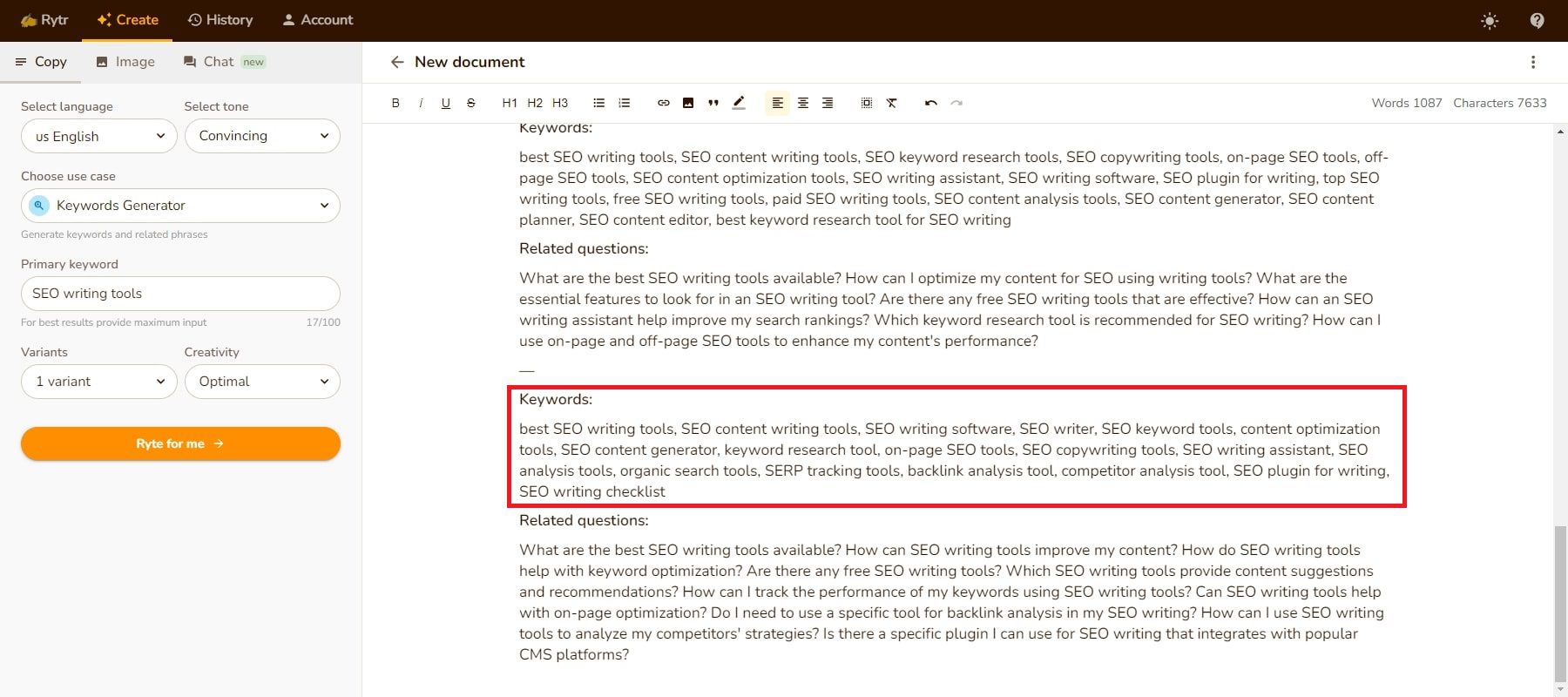
Rytr is the most boring tool on this list, and I mean that as a compliment. There is no chat canvas and no personality. You pick from 40+ use cases, choose one of 20+ tones, feed it a short input, and it produces the thing: an ad, a caption, a subject line, an outline.
At $7.50 a month on annual billing, Unlimited removes the character cap entirely, adds a Chrome extension, and includes 50 plagiarism checks a month. Nothing else in the category offers uncapped generation at that price, and users seem to agree: Rytr sits at 4.7 on G2 and 4.5 on Trustpilot.
The limits are just as clear. Unlimited locks you to a single language, so multilingual writers need the $24.16/mo Premium tier, which stops being a budget pick. And Rytr does not really do long form. Ask it for a 2,000 word article and you will spend more time stitching than writing.
MY ADVICE
If your week is captions, ads, emails, and product blurbs, this is the best dollars-to-output ratio on the page. If your week is essays and articles, keep scrolling.
QuillBot Premium: the tool that kept scoring everyone else
| Cheapest way in | Premium, $8.33/mo annual ($99.95/yr; $19.95 monthly) |
| Free tier | Yes, with a 125 word paraphrase cap and two modes |
| The standout | One subscription covering paraphrasing, grammar, plagiarism, detection |
| The catch | It improves writing that exists; it will not fill a blank page |
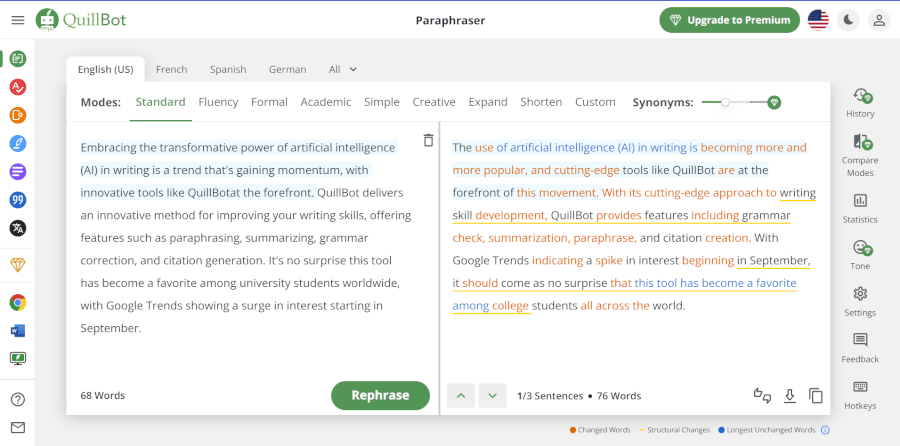
QuillBot earned its spot on this list in an unusual way: it kept showing up on the judging side of my bench. Its free grammar checker scored the NovelAI story. Its free AI detector was one of the three I used against GPT Scrambler. When a tool's free products are reliable enough to grade the competition, the paid version deserves a look.
Premium at $8.33 a month (annual) unlocks unlimited paraphrasing across all modes, advanced grammar suggestions, an unlimited humanizer, a summarizer, and a plagiarism checker with a monthly allowance. The annual discount is steep, a 58 percent saving over the $19.95 monthly rate, there is a 3 day money back guarantee, and students with a valid email pay even less.
QuillBot is not a generator, though. It assumes you have written something and want it tighter or cleaner. For a lot of working writers, that is exactly the right relationship with AI: you keep the drafting, it takes the sanding.
MY ADVICE
The free plan is a permanent trial, so push it until the 125 word cap annoys you. If that happens weekly, the annual plan is the single safest purchase in this article.
NovelAI: the fiction specialist that made me laugh out loud
| Cheapest way in | Tablet, $10/mo (no annual discount on any tier) |
| Free tier | One time trial: 50 text generations, 30 images |
| The standout | A model that continues your prose instead of replying to it |
| The catch | Reset your password and your cloud stored stories are gone |
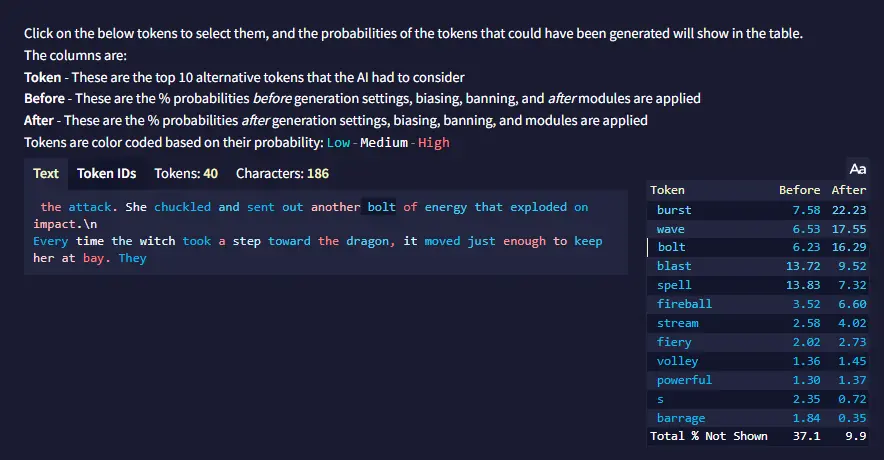
NovelAI is the strangest product here and the one I keep thinking about. It is not an assistant. There is no chat. You write, press Send, and it carries on from you, trained on an enormous amount of fiction and very little else.
For the free trial test, I asked for a funny story about a meeting that should have been an email. It gave me Conference Room B, a paperclip giraffe that becomes a running gag, and a payoff where the giraffe collapses at the exact moment the meeting does. I did not ask for structure. It found one anyway. Run through QuillBot's checker, the unedited 599 word story scored 99 for grammar, 96 for fluency, and 93 for engagement. The 74 for clarity is the model committing to dense corporate jargon jokes, not a defect.
Pricing is unusual. Tablet is $10, Scroll is $15, Opus is $25, all monthly, with no annual option. The trial is a fixed 50 generation allowance, but since October 2025 the same GLM-4.6 model runs on every tier including the trial, so what you test is close to what you buy. The sharp edge is privacy done seriously: stories are encrypted in your browser before upload, so a password reset destroys your remotely stored work. Export your stories on day one.
MY ADVICE
For fiction, $10 a month is an easy yes. For emails, marketing, or anything practical, it will feel stubborn, because it is not trying to help you. It is trying to write.
Paperpal: journal English for less than one professional edit
| Cheapest way in | Prime annual, $139/yr , about $11.58/mo ($25 monthly) |
| Free tier | 200 language suggestions/mo, 5 AI uses/day, unlimited citations |
| The standout | Academic tone built in, plus citations from 250M+ articles |
| The catch | Deliberately will not write the paper for you |
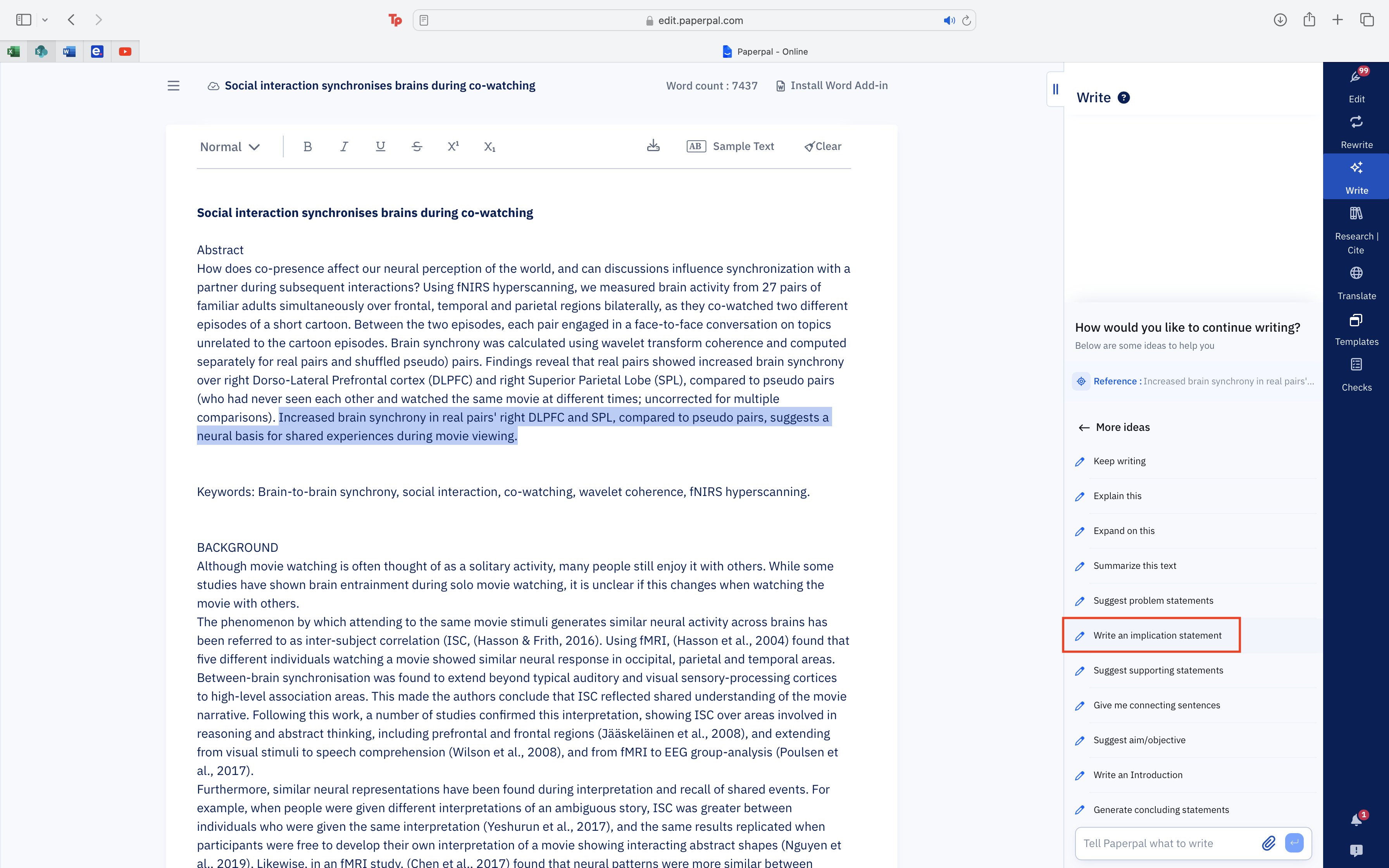
Paperpal is what happens when an academic editing company (Cactus Communications, the people behind Editage) builds AI on top of two decades of manuscript work. To see whether its "Make Academic" mode was real or just a label, I fed it the least academic text I could produce: a 100 word Iron Man story from ChatGPT.
The rewrite was not a synonym swap. "Adjusted" became "calibrated," "hacked" became "infiltrated," and loose action phrasing was rebuilt into full scholarly clauses rather than padded with longer words. The meaning survived, the register genuinely shifted, and tracked changes showed every edit like a copy editor's markup. Two honest caveats: free plan rewrites cap at 150 words per pass, and academic English runs denser, so you may need the word reduction mode afterward.
The pricing math is the real argument. Monthly is $25, quarterly is $55, but the annual plan lands at $139, about $11.58 a month, which is less than a single professional language edit. It holds a 4.6 on Trustpilot across 200+ reviews, with non native English researchers as its most consistent fans. The loudest complaint is auto renewal surprises, so treat this like GravityWrite: calendar reminder, always.
MY ADVICE
If you submit to journals more than twice a year, buy annual. If you write one paper a year, the free tier likely covers you. If you need blogs or emails, this tool is useless to you by design.
GPT Scrambler: the $1.99 pack that beat two detectors
| Cheapest way in | Starter pack, $1.99 one time for 2,000 words |
| Free tier | Yes, about 200 words per pass (not stated upfront) |
| The standout | No subscription at all; word credits never expire monthly |
| The catch | Output arrives with deliberate typos you must clean up |
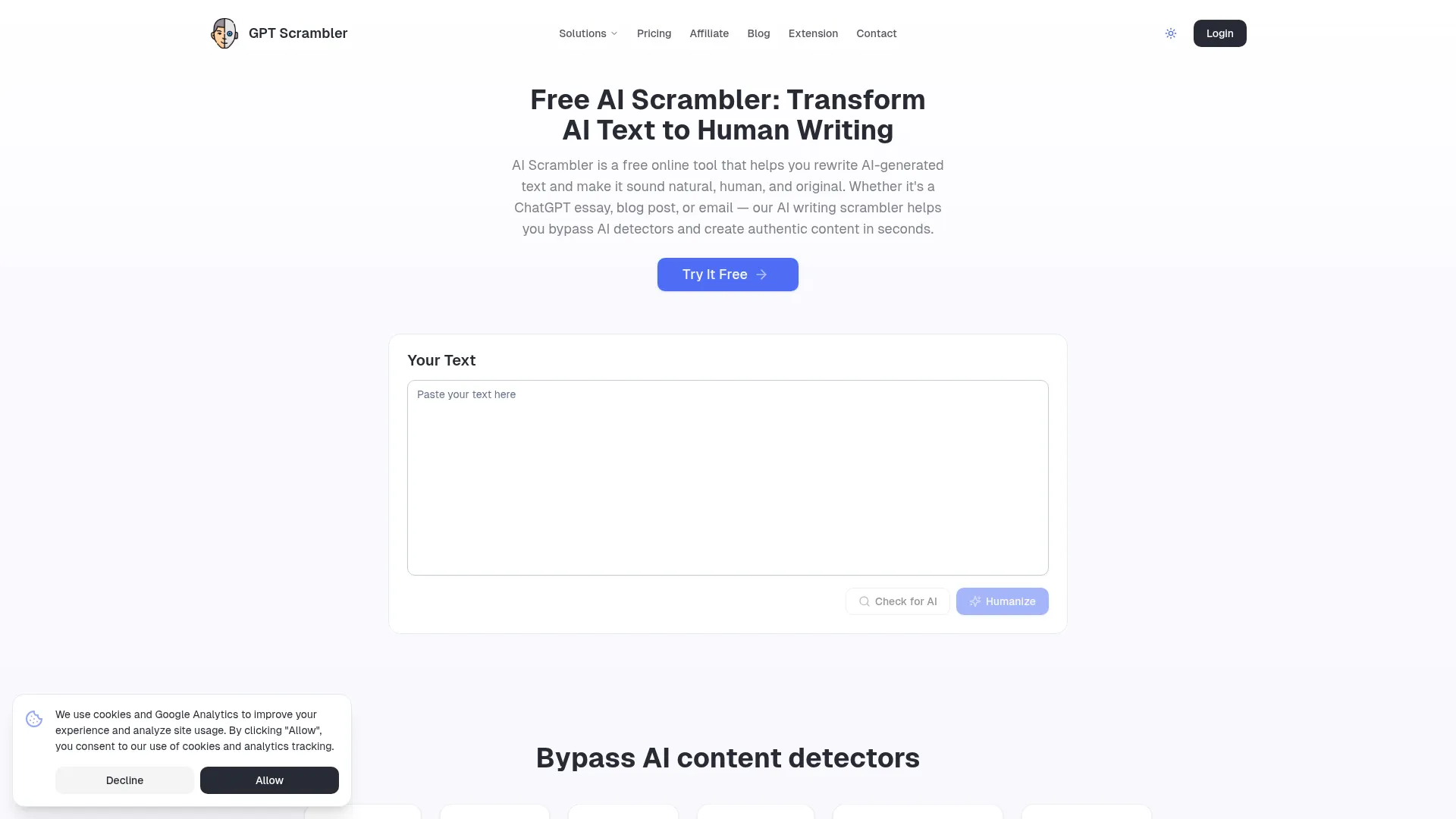
This is the tool from the second moment in my intro. The test was simple: generate a paragraph in ChatGPT, confirm the baseline, humanize, retest on identical settings.
| Detector | Original ChatGPT text | After GPT Scrambler |
|---|---|---|
| ZeroGPT | 100% AI | 0% AI, labeled human written |
| QuillBot | 100% AI | 0% AI |
| GPTZero | 100% AI | Mixed: 31% AI, zero of seven sentences flagged |
Each pass took five to seven seconds. Two hard 100s dropped to clean zeros, and even GPTZero, the strictest of the three, stopped confidently calling it AI. Detector results vary run to run, so treat that as a snapshot rather than a guarantee, but few tools in this category can show one this strong.
It has the budget-friendliest structure here: one time packs at $1.99 for 2,000 words, $3.99 for 5,000, or $9.99 for 15,000, with Pro adding 50+ languages and the advanced engines. No renewal date, ever. The trade-off sits in the output itself: part of how it beats detection is slipping in small human style imperfections, so phrases like "even if it don't seem like it" appear on purpose. Budget five minutes of proofreading per piece.
One thing worth saying plainly: the company itself states the tool is not built for academic dishonesty, and if you are a student, your institution's rules outrank any review, including this one.
MY ADVICE
The $3.99 Student pack is the sweet spot. Verify with the built in detector before publishing, and never skip the proofread.
How they stack up against the expensive tools
The fair question hanging over this list: why not skip the budget tier and buy the tool everyone names? Here is what the extra money actually gets you, using the three mainstream options readers ask about most.
| Tool | Starting price | Built for | What the extra money buys |
|---|---|---|---|
| Writesonic | $16/mo | Long form blogs and SEO teams | A deeper long form engine and a far larger review base |
| ChatGPT Plus | $20/mo | Flexible, general use | A stronger raw model, no templates, more prompt work on you |
| Jasper AI | $39/mo | Brand teams and agencies | Serious brand voice controls at a premium price |
That column buys polish, control, and raw model muscle, not a guarantee your specific work improves. And every plan recommended in this article comes in under the cheapest of the three.
Match the tool to the job
Budget tools reward specialists. Here is the honest routing table.
| If your week is mostly... | Get | Cost |
|---|---|---|
| Blog posts, scripts, mixed marketing | GravityWrite Plus | $8/mo |
| Captions, ads, product copy at volume | Rytr Unlimited | $7.50/mo annual |
| Editing and polishing your own drafts | QuillBot Premium | $8.33/mo annual |
| Fiction, stories, creative prose | NovelAI Tablet | $10/mo |
| Journal papers and theses | Paperpal Prime | $139/yr |
| Cleaning up AI flagged drafts | GPT Scrambler Student pack | $3.99 once |
What staying under $10 actually costs you
Every tool above earns its price, but the budget tier shares a few tax brackets worth naming.
Your time becomes the subsidy. GravityWrite output often needs editing to hold a brand voice. GPT Scrambler ships intentional typos. The cheap tools assume you will do the last pass yourself.
Meters and caps do the cost control. Credits at GravityWrite, 150 word rewrites on Paperpal's free plan, one language on Rytr Unlimited, a 200 word ceiling GPT Scrambler never mentions upfront. Read the fine print before the fine print reads your card.
Billing is where budget tools bite. The recurring complaint across Trustpilot and G2 for this whole tier is not quality, it is renewals. Start monthly, set reminders, and only go annual once a tool has survived a real month of your work.
Final take
If I could keep only one subscription from this list, it would be QuillBot's annual plan, because it improves everything I write regardless of where I wrote it. But the honest answer is that the budget tier works best in pairs. QuillBot plus Rytr covers generation and polish for $15.83 a month, less than two streaming services. Swap Rytr for NovelAI if you write fiction, or for Paperpal if you publish research, and the math barely moves.
The bigger lesson from all this testing was not about any single tool. It was that price and quality have quietly come apart in this market. The $1.99 pack outperformed its category. The $8 plan had the roughest onboarding I have seen all year. A tool's pricing page tells you almost nothing anymore, which is exactly why the free tiers, trial allowances, and money back windows listed above matter. Use them ruthlessly, on your own writing, before a single renewal date exists with your name on it.
That is the whole trick to buying cheap AI tools well: make them earn the second month.