Marketing teams in 2026 publish roughly four times more content than they did in 2023, but only 23 percent have AI actually integrated into a system. The rest are paying for tools that produce drafts, not pipelines. This report examines the platforms doing the real work behind that productivity gap, with pricing benchmarks, performance data, and the limitations vendors prefer to mute.
Six tools earn deep treatment here: Jasper, Claude, ChatGPT, Surfer SEO, Copy.ai, and MarketMuse. Each is evaluated on architecture, applied workflow, ratings, and ideal user fit, with cross-tool comparisons at the end. The aim is not a leaderboard. It is a procurement document for marketing leaders who have already spent enough on subscriptions that produce content nobody reads.
The numbers behind the noise
Adoption is settled. Performance is not. According to Salesforce’s State of Marketing 2026, 87 percent of marketers use generative AI in at least one recurring workflow, climbing from 51 percent in Q1 2024. HubSpot’s AI Trends 2026 survey places content marketer adoption at 96 percent, with SEO specialists at 93 percent. Yet Averi’s industry analysis indicates only 23.3 percent of companies run AI through a unified content engine; the majority operate at what the report calls ‘Level 1 ad hoc usage.’ That structural gap, rather than tool choice, explains why some teams report 4.6x content output gains while others see marginal returns.
The financial stakes track the adoption curve. Statista projects global AI marketing revenue to grow from roughly $47 billion in 2025 to $107.5 billion by 2028, a 36.6 percent CAGR. McKinsey’s 2026 marketing benchmarks attribute a 22 percent ROI lift to AI-driven campaigns and a 32 percent improvement in conversions versus baseline.
Adoption trajectory among content marketers, 2021 to 2026
| Year | Marketers using AI for content | Primary source |
|---|---|---|
| 2021 | 29 percent | IBM Global AI Adoption Index |
| 2023 | 61 percent | HubSpot State of Marketing |
| 2024 | 76 percent | Salesforce State of Marketing |
| 2025 | 85 percent | HubSpot AI Trends |
| 2026 | 87 to 96 percent (range) | Salesforce, HubSpot |
Six tools evaluated on cost, capability, and real-world fit
Jasper AI: the operations layer for teams that care about brand voice

Jasper is no longer trying to be ChatGPT with marketing templates. The 2026 product is an agent workspace; the company’s official positioning lists more than 100 specialized agents and ‘Content Pipelines’ that move work from brief to published asset. Underneath, Jasper routes between GPT-4-class, Claude, and Cohere models depending on task, which is why output quality is more consistent than tools wedded to a single LLM.
How marketing teams actually use it
The signature feature is Brand Voice. A team uploads three to five sample assets; Jasper extracts tone, vocabulary, and structural patterns and applies them to every generation. For agencies running multi-brand operations, this eliminates the voice-drift problem that emerges when five contractors write blog posts using raw GPT prompts. The native SurferSEO integration means a writer can score content against target keywords without leaving the editor, removing one tool-switching step that compounds at volume.
Inside enterprises, the actual workflow looks less glamorous than the marketing pages suggest. A demand-gen team typically uses Jasper to draft email sequences, ad variations for paid social, and landing-page copy that goes through human editing before publication. The Capterra reviews are unusually candid here; one verified buyer noted that ‘it takes a bunch of generations to get what I want, and it all counts against the word limit,’ which captures the gap between marketing demos and Tuesday afternoon reality.
Plans and what they cost in practice
| Tier | Monthly price | What unlocks | Best fit |
|---|---|---|---|
| Creator | $49 | Single user, 1 brand voice, 50+ templates, SurferSEO add-on | Solo marketers, small agencies |
| Pro | $69 | Up to 5 seats, 3 brand voices, campaign workflows | In-house content teams |
| Business | Custom (~$250+) | Unlimited voices, SOC 2, API, SSO | Mid-market and enterprise |
Annual billing knocks roughly 20 percent off. The first-year cost on the cheapest plan works out to $468, which Startupowl correctly notes is 2.4x to 5x the cost of Writesonic, Rytr, or Copy.ai’s Pro tier. You are paying for the brand voice infrastructure, not the writing.
What it gets right and what it does not
| Strengths | Drawbacks |
|---|---|
| More on-brand output than raw model prompting once Brand Voice is configured | Cost-per-value is poor at the Creator tier for solo creators |
| Marketing template library covers AIDA, ad copy, product descriptions in formats experienced copywriters recognize | Hallucination on technical content remains real, problematic in fintech and healthcare |
| SurferSEO integration genuinely removes a tool-switching step | Output still needs editing; not a finished-copy tool |
| Multi-model routing produces more consistent results than single-LLM tools | Pricing is doing significant filtering; ChatGPT Plus delivers ~80 percent of value at $20 |
Ratings snapshot. G2: 4.7 out of 5 across 1,270 reviews. Capterra: 4.8 out of 5 across 1,800-plus reviews. Gartner Peer Insights: 4.5 out of 5. Sentiment pattern: high marks on speed and brand consistency; repeated complaints on cost-per-value at the Creator tier and on output quality for niche subjects.
Claude (Anthropic): the prose engine for teams that read what they publish
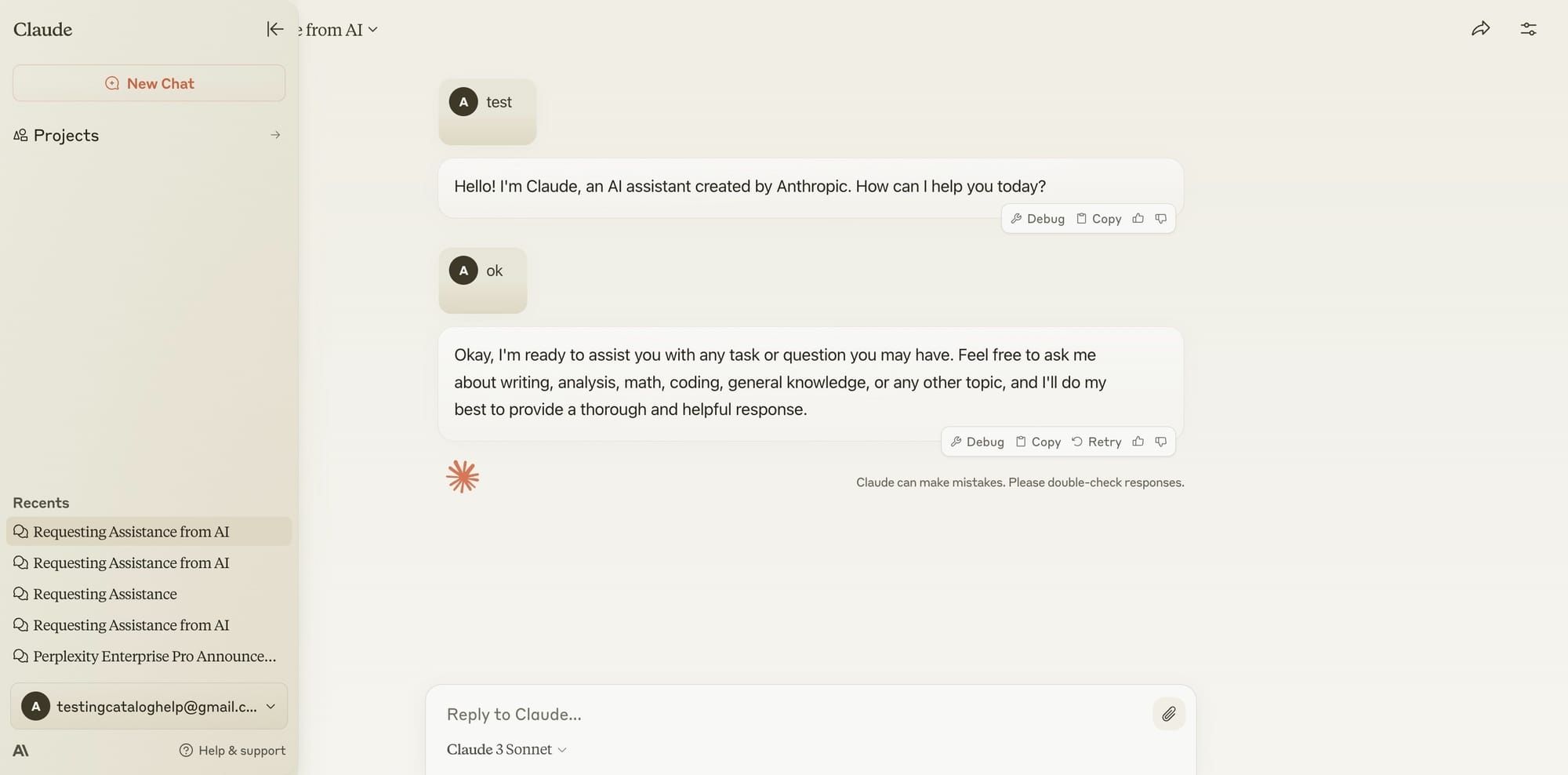
If Jasper is infrastructure, Claude is a writer who happens to live inside an API. Anthropic’s Opus 4.7 model leads the SWE-bench Pro coding benchmark and has become, per Stack Overflow’s 2025 Developer Survey, the preferred coding tool for roughly 70 percent of developers who use AI assistants. For marketers, the more relevant data point is Tom’s Guide’s 2026 ‘AI Madness’ tournament, which described Claude’s output as having a ‘lived-in quality’ against ChatGPT’s ‘academic templates.’ That is a reviewer’s polite way of saying Claude sounds less like an LLM.
Why writers gravitate to Claude over ChatGPT
Claude’s 200,000-token context window (1 million on Opus 4.7) means a marketer can paste an entire content style guide, three top-performing past articles, and a brand book into one prompt and ask for a new piece in voice. ChatGPT Plus caps at 128,000 tokens, sufficient for short copy but degrading on long, voice-sensitive briefs. Marketers running long-form thought leadership, executive ghost-writing, or technical content where a wrong word breaks credibility tend to converge on Claude after testing both.
The integration story matured in 2026. Claude in Excel and Claude in PowerPoint (currently in beta) let marketing analysts run AI passes on campaign data and decks without leaving Microsoft Office. Cowork, the desktop file-management agent, handles the file-shuffling work that used to consume an analyst’s afternoon.
What Claude costs
| Plan | Price | Headline benefit |
|---|---|---|
| Free | $0 | Limited Sonnet 4.6 access, basic features |
| Pro | $20/mo | Opus 4.7, Projects, 200K context window, Claude Code |
| Max 5x | $100/mo | Roughly 25x free-tier usage; recommended for daily content work |
| Max 20x | $200/mo | Roughly 100x free-tier usage; for power users |
| Team | $30/seat/mo | Shared Projects, admin controls, central billing |
The blind spots
Claude does not generate images. Marketers who need image and copy in one window default to ChatGPT or layer Midjourney on top of Claude. The integration ecosystem, while improving, still trails OpenAI’s plugin breadth. Claude is also more conservative with claims; for marketers who want a confident-sounding draft to edit down, the cautious tone can read as hedging.
Ratings snapshot. G2 (Anthropic Console): 4.6 out of 5. Per Morph LLM router data (April 2026), Claude is the consensus pick among professional writers for marketing copy and editorial content, with ChatGPT preferred for structured short-form at scale.
ChatGPT (OpenAI): breadth that compensates for an average prose ceiling

The default. According to The CMO and HubSpot data cited in 2026 industry roundups, 88 percent of marketers use ChatGPT in some capacity, often as a brainstorming and research layer beneath specialized tools. GPT-5.5, released in April 2026, narrowed Claude’s lead on long-form writing while widening OpenAI’s lead on multimodal work, real-time browsing, and the third-party plugin ecosystem.
Three places where ChatGPT genuinely wins
First, image generation through the integrated DALL-E and Sora workflows means a marketer can draft a LinkedIn post and a hero image in one session. Second, Deep Research and the Agent feature handle multi-step competitive analysis (pull pricing pages, summarize, table the differences) without external orchestration. Third, the Codex coding agent lets non-technical marketers build small internal tools, scrapers, or dashboards without engineering tickets.
The 2025 Stack Overflow Developer Survey found 81 percent of developers still use ChatGPT, which matters for marketers because it means the engineers next to you have already standardized on it for code review and SQL writing. Your data team’s favored tool tends to influence which AI marketers can ship workflows on.
Pricing and the creeping limits
| Tier | Price | What you get |
|---|---|---|
| Free | $0 (with ads, Feb 2026) | GPT-5.3, basic limits |
| Go | $8/mo | Extended free quota, fewer ads |
| Plus | $20/mo | GPT-5.5, ~150 messages/3hr, Deep Research, Agent |
| Pro | $100/mo | Higher limits, priority access, full Agent capacity |
| Business | $21/seat/mo | Team admin, SSO, no training on your data |
| Enterprise | Custom | SOC 2, dedicated capacity, custom contracts |
A pattern noted by FindSkill.ai and others: monthly pricing held steady while message limits tightened in April 2026, a phenomenon X users called ‘AI shrinkflation.’ For marketing teams running daily content, that matters operationally even if the sticker price has not moved.
Where it underperforms
The ‘AI slop’ pattern is real. ChatGPT defaults to predictable structures (bulleted summaries, hedged conclusions, transition phrases) that experienced editors can spot at fifty paces. For marketing copy that needs voice (founder-led content, brand journalism, executive op-eds), most professional writers consider it a starting point rather than a finished product. ChatGPT also reportedly produces more first-draft factual errors on technical topics than Claude, per the same Tom’s Guide testing cycle, though both improved meaningfully through 2025.
Sentiment summary. Broad acclaim for versatility; consistent complaints on output sameness and on the tightening of message quotas in 2026.
Surfer SEO: turning SERP analysis into a writing checklist

Surfer is not a writing tool that bolted on SEO. It is an SEO tool that grew an editor. The platform analyzes more than 500 web signals from pages already ranking for a target keyword, then generates a real-time content score as a writer drafts. For content marketers whose KPI is organic traffic rather than impressions, this changes the writing process from intuition to instrument-flying.
Inside the workflow
A typical Surfer use case: a marketer drops ‘ai content tools’ into the Content Editor, selects the top 10 SERP competitors, and gets a guideline document covering target word count, recommended headings, NLP-derived terms to include, and a content score that updates as the draft evolves. Topical Map (relaunched in 2025) plans entire clusters from one seed keyword, useful for anyone building topical authority for a new domain. The AI Tracker add-on, at $95 per month for 25 prompts, monitors brand mentions across ChatGPT, Gemini, and Perplexity, addressing the AI-search visibility problem that Brandi and Sight have built standalone businesses around.
What it actually costs in 2026
| Plan | Annual rate (monthly) | Monthly rate | Article credits | Best fit |
|---|---|---|---|---|
| Essential | $79 | $99 | 30 Editor + 5 AI articles | Solo creators |
| Scale | $179 | $219 | 150 Editor + 20 AI articles | Content teams of 3+ |
| Enterprise | Custom | Custom | Unlimited, API, SSO | Agencies, large brands |
A frequently overlooked detail: AI articles cost $29 each beyond plan limits, and the AI Tracker is a separate $95 per month add-on. The advertised $79 starting price misrepresents what most marketing teams actually spend, which lands closer to $200 to $300 per month once realistic usage is layered on.
Strengths versus structural drawbacks
| What works | Where it strains |
|---|---|
| Best-in-class on-page optimization with NLP-derived terms | Does not replace Ahrefs or Semrush for backlink analysis |
| Google Docs and WordPress integrations make publishing painless | AI articles need significant editing before publication (Arvow, March 2026) |
| Topical Map produces real strategic value for cluster planning | Credit expiration on monthly plans frustrates seasonal content teams |
| Trusted by FedEx, Shopify, Square, and 150,000-plus users in 159 countries | True effective price is $200 to $300/month after add-ons |
Ratings snapshot. G2: 4.8 out of 5 across 539 reviews. Capterra: 4.8 out of 5 across 537 reviews.
Copy.ai: the GTM platform that used to be a writing tool
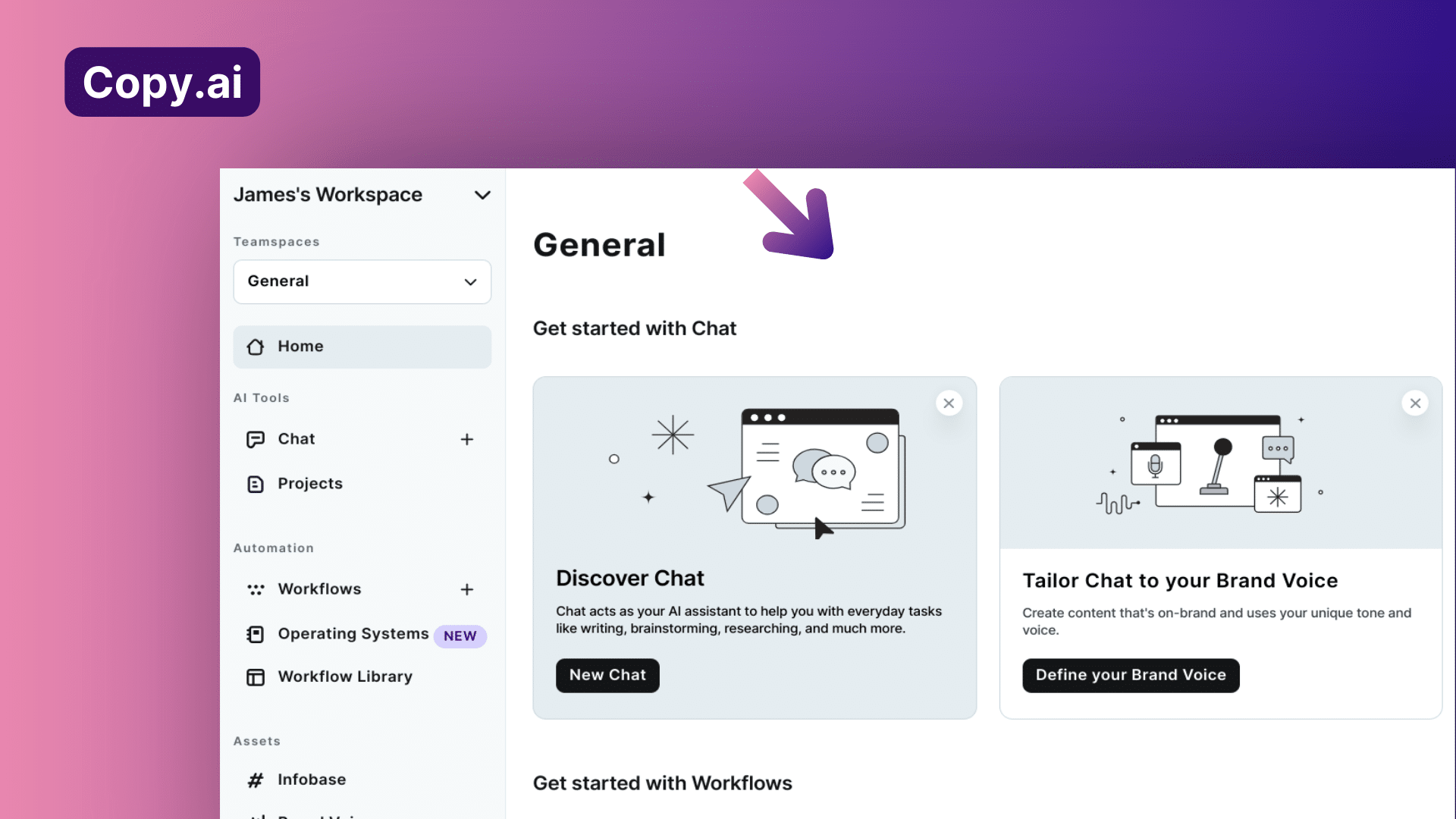
Copy.ai’s 2024 pivot to a ‘Go-to-Market AI Platform’ is the most significant repositioning in the AI marketing tools category. The Pro tier disappeared, prices climbed, and the product reorganized around workflow automation that pulls data from CRMs, enriches leads, drafts outreach sequences, and chains AI prompts into reusable pipelines. Solo writers were quietly shown the door.
What replaced the simple writing tool
The Workflow Builder is now the center of gravity. A demand-gen team can build a multi-step pipeline that ingests a list of ideal customer profiles, enriches each record with firmographic data, drafts a personalized outreach email per contact, and routes the output to HubSpot or Salesforce. Content Agents, the brand voice training feature, lives at the $249 per month Agents tier and is the actual ROI driver for teams producing content at scale. None of this matters if you are writing one product description.
Tier reality
| Plan | Price | Designed for |
|---|---|---|
| Free | $0 | 2,000 words/month, 1 seat, evaluation only |
| Starter | $29 to $49/mo | 1 user, unlimited Chat, no Brand Voice |
| Advanced | $249/mo | 5 users, Workflow Builder, 2,000 credits |
| Enterprise | Custom | Custom workflows, SSO, dedicated support |
The free plan is intentionally leaky; the gap between Free and Advanced is the moat. AIToolsBakery’s review captures the fault line: ‘1.9 on Trustpilot vs 4.4 on G2 reflects the gap between legacy users who feel abandoned and enterprise teams who see value in the new direction.’
Honest tradeoffs
Copy.ai genuinely excels at sales outreach and short-form ad copy at volume. Its 90-plus marketing-specific templates are more conversion-focused than Jasper’s, and the chat interface beats Jasper’s for iteration speed. The downsides: brand voice less polished than Jasper’s, no image generation, no SEO research, output quality on long-form noticeably weaker than Claude or Jasper. The 5-day refund window has been a recurring point of complaint.
Ratings snapshot. G2: 4.7 out of 5 across roughly 3,400 reviews. Capterra: 4.5 out of 5. Trustpilot: 1.9 out of 5 (heavily skewed by billing disputes). The split tells the story.
MarketMuse: content strategy at the page-portfolio level
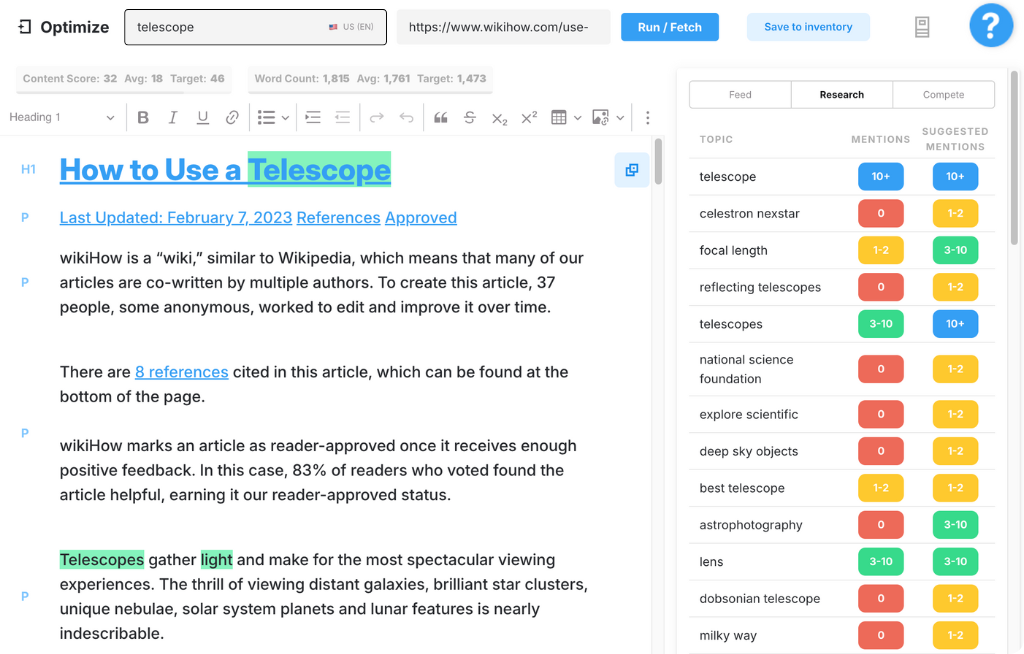
Where Surfer optimizes a single article and Frase generates a brief, MarketMuse models an entire content footprint. Acquired by Siteimprove in October 2024, the platform’s patented topic modeling analyzes hundreds of competitor pages to identify gaps, calculate domain-specific difficulty, and rank which content to create, refresh, or consolidate. It is the only tool on this list that answers the question: which 50 articles should we even bother writing?
The strategic loop in practice
A content director at a B2B SaaS company runs MarketMuse’s content inventory crawler against their own domain. The platform maps every URL to topics, applies Personalized Difficulty (a domain-specific ranking probability), and surfaces the highest-ROI gaps. Briefs get generated for the top 20 opportunities, handed to writers, scored before publication. This is content operations, not content writing, which is why MarketMuse looks expensive until you compare it to the cost of paying a content strategist to do the same analysis manually.
Tier breakdown
| Plan | Price | Surface area |
|---|---|---|
| Free | $0 | 10 queries/month, evaluation tier |
| Standard | $99 to $149/mo | Single user, content briefs, basic optimization |
| Team | $249 to $399/mo | Multi-user, content inventory, full topic models |
| Premium | $499+/mo | Unlimited queries, advanced features |
The pricing math only works for sites publishing 30 or more pieces a month or domains with substantial existing content libraries that need pruning and refreshing. Below that threshold, Frase or Clearscope is a better fit.
Where MarketMuse leaves marketers wanting
Reviewers consistently flag the learning curve; this is not a tool that delivers value in week one. Some users report that content scoring is less accurate than Surfer or Clearscope on individual page optimization. The Siteimprove acquisition introduced uncertainty about future product direction, since Siteimprove’s core business is web accessibility rather than SEO. None of this disqualifies the platform; it does mean the buying decision should be made by someone who has tested at least one alternative.
Ratings snapshot. G2: 4.6 out of 5 across 216 reviews. Capterra: 4.6 out of 5. Trusted by IBM, Deloitte, MongoDB, and approximately 5,000 brands.
Side by side: how the six stack up
Rather than repeat seven feature lists, the matrix below isolates the dimensions that actually drive procurement decisions.
| Dimension | Jasper | Claude | ChatGPT | Surfer | Copy.ai | MarketMuse |
|---|---|---|---|---|---|---|
| Entry price | $49 | $20 | $20 | $79 | $29 to $49 | $99 |
| Free tier | No | Yes (limited) | Yes (with ads) | No | Yes | Yes |
| Brand voice | Best in class | Manual prompt | Manual memory | Templates | At $249 tier | None |
| SEO scoring | Via add-on | None | None | Native, top tier | None | Native, strategic |
| Workflows | Pipelines | Limited | Agent (basic) | None | Workflow Builder | None |
| Image gen | Jasper Art | None | DALL-E (strong) | None | None | None |
| Long-form | Strong | Strongest | Good | Optimization | Weak | Strategic only |
The pattern is interpretable in one sentence: no tool covers more than two of the four jobs (strategy, drafting, optimization, distribution) competently. Marketers running comprehensive operations end up with two to three subscriptions, which is why the average SMB now spends between $900 and $2,700 per month on AI marketing tools (Searchlab, 2026).
Cost versus measurable value
The question is not what these tools cost. It is what they cost relative to the work they replace. The framework below uses a simple ratio: blended monthly cost divided by hours saved per user per week, mapped against output quality (1 to 10) measured against an unedited human baseline.
| Tool | Cost/month (typical) | Hours saved/week | Quality (1-10) | Verdict |
|---|---|---|---|---|
| Claude Pro | $20 | 8 to 10 | 9 | Best ratio for solo creators |
| ChatGPT Plus | $20 | 8 to 12 | 7 | Highest versatility per dollar |
| Jasper Pro | $69 | 6 to 8 | 8 | Pays back at team scale only |
| Copy.ai Advanced | $249 | 10 to 15 (team) | 7 | Workflows justify the price |
| Surfer Essential | $79 | 4 to 6 | 8 | Specialized; pair with writing tool |
| MarketMuse Team | $249 to $399 | 8 to 12 | 9 | Strategic value, not draft volume |
Two implications follow. First, the cheapest tools (Claude, ChatGPT) deliver the best dollar-per-hour math for individual marketers. Second, the more expensive tools (Jasper, Copy.ai, MarketMuse) only earn their keep when applied at team scale or against well-defined operational bottlenecks. The McKinsey 2026 finding that enterprise teams report 3.4x AI ROI versus 2.3x for SMBs is partly explained by this asymmetry: expensive tools punish small teams that cannot saturate the seat count.
Picking the right tool without making a $4,000 a year mistake
The decision matrix below collapses dozens of edge cases into the four axes that matter most.
| If you are… | Start with | Add later |
|---|---|---|
| A solo content creator under $50/month | Claude Pro or ChatGPT Plus | Frase Solo at $15 for SEO |
| An in-house team of 3 to 10 publishing weekly | Jasper Pro + Surfer Essential | Copy.ai Brand Voice for outreach |
| An SEO-led content agency | Surfer Scale + Claude Pro per writer | MarketMuse Team for strategy |
| A demand-gen team running outreach at volume | Copy.ai Advanced | Claude Max for long-form briefs |
| An enterprise with a 500+ page library | MarketMuse Team + Jasper Business | Custom Surfer Enterprise |
| A marketing solopreneur experimenting | Free tiers across the stack | Upgrade only on a documented bottleneck |
Three buying mistakes that recur
Buying Jasper Creator when ChatGPT Plus would do; the $29 monthly delta does not buy enough Brand Voice value at solo scale. Buying Surfer without a separate writing tool; Surfer’s AI articles need editing that often exceeds the time saved. Buying Copy.ai for solo writing in 2026; the product is no longer designed for that use case, regardless of what the homepage suggests.
What to actually do on Monday morning
The 2026 reality is uncomfortable for vendors and clarifying for buyers. AI is no longer a content advantage; it is the baseline. The differentiator has shifted from “do you use AI” to “is your AI integrated into a system that compounds.” Tools matter less than the workflow they sit inside, which is why a disciplined ChatGPT Plus subscription frequently beats a $382 per month tool stack operated by someone who has not built a writing process.
Three takeaways for marketing leaders making procurement decisions this quarter. First, audit current tool spend before adding anything; the average team carries one redundant subscription that does not survive a quarterly review. Second, anchor every tool decision to a measurable bottleneck, such as output volume, voice consistency, SEO performance, or outreach personalization, rather than to a feature list. Third, the marketing teams pulling 4.6x output gains are not the ones with the largest stacks; they are the ones who picked two or three tools and built a repeatable system around them.
That is also where platforms like WriteNexa fit naturally into the conversation. For teams and creators trying to understand AI writing, SEO content, and practical tool workflows, the value is not in chasing every new app, but in learning how to turn AI into a repeatable content system.
The best AI content tool for marketers in 2026 is whichever one your team is willing to use the same way every week. Everything else is a subscription waiting to be cancelled.