I keep a spreadsheet of every CMS invoice I have paid since 2023, partly for taxes and partly out of stubbornness. It currently has 61 rows. Some of those rows are boring, like the $48 WordPress.com Personal renewal that runs a friend's food blog. Some still annoy me, like the month I paid for two Webflow seats nobody was logging into. And one of them, a Contentful quote for a startup client, made everyone on the call go quiet for a solid five seconds.
That spreadsheet is why this guide exists. Vendor pricing pages show you the annual-billing number with every discount applied. Your card statement shows you the truth. Below is what the major platforms cost in 2026, what quietly gets added on top, and which plan I would pick in a handful of common situations. Pricing moves often, so treat each vendor's own page as the final word before you pay.
| The short version: a working small business site on a hosted CMS costs $17 to $49 per month on annual billing in 2026. Open source options like WordPress.org land near $75 to $150 per year all-in if you keep things lean. Headless platforms built for product teams start at $300 per month on Contentful, while Sanity gets a small team in for $45 to $75. |
What each CMS costs in 2026, platform by platform
Prices below assume annual billing in USD unless noted, because that is how the vast majority of people end up paying. Monthly billing is covered in the hidden costs section, and it stings.
WordPress.org - $75 to $600+/yr all-in
Software $0 · Domain $10 to $20/yr · Hosting $3 to $50/mo
The software is free and open source, which is true and slightly misleading at the same time. You still pay for a domain, usually $10 to $20 a year, and hosting, which runs $3 to $10 a month on shared plans or $20 to $50 on managed WordPress hosts. A lean personal site lands around $75 to $150 a year. The budget grows with premium plugins, a paid theme, and eventually a maintenance retainer or a developer. The same math applies to Drupal and Joomla: free code, paid everything around it.
Watch for: plugin subscriptions stacking up. Three or four at $49 to $99 a year each is normal on business sites, and they renew whether you remember them or not.
WordPress.com - $4 to $45/mo
Free $0 · Personal $4 · Premium $8 · Business $25 · Commerce $45
Hosted WordPress with the servers handled for you. Pay monthly instead of yearly and those prices jump to $9, $18, $40 and $70, one of the sharpest markups in this guide. The free tier exists but shows ads and blocks plugin installs. Business is the tier that actually matters, since that is where plugins and custom themes become available and the platform stops feeling fenced in. Below it, you are renting a nice blog.
Watch for: the domain renewal after your free first year, which runs roughly $15 to $60 depending on the extension.
Wix - $17 to $159/mo
Free $0 · Light $17 · Core $29 · Business $39 · Business Elite $159

Wix rebuilt its lineup into four paid plans, and the structure is genuinely easier to shop than the old one. Monthly billing raises the prices to $24, $36, $46 and $172. You need Core or above to sell anything, and Wix Payments takes 2.9% plus 30 cents per card transaction in the US. The free plan is fine for testing the editor and little else, since it carries Wix ads and a wixsite.com address. Enterprise plans start around $500 a month.
Watch for: the app market. Useful add-ons commonly cost $3 to $20 a month each, and a site with five of them has doubled its own subscription.
Squarespace - $19 to $99/mo
Basic $19 · Core $29 · Plus $49 · Advanced $99

Squarespace retired its old Personal and Business tiers and now sells Basic, Core, Plus and Advanced, with annual billing saving you up to about a third versus monthly. The fee schedule is the real differentiator: Basic charges 2% on store sales and 7% on digital products, Core drops the store fee to 0% and digital to 5%, Plus takes digital down to 1%, and Advanced removes platform fees entirely. Every annual plan includes a custom domain free for the first year, and there is a 14 day trial instead of a free tier.
Watch for: the Basic transaction fee. Once you pass roughly $500 a month in sales, Core becomes cheaper than staying on Basic.
Webflow - $15 to $25/mo + seats
Starter $0 · Basic $15 · Premium $25 · Team $2,500 · Enterprise custom

Webflow reshuffled everything in May 2026. The old CMS and Business site plans merged into a single Premium plan that includes 20,000 CMS items and 40 collections, which comfortably covers most content sites. Basic skips the CMS entirely and suits static pages. The numbers that surprise people are the seats: each extra full seat costs $39 a month, content editor seats cost $15, and the Optimize testing add-on starts at $299 a month. The new Team plan bundles seats, localization and workflows for organizations that outgrew self-serve.
Watch for: seat charges outgrowing the plan itself. A five person team can pay more for access than for hosting.
HubSpot Content Hub - $15 to $1,500/mo
Starter $15/seat (annual) · Professional ~$500 · Enterprise $1,500

HubSpot's CMS makes sense when your website should live next to your CRM. Starter costs $20 a month per seat, or $15 on annual billing, and runs a real site with custom domains and no HubSpot branding. Professional starts around $450 to $500 a month with three seats included, adding A/B testing, SEO recommendations and smart content, which is the tier a working marketing team actually needs. Enterprise runs $1,500 a month with five seats. Extra Professional seats cost $50 a month each.
Watch for: the gap between Starter and Professional. There is nothing in between, so budget for that cliff before committing to the ecosystem.
Headless CMS pricing: a different sport entirely
Headless CMS platforms deliver content through APIs to websites, apps and whatever else you build. You are buying infrastructure, not a site builder, and the pricing reflects it.
Contentful - Free, then $300/mo
Free $0 · Lite $300 · Premium custom quote
The reference point for enterprise headless. The free tier genuinely works for small projects, then pricing jumps straight to Lite at $300 a month with 20 users and one million API calls, with nothing in between. Premium is quote-only, and procurement data puts typical contracts in the mid five figures for smaller companies and around $179,000 a year at enterprise scale. Salesforce agreed to acquire Contentful in mid 2026, which tells you exactly where the product is headed.
Watch for: the free-to-$300 cliff. Plenty of startups budget for the free tier and meet the real invoice eight months later.
Sanity - $15/seat/mo
Free $0 (20 seats, 10,000 docs) · Growth $15/seat · Enterprise custom
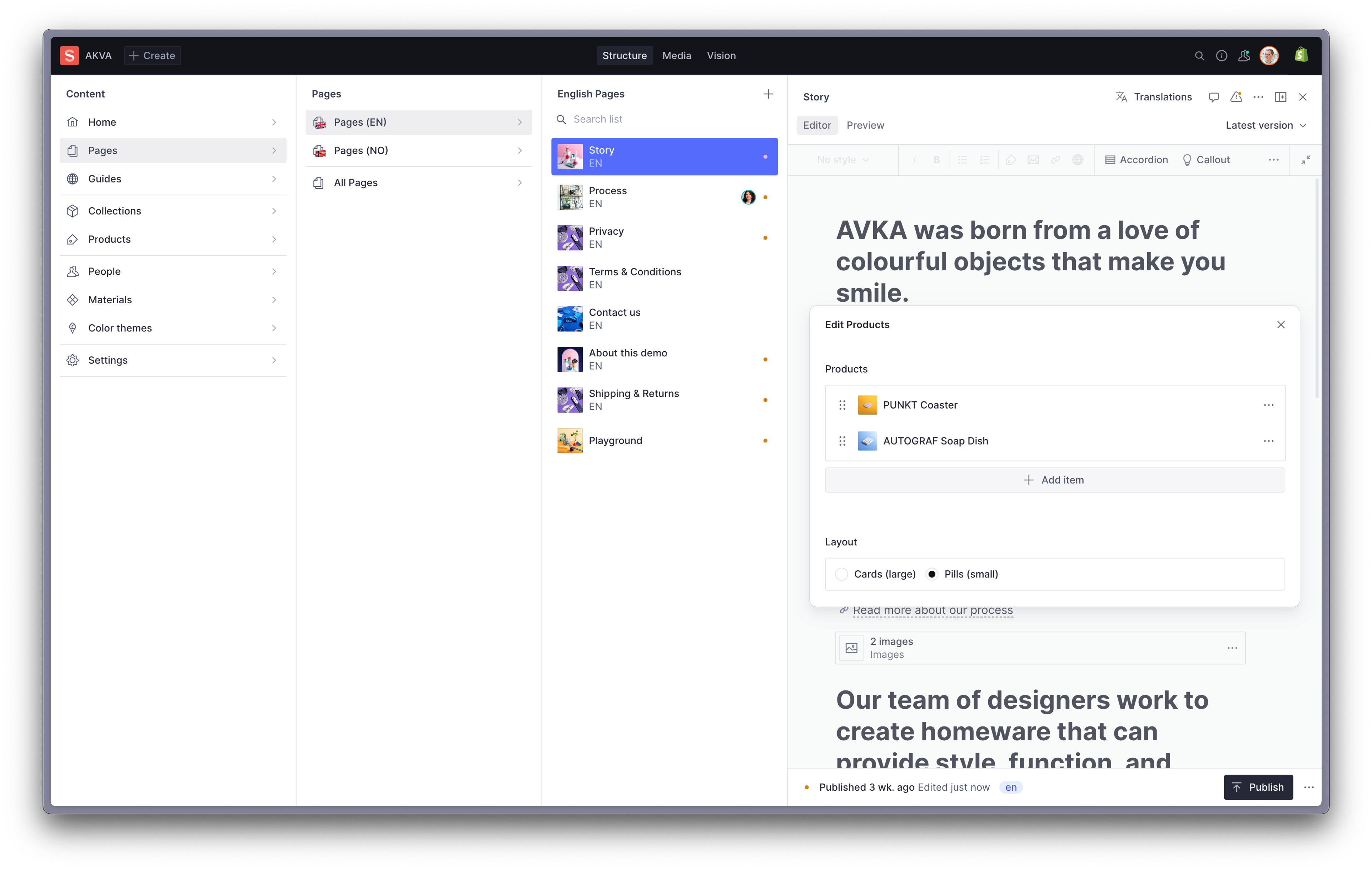
The friendliest pricing in headless. The free plan allows up to 20 seats, two datasets and 10,000 documents, and it will run a low traffic production site indefinitely. Growth costs $15 per seat a month, closer to $12 on annual billing, and adds private datasets, scheduled publishing and proper roles. A three to five person team lands at $45 to $75 a month, which undercuts everything comparable. Viewers are free, which matters more than it sounds once stakeholders want access.
Watch for: usage overages. They are pay as you go and priced fairly, but a traffic spike does show up on the bill.
Strapi - $0 self-hosted, $45/mo licensed
Community $0 · Growth $45 (3 seats) · Cloud Pro $75 · Cloud Scale $375
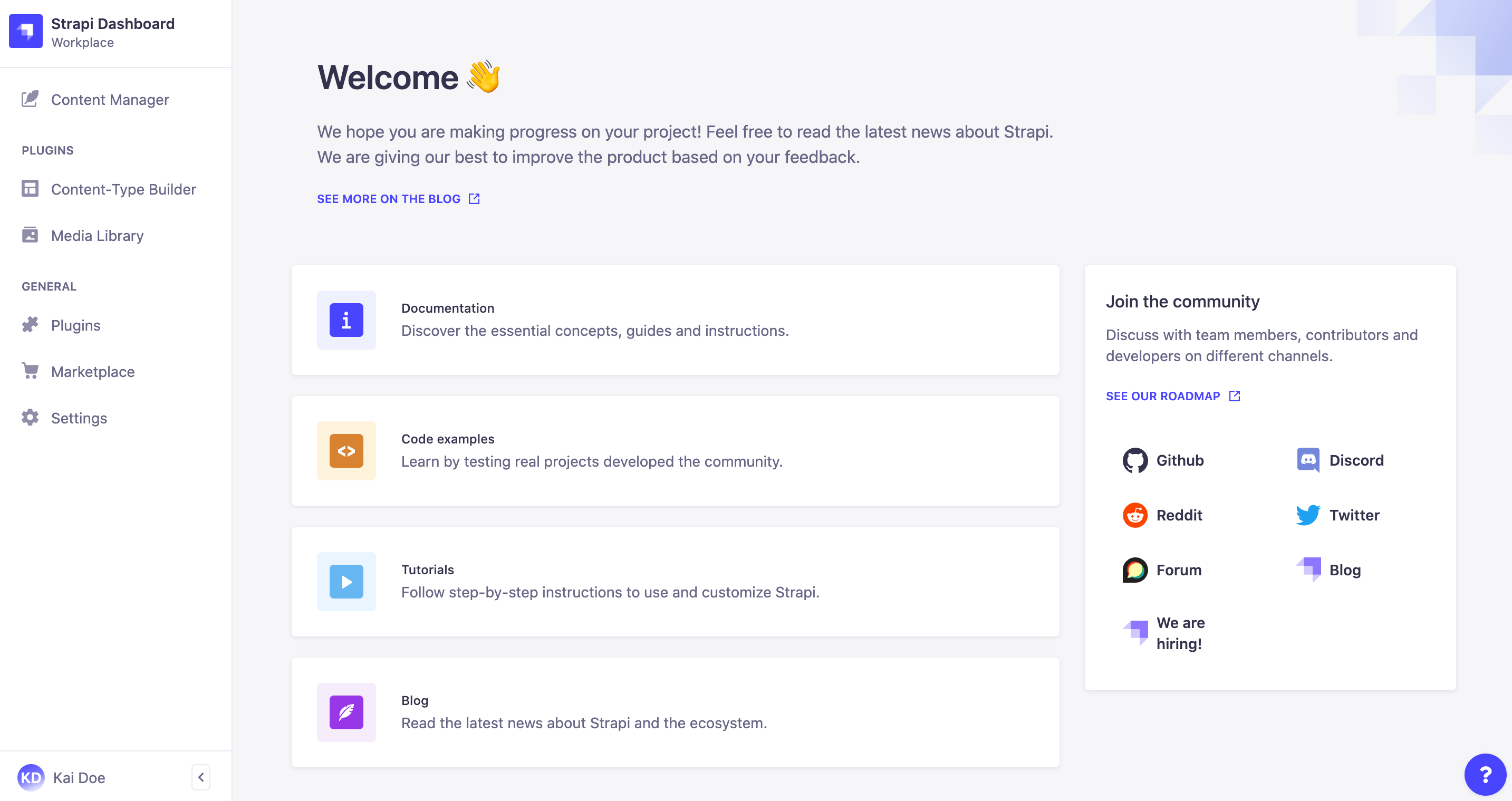
Open source under the MIT license, so the software itself costs nothing and a small self-hosted project runs on a $10 to $25 a month server. The paid Growth licence adds AI features, live preview and content history for $45 a month covering three seats, plus $15 per extra seat. Strapi Cloud is a separate managed hosting product with a free developer tier, then Pro at $75 and Scale at $375 a month. Full data ownership is the whole pitch, and for regulated industries it is a strong one.
Watch for: the cost of your own time. Upgrades, backups and monitoring are on you when self-hosting, and that engineering time is the real price tag.
The costs pricing pages don't lead with
None of these are scams. All of them are absent from the big friendly number at the top of the pricing page, and together they routinely add 30% to 100% to a first-year budget.
BILLING The monthly markup Paying month to month costs up to 41% more on Wix, more than double on some WordPress.com tiers, and roughly a third more on Squarespace. If you are staying a year, pay for the year. | DOMAINS Year-two domain renewal Nearly every platform includes the domain free for year one. Renewal runs $15 to $60 a year depending on the extension, and it arrives on the anniversary you forgot about. |
COMMERCE Transaction fees Squarespace Basic takes 2% of store sales. Wix Payments charges 2.9% plus 30 cents per card payment. At $2,000 a month in sales, fees quietly become your biggest line item. | TEAMS Per-seat charges Webflow charges $39 a month per extra full seat. HubSpot Professional charges $50. Sanity charges $15. Multiply by your head count before you compare plan prices. |
EXTENSIONS Apps, plugins, themes Wix apps run $3 to $20 a month each. Premium WordPress plugins renew at $49 to $199 a year. Budget for three to five of these on any serious business site. | LABOR Build and migration Hosting is the cheap part. A professional Webflow or WordPress build is quoted in the thousands, and switching platforms later costs more than most annual subscriptions. |
What you'll actually spend: six common situations
These estimates use annual billing and assume you avoid the traps above. Payment processing fees sit on top for anything that sells.
| SITUATION | SENSIBLE PICK | YEARLY ESTIMATE |
|---|---|---|
| Personal blog or portfolio | WordPress.com Personal or Webflow Basic | $48 to $180 |
| Small business brochure site | Wix Light or Squarespace Basic | $204 to $228 |
| Small online store | Wix Core or Squarespace Core | $348 + card fees |
| Content-led marketing site | Webflow Premium plus one extra seat | about $770 |
| Multi-channel product content | Sanity Growth (5 seats) or Contentful Lite | $720 to $3,600 |
| CRM-centered marketing team | HubSpot Content Hub Professional | about $6,000 |
Five ways to spend less without downgrading
1. Commit annually only after one paid month of real use. The annual discount is real, but so is the refund policy fine print once you are locked in.
2. Start one tier lower than the sales page suggests. Upgrading takes thirty seconds. Downgrading mid-cycle rarely gives money back.
3. Do the transaction fee math before picking a commerce tier. On Squarespace, roughly $500 a month in sales is the point where Core beats Basic on total cost.
4. Count seats before anything else on Webflow, HubSpot and Sanity. Per-seat pricing punishes optimistic head counts, and viewer or reviewer seats are often free if you ask.
5. Budget year two, not year one. Plan renewal plus domain renewal plus app subscriptions is your real annual number, and it is always higher than the launch quote.
Final VerdictWhere I landed after 61 invoices For most small businesses I now set up Squarespace Core or Wix Core and stop worrying, because $29 a month buys a professional site with commerce built in and nothing to maintain. When a client cares about design and content structure, Webflow Premium at $25 is the best value in this entire guide, provided everyone remembers the seat charges before adding the whole team. My own sites still run on WordPress.org, because $130 a year and full control beats any subscription for me personally, and I accept the plugin housekeeping that comes with that choice. The two decisions I watch people regret are both about ambition. The first is buying headless for a single marketing site, which turns a $300 a year problem into a $3,600 one. The second is choosing on year-one pricing, then meeting the domain renewal, the monthly markup and the app subscriptions in year two. Write down your true twelve month number before you pick, boring line items included. The best CMS at the wrong price stops feeling like the best CMS remarkably fast. |